Why Mobility Harnesses for Senior Dogs Help
Mobility harnesses for senior dogs give owners a safe way to physically support a dog with weak hind legs, recovering from surgery, or managing advanced arthritis, without straining their own back trying to lift or steady a dog directly. This guide covers the main types available and how to choose one that actually fits your dog’s specific needs.
Who Benefits From a Mobility Harness
- Dogs with weakness in the hind legs due to arthritis, hip dysplasia, or degenerative myelopathy
- Dogs recovering from orthopedic surgery who need temporary support during the healing period
- Dogs that struggle specifically with stairs, getting into vehicles, or standing up from lying down
- Dogs with occasional wobbliness who don’t need full-time support, but benefit from assistance during specific activities
Types of Mobility Harnesses
Rear-Support Harnesses
These wrap around the hindquarters, with a handle that lets owners provide lifting support to the back legs specifically. This works well for the many senior dogs whose front legs remain relatively strong while their hind legs weaken first.
Front-Support Harnesses
Designed for dogs with front-leg or shoulder weakness, though this is less common than hind-leg weakness in typical age-related decline.
Full-Body Harnesses
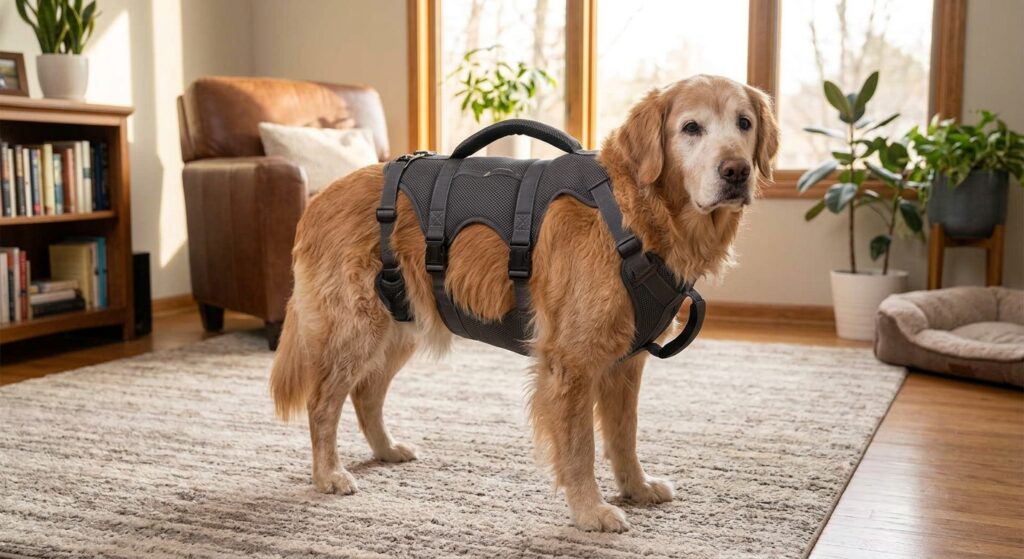
Combining front and rear support with two handles, these work well for dogs needing assistance getting up, navigating stairs, or general full-body stability, particularly during recovery from surgery or significant mobility decline.
Sling-Style Support
A simpler option, typically just a strap positioned under the belly or hindquarters, offering basic lifting support for occasional use, such as helping a dog into a car.
Getting Your Dog Used to a Harness
Some dogs adjust to a mobility harness immediately, while others need a short introduction period:
- Let your dog sniff and investigate the harness before putting it on, rather than surprising them with it.
- Put it on briefly at first without using the handles, so your dog associates wearing it with normal, low-pressure moments.
- Introduce the lifting support gradually, using it for a single stair or short assist before relying on it for longer periods.
- Pair the process with treats and calm praise, building a positive association rather than letting it become a stressful daily struggle.
Fit and Comfort Considerations
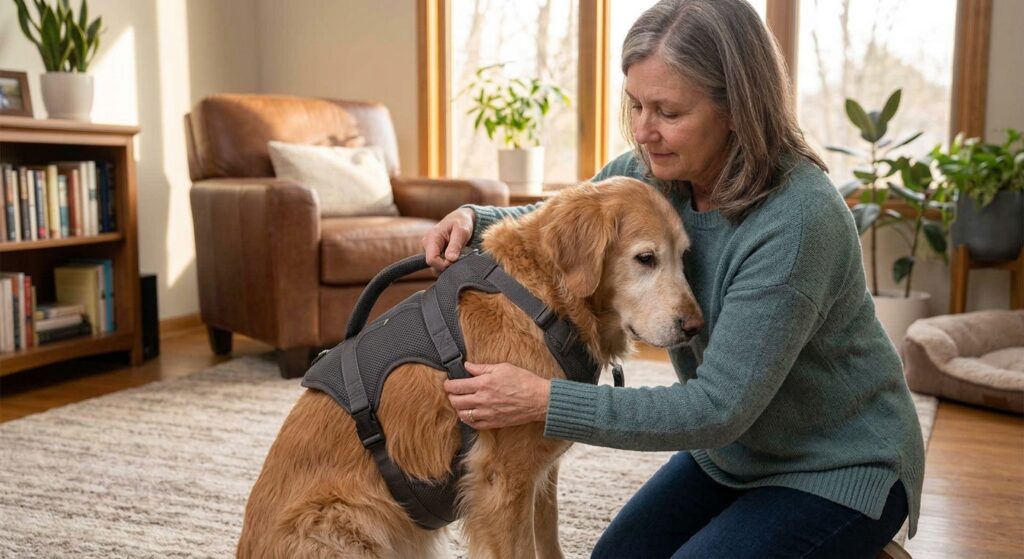
- Avoid straps that dig into the armpits or groin area, since a poorly fitted harness can cause chafing or discomfort with regular use.
- Check for adjustable straps that accommodate weight changes, since senior dogs sometimes gain or lose weight as health conditions evolve.
- Look for breathable, washable material, especially for dogs who wear the harness for extended periods or in warmer climates.
- Test the handle height with your own hand while your dog stands normally, to make sure lifting doesn’t require you to bend awkwardly.
When a Harness Isn’t Enough
A mobility harness helps with physical support, but it doesn’t address the underlying cause of weakness. If your dog needs a harness regularly, it’s worth a full veterinary evaluation to identify and manage the underlying condition — whether that’s arthritis, a neurological issue, or something else. For dogs whose mobility challenges have progressed significantly, a wheelchair or cart may eventually become a more appropriate long-term solution than a harness alone.
Frequently Asked Questions
How do I know if my senior dog needs a mobility harness?
Signs include difficulty standing up from lying down, hind-leg wobbliness, hesitation or inability to manage stairs, or visible struggle getting into vehicles. A vet can help confirm whether a harness would genuinely help based on your dog’s specific condition.
Can a mobility harness be used all day?
Generally, no — most mobility harnesses are designed for use during specific activities (stairs, getting up, car access) rather than continuous all-day wear, which can cause skin irritation or discomfort over extended periods.
Will using a harness make my dog more dependent on it?
No — a properly used mobility harness provides support during genuinely difficult moments, similar to how a cane assists a person; it doesn’t cause muscle weakness or increase dependency when used appropriately for its intended purpose.
A well-fitted mobility harness can make daily life significantly easier for both a senior dog and their owner. Pair it with a full evaluation of the underlying cause, and see our arthritis in senior dogs guide if joint pain plays a role in your dog’s mobility challenges.