
Why the Right Bed Matters for Arthritic Dogs
Finding the best orthopedic beds for senior dogs with arthritis makes a bigger difference than most owners expect. A standard bed compresses over time and stops providing real support, while a properly designed orthopedic bed cushions pressure points and reduces the strain on already painful joints during rest — which makes up a large portion of a senior dog’s day. This guide covers what actually makes a bed “orthopedic,” and what to look for when choosing one.
What Makes a Bed Truly Orthopedic
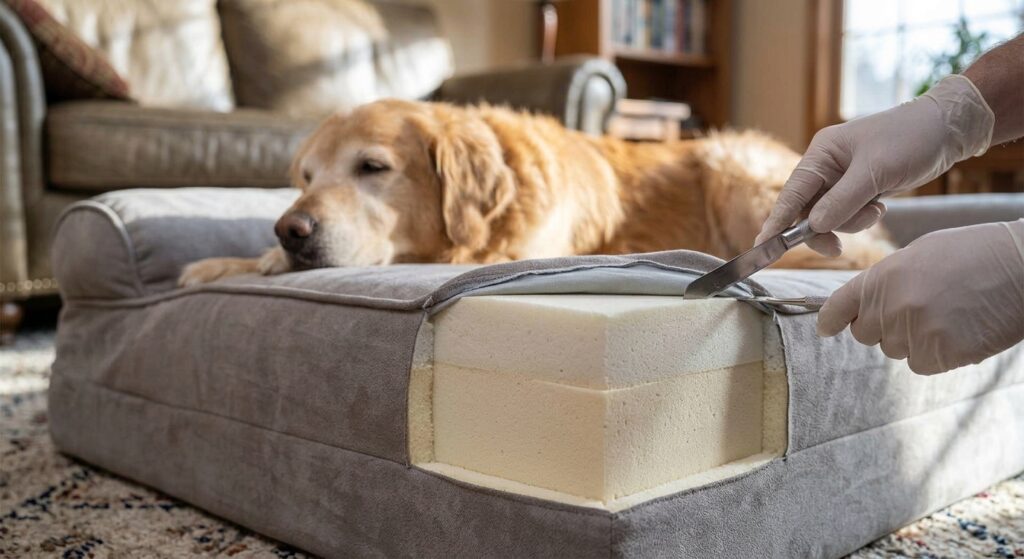
Not every bed labeled “orthopedic” delivers real support. Genuine orthopedic beds share a few key features:
- High-density memory foam, typically at least 3-4 inches thick for medium-to-large dogs, that contours to the body without bottoming out.
- Consistent support over time, meaning the foam should hold its shape rather than flattening permanently within a few months of regular use.
- Pressure redistribution, reducing concentrated weight on hips, elbows, and shoulders — the joints most commonly affected by arthritis.
Beds using standard polyester fiberfill or thin padding, even if marketed as “supportive,” generally don’t provide the same joint-relief benefits as genuine memory foam construction.
Choosing the Right Size and Shape
A bed that’s too small forces a dog into an unnatural sleeping position, which can offset any benefit from the orthopedic material itself.
Sizing guidelines:
- Measure your dog from nose to tail while lying in their natural stretched-out position, and add a few inches on each side for a comfortable margin.
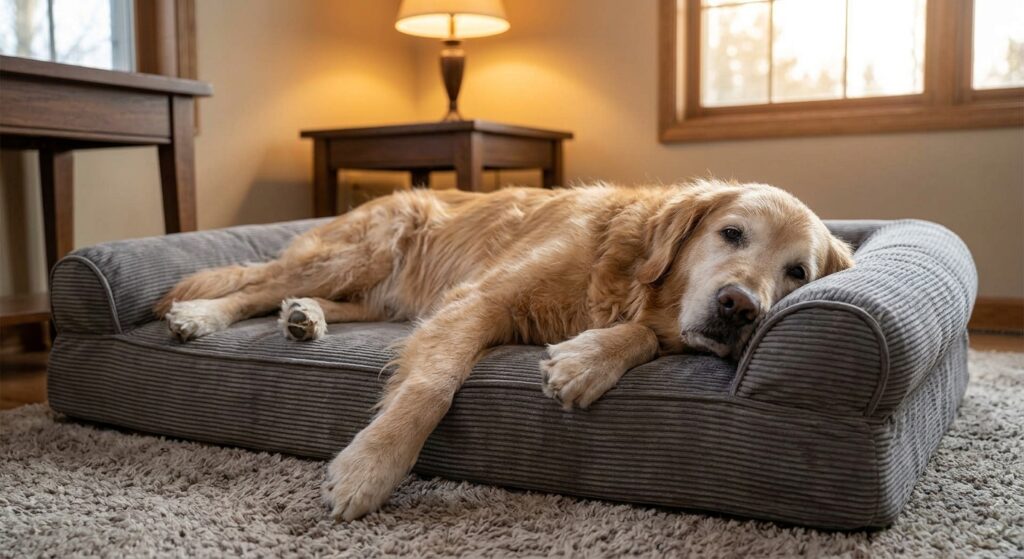
- For dogs that like to lean or rest their head on something, a bolster-edge design provides extra support without sacrificing the flat resting area.
- For dogs with mobility issues who struggle to climb into a raised-edge bed, a low-profile design with easy access matters more than bolster features.
Top Features to Compare
| Feature | Why It Matters |
|---|---|
| Foam density (measured in lb/ft³) | Higher density generally means better long-term support and slower breakdown |
| Removable, washable cover | Senior dogs are more prone to accidents; an easy-to-clean cover matters practically |
| Waterproof liner | Protects the foam itself from moisture damage, extending the bed’s usable life |
| Non-slip base | Prevents the bed from sliding on hardwood or tile floors during use |
| Cooling gel layer (optional) | Helps dogs who run warm or live in hotter climates stay comfortable |
Placement Matters Too
Even the best orthopedic bed works better in the right location:
- Keep it away from direct drafts, vents, or cold floor areas, since cold can worsen joint stiffness.
- Position it somewhere your dog can easily access without navigating stairs or slippery flooring — see our guide on non-slip flooring for senior dogs if this is a challenge in your home.
- Consider having a second bed on another floor of the house if your dog spends time in multiple areas, reducing the need to navigate stairs repeatedly.
How Long Do Orthopedic Beds Last?
Quality orthopedic beds typically maintain their supportive structure for 2-4 years with regular use, though this varies by foam quality and dog size/weight. A bed that has visibly flattened or no longer springs back after your dog gets up has likely lost most of its orthopedic benefit, even if it looks fine on the surface.
Frequently Asked Questions
Are orthopedic dog beds worth the extra cost compared to regular beds?
For a senior dog with arthritis, generally yes — the joint support and pressure relief directly address a daily source of discomfort, making it one of the more impactful purchases for comfort, alongside diet and medical management covered in our arthritis in senior dogs guide.
How do I know if my dog’s current bed has lost its support?
Press down firmly on the foam — if it doesn’t spring back within a few seconds or feels noticeably thinner than when new, it has likely lost most of its supportive structure and is due for replacement.
Can an orthopedic bed replace other arthritis treatments?
No — a supportive bed helps with comfort during rest, but it works best alongside other management strategies like appropriate exercise, weight control, and any vet-recommended medication or supplements, not as a standalone treatment.
A genuinely supportive bed is one of the simplest, lowest-maintenance ways to improve a senior dog’s daily comfort. Pair it with the broader strategies in our arthritis in senior dogs guide for a complete approach to managing joint pain.