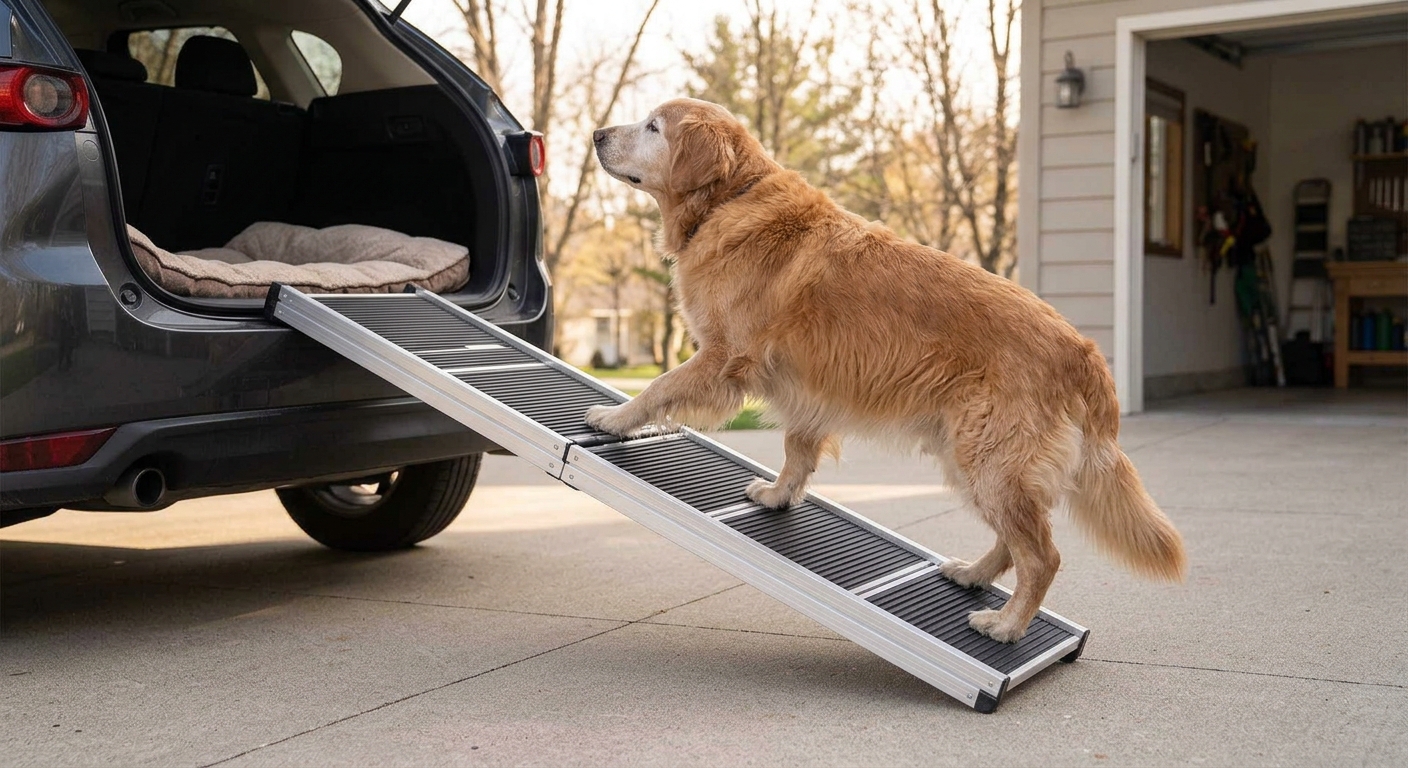
Why Dog Ramps for Cars Matter for Senior Dogs
Jumping in and out of a car puts real strain on aging joints, and a bad landing can cause genuine injury. Dog ramps for cars let senior dogs get in and out safely at their own pace, without the repeated impact that car jumps create over time. This guide covers the main types available and what actually matters when choosing one.
Why Jumping Is Riskier Than It Looks
The height of most car trunks and back seats creates a significant drop, especially for dogs already managing arthritis or reduced muscle mass. Even dogs that seem physically capable of jumping may be doing so at the cost of increased joint stress that builds up over repeated use, contributing to worsening arthritis symptoms over time. See our guide on arthritis in senior dogs for more on how repeated impact affects joint health.
Types of Dog Ramps
Telescoping Ramps
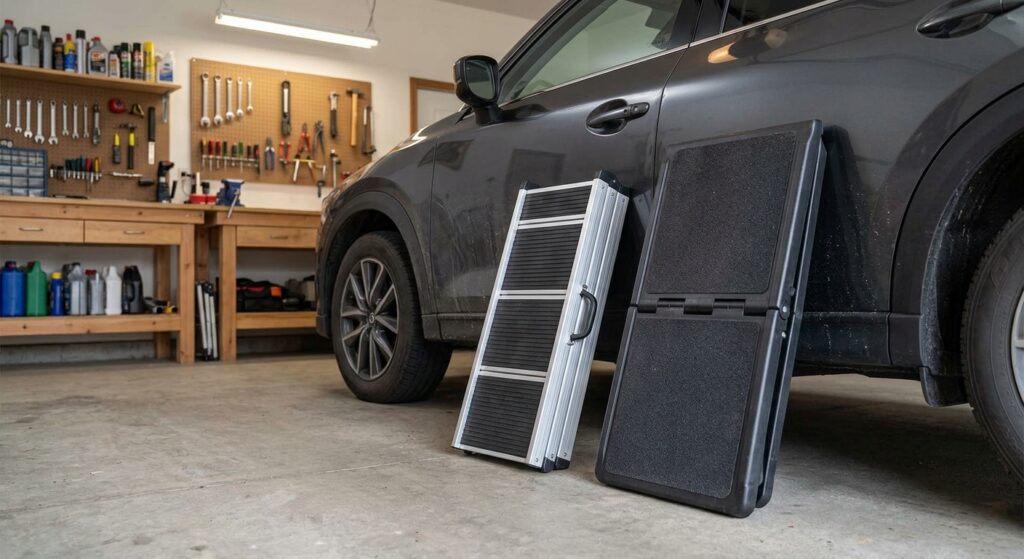
These extend and retract in sections, folding down to a compact size for storage. They’re generally lightweight and easy to carry, though the multi-piece design can feel less sturdy underfoot for larger or more hesitant dogs.
Best for: Small-to-medium dogs, or owners prioritizing compact storage.
Bi-Fold Ramps
These fold in half rather than telescoping, generally offering a more solid, continuous walking surface at the cost of being bulkier to store and carry.
Best for: Larger dogs or dogs who feel more confident on a solid, one-piece surface.
Tri-Fold Ramps
Similar to bi-fold designs but folding into three sections, striking a middle ground between portability and surface stability.
Best for: Owners who need a balance between a stable walking surface and reasonably compact storage.
Weight Capacity and Length
Checking weight capacity matters more than owners often expect — a ramp rated for a 50 lb dog will typically flex or feel unstable under an 80 lb dog, which can undermine a nervous dog’s confidence using it at all.
General guidelines:
- Choose a ramp rated for at least 20-30% more than your dog’s actual weight, for a stable, confident feel.
- Longer ramps create a gentler incline, which matters significantly for dogs with more advanced arthritis — a steep, short ramp can feel almost as challenging as jumping.
- Measure your vehicle’s trunk or door height before buying, since ramp length needs vary a lot between an SUV and a sedan.
Surface Texture and Traction
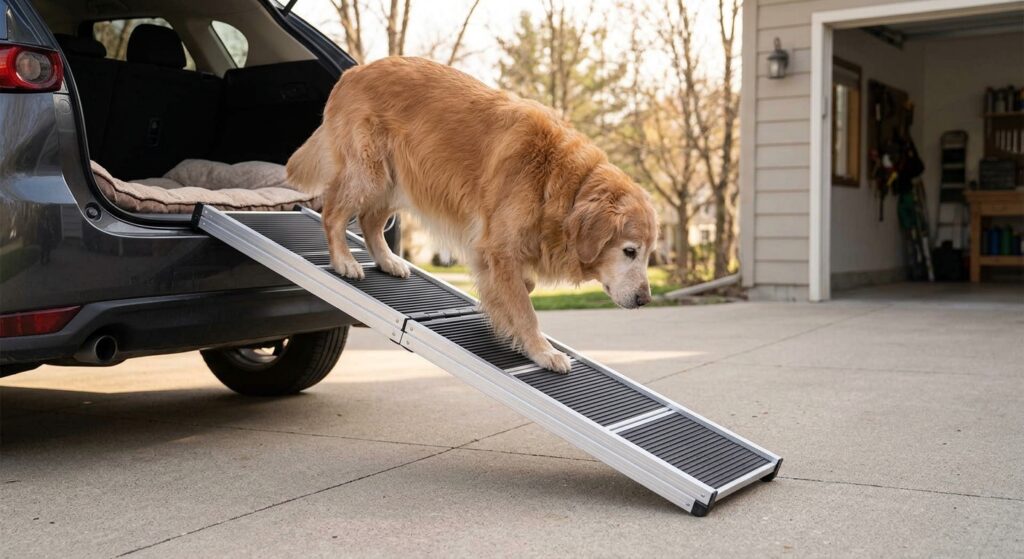
A ramp with poor traction can actually feel scarier to a hesitant dog than jumping, undermining the entire purpose of buying one.
Look for:
- A textured, non-slip surface rather than smooth plastic or bare metal.
- Raised side rails on models designed for dogs prone to veering off-center.
- A surface that stays grippy when wet, if you’ll be using it in varied weather.
Introducing Your Dog to a New Ramp
Many dogs need a short adjustment period before confidently using a ramp:
- Start on flat ground, letting your dog walk across the ramp laid flat before angling it against the car.
- Use treats and encouragement to build a positive association, rather than forcing or lifting your dog onto it.
- Increase the angle gradually over several short sessions rather than expecting full car height immediately.
- Stay patient — some dogs take just one try, while others need several days of short practice sessions.
Frequently Asked Questions
Are dog ramps better than portable steps for cars?
Ramps generally work better for dogs with significant joint pain or mobility issues, since steps still require a stepping motion that can be uncomfortable. Steps can work well for dogs with milder mobility concerns who prefer a shorter, more stable climb.
Can a dog ramp help with more than just car access?
Yes — many owners also use the same ramp for beds, sofas, or porch steps, making it a versatile purchase rather than a car-specific one.
How do I clean a dog ramp after outdoor use?
Most textured rubber or foam ramps can be wiped down with a damp cloth or hosed off, depending on the material — check the specific product’s care instructions, since some foam-core ramps shouldn’t be fully submerged in water.
A well-chosen ramp removes one of the more physically demanding parts of a senior dog’s day. Pair it with the home adaptations covered in our making your home safer for a senior dog guide for a complete approach to reducing joint strain around the house and on the go.