
Simple Ways to Make Your Home Safer for a Senior Dog
As mobility declines with age or arthritis, everyday parts of your home — stairs, slippery floors, tall furniture — can turn into real obstacles. Making your home safer for a senior dog with limited mobility doesn’t require a full renovation. A handful of practical changes can meaningfully reduce the risk of slips and falls while making daily life more comfortable.
Flooring: The Biggest Hidden Hazard
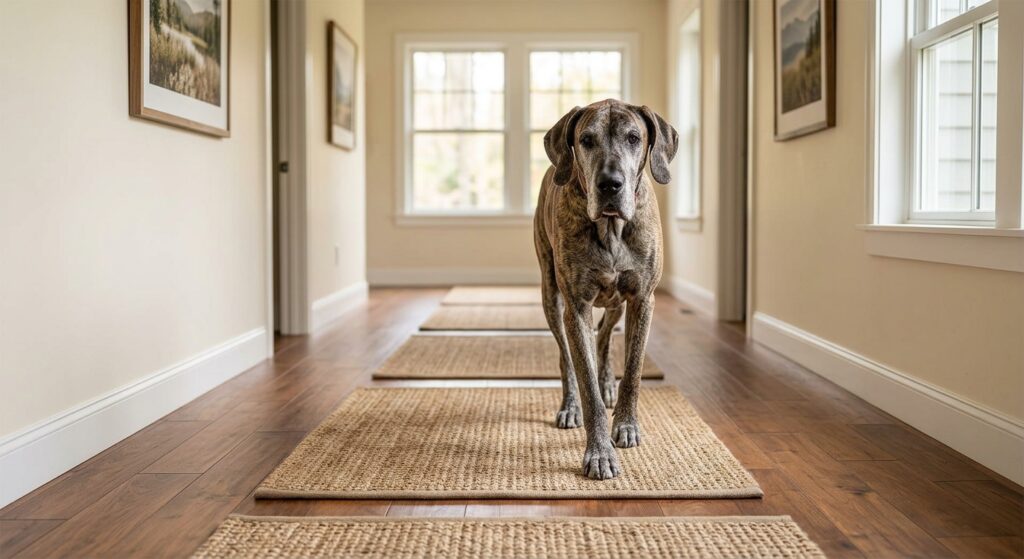
Hardwood, tile, and laminate floors offer very little grip for a dog whose muscles and joints already work harder than they used to. A single slip can cause real injury, and repeated slipping can worsen existing joint problems.
Practical fixes:
- Add non-slip rugs or runners along frequently used paths (hallways, room entrances, in front of food bowls).
- Use non-slip pads underneath any existing rugs, since a rug that slides is nearly as risky as bare floor.
- Consider paw grip wax or textured socks for dogs on entirely hard-floor homes, as a lower-cost alternative to replacing flooring.
Managing Access to Furniture and Beds
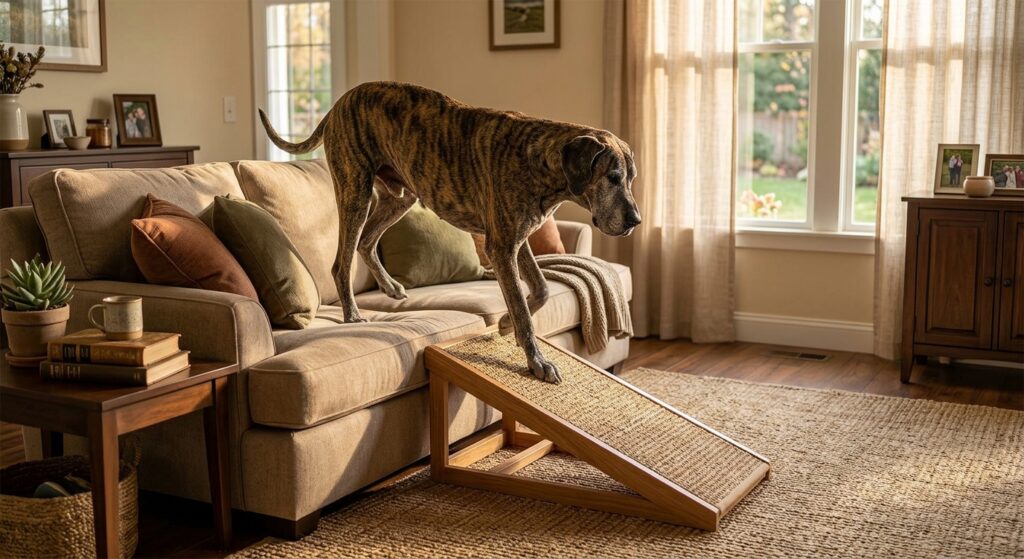
Jumping on and off furniture puts significant strain on aging joints, and a bad landing can cause injury. Rather than restricting your dog from favorite spots entirely, provide safer ways to reach them.
Practical fixes:
- Pet ramps or steps next to the sofa, bed, or car trunk.
- Position a dog’s own bed at floor level near the family’s usual gathering spot, so they don’t feel excluded while avoiding the jump.
- Block access to particularly high or risky furniture if a safe alternative isn’t practical.
Stairs and Level Changes
Stairs present one of the biggest risks for a dog with limited mobility, especially descending, which puts more strain on joints than climbing.
Practical fixes:
- Install a pet gate at the top and bottom of staircases if your dog struggles significantly.
- Add carpet runners on stair treads for better grip if stairs remain unavoidable.
- Carry small dogs up and down stairs when mobility is significantly reduced, rather than risking a fall.
Food, Water, and Rest Areas
Small adjustments to daily essentials reduce unnecessary strain throughout the day.
Practical fixes:
- Elevated food and water bowls reduce the need to bend the neck and front legs repeatedly.
- Place a supportive orthopedic bed in a warm, draft-free spot, since cold floors can worsen joint stiffness.
- Keep water bowls in multiple easily accessible locations if your dog has to travel far to reach one.
Outdoor Areas and Entry Points
- Add a ramp at outdoor steps or porch entries where possible.
- Ensure outdoor paths your dog regularly uses stay clear of loose gravel or uneven ground.
- Consider a shaded, easily reachable spot in the yard so your dog doesn’t need to walk far to rest outside.
The American Kennel Club recommends adapting the home environment as part of a broader approach to supporting mobility in aging dogs.
Building a Routine Around These Changes
Home adaptations work best alongside the broader care approach covered in our guide on arthritis in senior dogs — flooring and furniture access address the environment, while diet, exercise, and medical management address the underlying condition itself.
Frequently Asked Questions
Do I need to make all these changes at once?
No — start with the areas your dog uses most, typically the main living space and the path to their food and water, then expand as needed based on where you notice the most difficulty.
Are orthopedic beds really necessary, or is any soft bed fine?
Standard soft beds compress over time and lose their supportive structure, while orthopedic memory foam beds maintain support for joints specifically, which makes a real difference for dogs with arthritis or general joint stiffness.
My dog refuses to use a ramp. What should I do?
Introduce ramps gradually with treats and encouragement rather than expecting immediate use — some dogs need a few days to feel confident on a new surface, and a ramp with some texture for grip tends to build confidence faster than a smooth one.
Small, targeted changes around the house go a long way toward keeping a senior dog safe and comfortable as mobility declines. Pair these adjustments with our guide on arthritis in senior dogs to build a complete comfort and care plan.