Why Nail Trims Get Harder as Dogs Age
Learning how to trim a senior dog’s nails without stress matters more with age, not less. Arthritis can make holding certain positions uncomfortable, past negative experiences may have built up over the years, and simply standing still for a trim can feel harder on aging joints. This guide covers the tools, technique, and calming strategies that make nail trims easier for both of you.
Why Nail Length Matters More in Senior Dogs
Overgrown nails change how a dog’s foot contacts the ground, which can affect posture and gait — something that matters even more for a senior dog already managing joint issues. Long nails can also curl and grow into the paw pad in severe cases, causing pain and infection risk.
Choosing the Right Tool
Guillotine Clippers
Simple and precise for dogs used to nail trims, though they require the nail to fit through a small opening, which can feel restrictive for anxious dogs.
Scissor-Style Clippers
Generally easier to control at different angles, which can help with dogs who won’t hold still perfectly, though they take a bit more practice to use precisely.
Nail Grinders
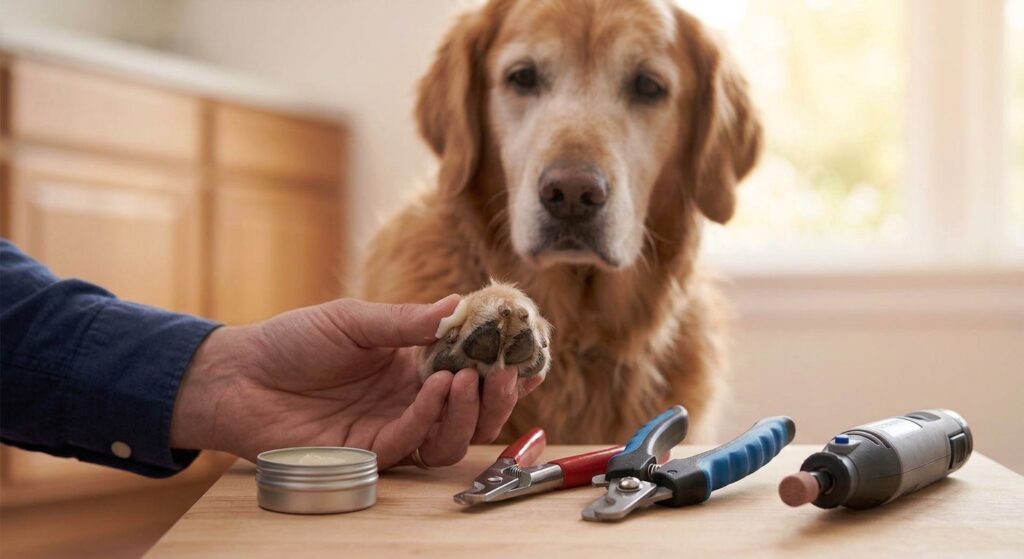
Grinders file the nail down gradually rather than cutting it in one motion, which reduces the risk of cutting the quick (the sensitive part of the nail) and can feel less startling than a clipping sound for noise-sensitive dogs. The trade-off is the vibration and grinding noise, which some dogs find just as unsettling.
Practical tip: if your dog already seems fearful of clippers from past experiences, a grinder introduced slowly and positively can sometimes reset that association more easily than continuing with clippers.
Step-by-Step Technique
- Choose a calm moment, ideally after a walk or gentle exercise, when your dog is naturally more relaxed.
- Support the paw gently but firmly, without gripping too tightly, especially if your dog has any joint sensitivity in the leg.
- Trim small amounts at a time, especially on dark nails where the quick isn’t visible — cutting conservatively reduces the risk of hitting it.
- Pause between paws if your dog shows signs of stress, rather than pushing through all four paws in one session.
- Reward calmly after each paw, not just at the very end, to build a positive association throughout the process rather than only at completion.
Calming Techniques for Anxious or Painful Dogs
- Desensitize gradually by handling paws regularly outside of trim sessions, so paw touching itself doesn’t automatically signal “something uncomfortable is about to happen.”
- Use high-value treats specifically reserved for nail trims, which helps build a stronger positive association than regular daily treats.
- Consider a calming aid, such as a pressure wrap or vet-approved calming supplement, for dogs with significant anxiety — discuss options with your vet before trying anything new.
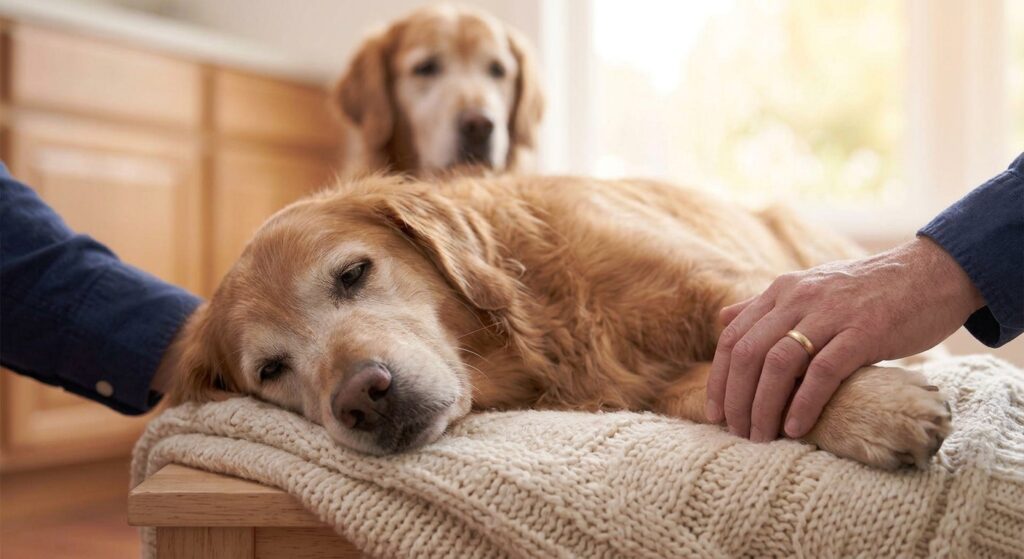
- Support painful joints during the process, such as trimming while your dog lies on a soft, cushioned surface rather than standing, which reduces strain on arthritic joints.
- Split it into multiple short sessions — trimming one or two nails per day, rather than all at once, works well for dogs who struggle to stay still for a longer session.
What to Do If You Cut the Quick
Accidentally cutting the quick causes brief pain and some bleeding, but it’s rarely a serious injury. Apply styptic powder (or in a pinch, cornstarch or flour) with gentle pressure to stop the bleeding, and reassure your dog calmly rather than reacting with alarm, since dogs often pick up on an owner’s stress response.
When to Consider Professional Help
If your senior dog has significant arthritis, severe anxiety around nail trims, or a history of aggressive reactions to handling, a groomer or vet technician experienced with senior dogs can often complete trims more safely and with less stress than repeated attempts at home. This is a reasonable and common choice, not a sign of failure on your part.
Frequently Asked Questions
How often should a senior dog’s nails be trimmed?
Most senior dogs need trims every 3-4 weeks, though this varies based on activity level — dogs that walk frequently on hard surfaces naturally wear their nails down faster and may need trims less often.
My senior dog won’t let me touch their paws at all. What should I do?
Start with very brief, low-pressure paw touching sessions paired with treats, completely separate from any attempt to trim, and build up gradually over days or weeks before reintroducing the clippers or grinder.
Is it safe to trim a senior dog’s nails if they have arthritis?
Yes, with adjustments — trim while your dog is in a comfortable, supported position rather than standing, work in shorter sessions, and avoid any position that requires holding a painful joint at an uncomfortable angle for too long.
A calmer nail trim routine makes a real difference in a senior dog’s day-to-day comfort and trust. For more ways to reduce daily physical strain, see our guide on making your home safer for a senior dog with limited mobility.