
Why Senior Dog Barking at Night Happens
Senior dog barking at night rarely happens without a reason, even when it seems to come out of nowhere. Aging brings changes — physical, cognitive, and sensory — that can genuinely disrupt a dog’s sleep and trigger nighttime barking that wasn’t there before. This guide walks through the most common causes and practical ways to help your dog (and you) get back to peaceful nights.
Canine Cognitive Dysfunction (Dog Dementia)
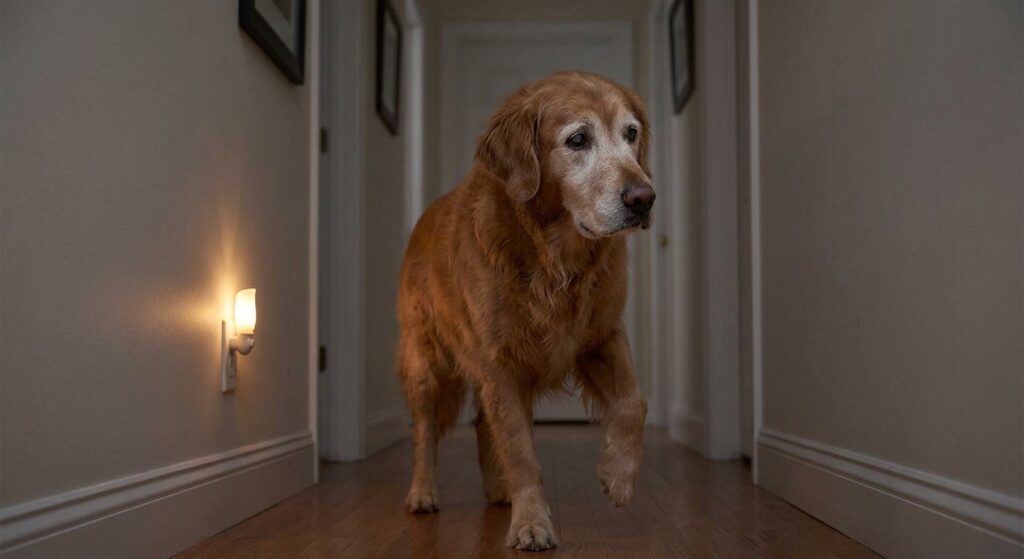
Often called “doggy dementia,” canine cognitive dysfunction is one of the most common causes of new nighttime barking in senior dogs. It can cause disorientation, confusion about familiar surroundings, and disrupted sleep-wake cycles — sometimes described as a dog being “up all night and sleeping all day.”
Other signs that often appear alongside night barking:
- Staring blankly at walls or into space
- Getting “stuck” in corners or behind furniture
- Pacing at night
- Reduced recognition of familiar people or routines
If these signs appear together, it’s worth discussing cognitive dysfunction specifically with your vet, since some medications and supplements can help manage symptoms.
Pain or Physical Discomfort
Arthritis and other sources of chronic pain often feel worse at night, partly due to lying still for extended periods and partly due to dropping temperatures. A dog that’s uncomfortable may bark simply because they can’t settle into a comfortable position, similar to how humans might toss and turn.
See our guide on arthritis in senior dogs if joint pain seems like a likely contributor.
Reduced Vision or Hearing
Sensory decline can make a dog more reactive to nighttime stimuli. A dog with reduced vision may startle more easily at shadows or movement, while a dog with hearing loss may bark in response to sounds they can no longer localize accurately, reacting out of uncertainty rather than genuine alarm.
Anxiety and Separation-Related Behavior
Some senior dogs develop new anxiety, including a heightened form of separation anxiety, even if they never showed signs of it earlier in life. Night hours, when the household is quiet and the dog is alone in their sleeping area, can intensify this.
Changes in Bladder Control
Increased nighttime urination needs — common with kidney disease, diabetes, or simply aging bladder control — can cause a dog to bark to signal they need to go outside, especially if this wasn’t a pattern before.
Creating a Calmer Nighttime Routine
Several practical changes can reduce nighttime barking, regardless of the underlying cause:
- Keep a consistent bedtime routine, including a final bathroom break right before settling down, to reduce nighttime bathroom-related waking.
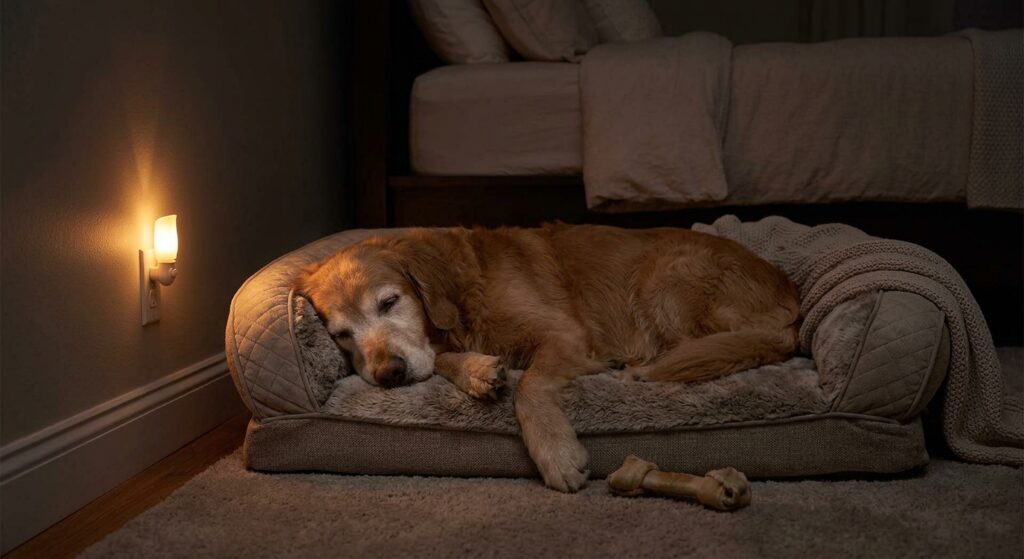
- Use a nightlight in your dog’s sleeping area, which can help dogs with declining vision or cognitive confusion feel more oriented.
- Provide a comfortable, supportive bed, especially for dogs with joint pain, positioned away from drafts.
- Limit water intake in the hour or two before bed if nighttime urination is a factor, though never restrict water during the day.
- Consider white noise or calming music to mask outside sounds that might trigger reactive barking.
- Avoid punishing the barking, since it’s typically driven by discomfort, confusion, or a genuine need, not defiance — addressing the cause works far better than trying to suppress the symptom.
The American Kennel Club notes that changes in behavior, including new nighttime restlessness, are common in aging dogs and worth discussing with a vet rather than dismissing as simple stubbornness.
When to See a Vet
Schedule a vet visit if nighttime barking:
- Started suddenly and doesn’t have an obvious environmental cause
- Comes with other signs of confusion, pain, or increased thirst/urination
- Significantly disrupts your dog’s (or your household’s) sleep on an ongoing basis
A vet can help distinguish between cognitive decline, pain, and other medical causes, which often require different management approaches.
Frequently Asked Questions
Is nighttime barking always a sign of dementia in senior dogs?
No — while cognitive dysfunction is a common cause, pain, anxiety, sensory decline, and bladder changes can all cause similar nighttime barking. A vet visit helps narrow down the actual cause rather than assuming it’s dementia by default.
Can medication help with senior dog barking at night?
In some cases, yes — depending on the underlying cause, vets may prescribe medication for cognitive dysfunction, pain relief, or anxiety, which can meaningfully reduce nighttime barking when addressing the root issue.
Should I ignore the barking to avoid reinforcing it?
Generally not recommended for senior dogs, since the barking usually stems from a genuine need or discomfort rather than attention-seeking behavior. Ignoring it may leave an underlying issue, like pain or a full bladder, unaddressed.
Nighttime barking in a senior dog almost always has an identifiable cause, even when it takes some detective work to find it. If joint pain seems like a factor, pair this guide with our article on arthritis in senior dogs to address both the daytime and nighttime symptoms together.