Why Mental Stimulation Matters as Dogs Age
Learning how to mentally stimulate a senior dog becomes more important, not less, as physical activity naturally decreases with age. Mental engagement helps maintain cognitive function, reduces boredom-related behaviors, and can even help manage anxiety and restlessness that sometimes develop later in life. This guide covers low-impact ways to keep a senior dog’s mind active without overtaxing their body.
Why Physical Decline Doesn’t Mean Mental Decline
A dog with arthritis or reduced stamina can still have a sharp, engaged mind — the key is finding activities that provide mental challenge without requiring the physical intensity of activities suited to a younger dog. In fact, increasing mental stimulation can partly compensate for reduced physical exercise, helping prevent the boredom and restlessness that sometimes follow a more sedentary lifestyle.
Puzzle Toys and Food-Dispensing Games
Puzzle feeders and treat-dispensing toys require a dog to work for their food, engaging problem-solving skills with minimal physical strain.
Tips for senior dogs specifically:
- Choose puzzles with larger pieces or gentler mechanisms if arthritis affects paw dexterity.
- Start with simpler puzzles and increase difficulty gradually, since frustration can undermine the goal of positive engagement.
- Consider slow feeders as a simpler entry point if standard puzzle toys feel too complex initially.
Scent Work and Sniffing Games
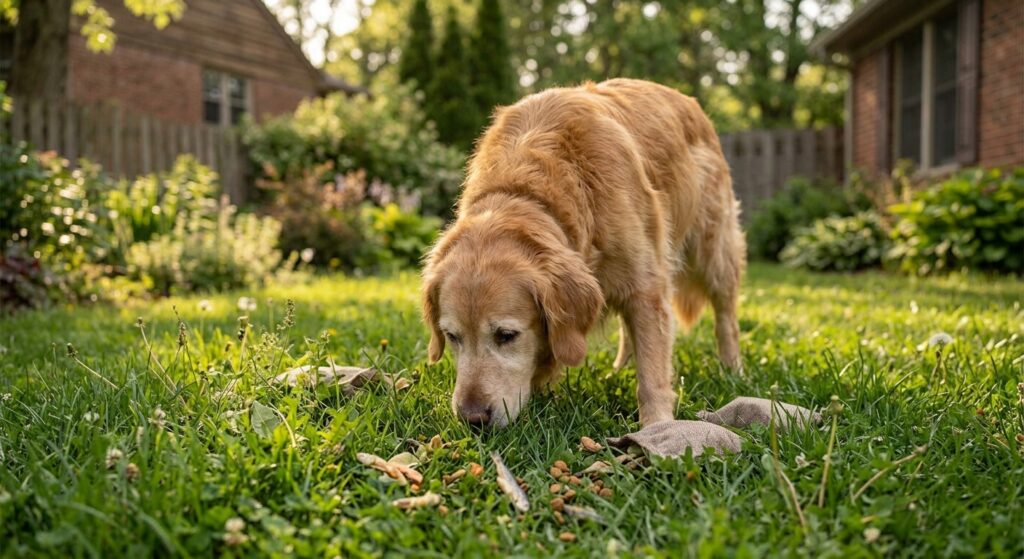
Scent-based activities tap into one of a dog’s strongest natural senses and require almost no physical exertion, making them ideal for dogs with limited mobility.
Simple options:
- Scatter treats in grass or a small designated area and let your dog sniff them out.
- Hide treats under a few cups or boxes and encourage your dog to find the right one.
- Try a “find it” game, hiding a favorite toy in another room for your dog to locate.
Scent work can be genuinely tiring for dogs in a good way — many dogs settle into a calmer, more relaxed state after a sniffing session, similar to how physical exercise affects them.
Low-Impact Training and Trick Practice
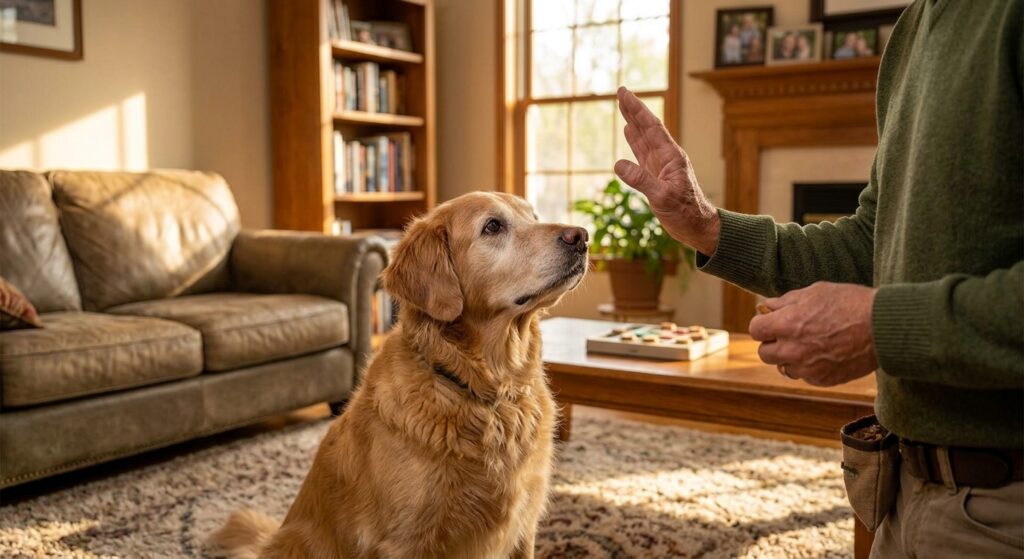
Teaching new, simple tricks or reinforcing old ones provides mental engagement through learning, without requiring jumping, running, or other high-impact movement.
Senior-friendly options:
- Nose-targeting a hand or object
- “Speak” or “quiet” cues
- Simple paw shakes or high-fives, adjusted for comfort if joint pain is present
Keep training sessions short — 5-10 minutes — since mental effort itself can be tiring for a senior dog, even without physical exertion.
Social Enrichment
Continued social interaction, whether with familiar people, calm dog friends, or simply supervised time watching activity in a park, provides mental stimulation through observation and engagement, even for dogs who can no longer participate as actively as before.
Rotating Toys and Novelty
Regularly rotating which toys are available, rather than leaving the same ones out constantly, helps maintain a dog’s interest, since novelty itself provides mental engagement. Introducing a “new” toy that’s actually been put away for a few weeks often generates renewed enthusiasm.
The American Kennel Club notes that mental enrichment plays an important role in supporting cognitive health and overall wellbeing in aging dogs.
Signs Your Senior Dog Needs More Mental Stimulation
- Increased destructive behavior around the house
- Excessive attention-seeking or restlessness
- General disengagement or apparent boredom
- Increased nighttime activity or restlessness (see our guide on senior dog barking at night if this applies)
Frequently Asked Questions
How much mental stimulation does a senior dog actually need?
There’s no fixed number, but even 10-15 minutes of focused mental engagement daily — through a puzzle toy, scent game, or short training session — can make a meaningful difference for most senior dogs.
Can mental stimulation help with cognitive decline?
While it can’t reverse cognitive dysfunction, regular mental engagement is generally considered supportive for cognitive health, and many vets recommend it as part of a broader management approach alongside diet and, in some cases, medication.
My senior dog seems uninterested in toys they used to love. What should I do?
Try rotating toys after a break, switching to a different type of enrichment (scent work instead of puzzle toys, for example), or checking whether reduced interest connects to pain, vision changes, or other health factors worth discussing with your vet.
Keeping a senior dog’s mind engaged supports their overall quality of life, especially as physical activity naturally decreases. Pair mental stimulation with the adapted physical activity covered in our exercise for senior dogs guide for a well-rounded approach to their wellbeing.