
Why Separation Anxiety in Senior Dogs Can Appear Later in Life
Separation anxiety in senior dogs sometimes shows up for the first time in dogs who were completely comfortable being left alone for years. This shift can feel confusing for owners, but it often connects to real changes happening with age — cognitive decline, sensory loss, or increased physical vulnerability that makes a dog feel less secure without their owner nearby. This guide covers the signs, likely causes, and treatment approaches that actually help.
Signs of Separation Anxiety in Senior Dogs
- Excessive vocalization (barking, whining, howling) starting shortly after you leave
- Destructive behavior focused around exit points, like doors or windows
- Pacing or restlessness before and during your absence
- Accidents in the house, even in a dog who’s otherwise fully house-trained
- Excessive drooling or panting unrelated to heat or exercise
- Following you from room to room more intensely than before, sometimes called “clinginess” or “shadowing”
Not every dog shows dramatic signs — some senior dogs express anxiety more subtly, through quiet pacing or a refusal to settle, rather than obvious destruction or vocalization.
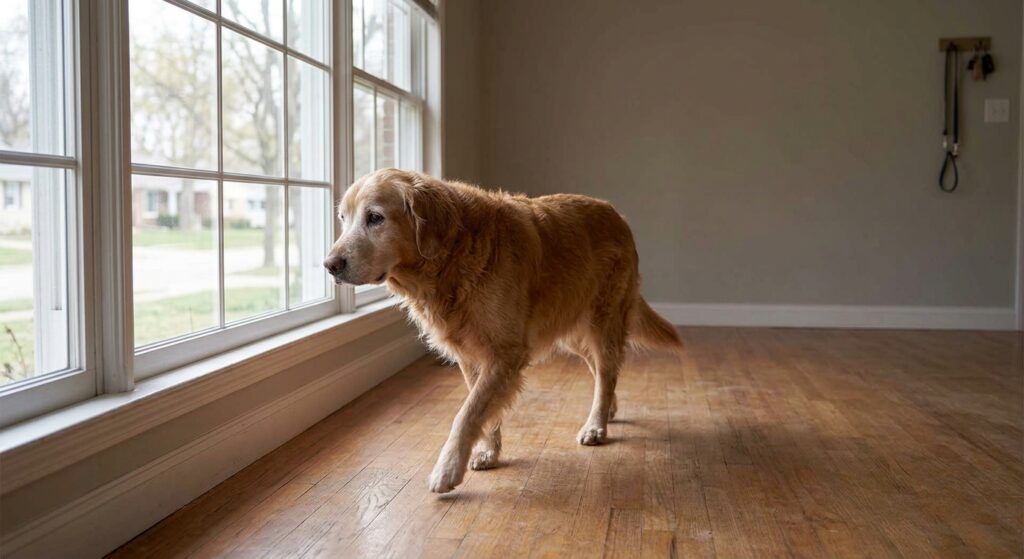
Why This Develops in Senior Dogs Specifically
Cognitive Decline
Canine cognitive dysfunction can cause confusion and disorientation, which often intensifies when a dog’s most familiar, reassuring presence (their owner) isn’t there to provide a sense of stability.
Vision or Hearing Loss
A dog with declining senses may rely more heavily on their owner’s presence for a sense of security, since they can no longer detect and interpret their environment as confidently as before.
Physical Vulnerability
Dogs with arthritis, reduced mobility, or other health conditions may feel more anxious about being unable to move away from a perceived threat or discomfort without help nearby.
A Genuinely New Medical Issue
Sometimes what looks like separation anxiety is actually a new medical problem — for example, a dog with an untreated painful condition may become anxious in general, with that anxiety becoming most visible during alone time.
Gradual Desensitization to Departures
One of the most effective long-term treatments involves gradually reducing the anxiety associated with departure cues:
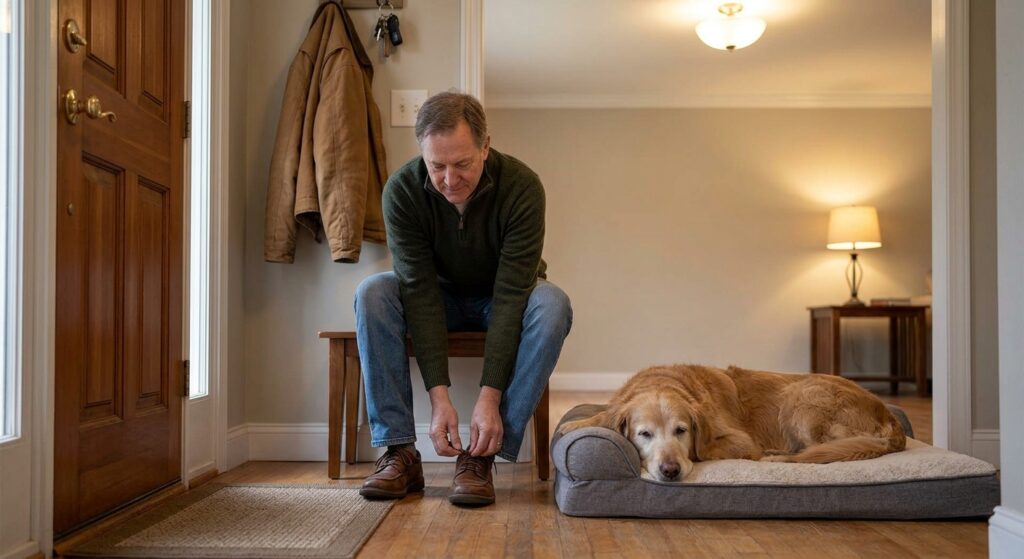
- Practice “fake” departure cues — picking up keys, putting on shoes — without actually leaving, so these cues stop reliably predicting an absence.
- Start with very short absences, even just stepping outside for 30 seconds, and gradually increase duration only as your dog stays calm.
- Avoid dramatic greetings or goodbyes, since heightened emotion on your end can reinforce your dog’s own anxiety around departures and returns.
- Pair departures with a positive association, such as a long-lasting treat or puzzle toy given right as you leave, so alone time starts to predict something good rather than only absence.
Additional Management Strategies
- Increase mental and physical stimulation during the day, since a more settled, appropriately tired dog often copes better with alone time.
- Consider background noise, like a TV or radio left on, which can make the home feel less silent and isolating.
- Create a comfortable, familiar space with your dog’s bed and a worn piece of your clothing nearby, which carries a reassuring, familiar scent.
- Rule out physical discomfort as a contributing factor, particularly arthritis, since pain can lower a dog’s overall tolerance for stress.
The ASPCA notes that separation anxiety treatment typically combines behavioral techniques with environmental management, and in more severe cases, veterinary-guided medication.
When Medication May Help
For moderate to severe cases, vets sometimes prescribe anti-anxiety medication to help a dog become receptive enough to behavioral techniques in the first place — severe anxiety can make a dog too distressed to benefit from desensitization alone. This is a legitimate treatment path, not a last resort to feel guilty about.
When to See a Vet or Behaviorist
Reach out for professional support if:
- Anxiety symptoms appeared suddenly and intensely
- Your dog shows signs of self-injury (excessive licking, chewing at themselves, or attempting to escape confined spaces)
- Home strategies haven’t produced improvement after several weeks of consistent effort
- You suspect an underlying medical cause contributing to the anxiety
Frequently Asked Questions
Can separation anxiety in senior dogs be fully cured?
Many dogs see significant improvement with consistent treatment, though some level of management may remain ongoing, especially if an underlying medical or cognitive condition contributes to the anxiety.
Will getting a second dog help with my senior dog’s separation anxiety?
Not usually — true separation anxiety is about the absence of a specific person, not just being alone, so another dog’s company often doesn’t resolve it and can sometimes create additional challenges instead.
Is it okay to use a crate for a senior dog with separation anxiety?
It depends on the individual dog — some feel safer in a familiar, den-like space, while others associate crates with distress and become more anxious. If your dog has never been comfortable in a crate, introducing one now during an anxious period usually isn’t the right time to start.
Separation anxiety in senior dogs often responds well to patient, consistent treatment, especially when combined with addressing any physical or cognitive factors involved. If pain seems like a contributing piece, our guide on arthritis in senior dogs covers management strategies that may help on both fronts.