Exercise That Doesn’t Hurt to Do
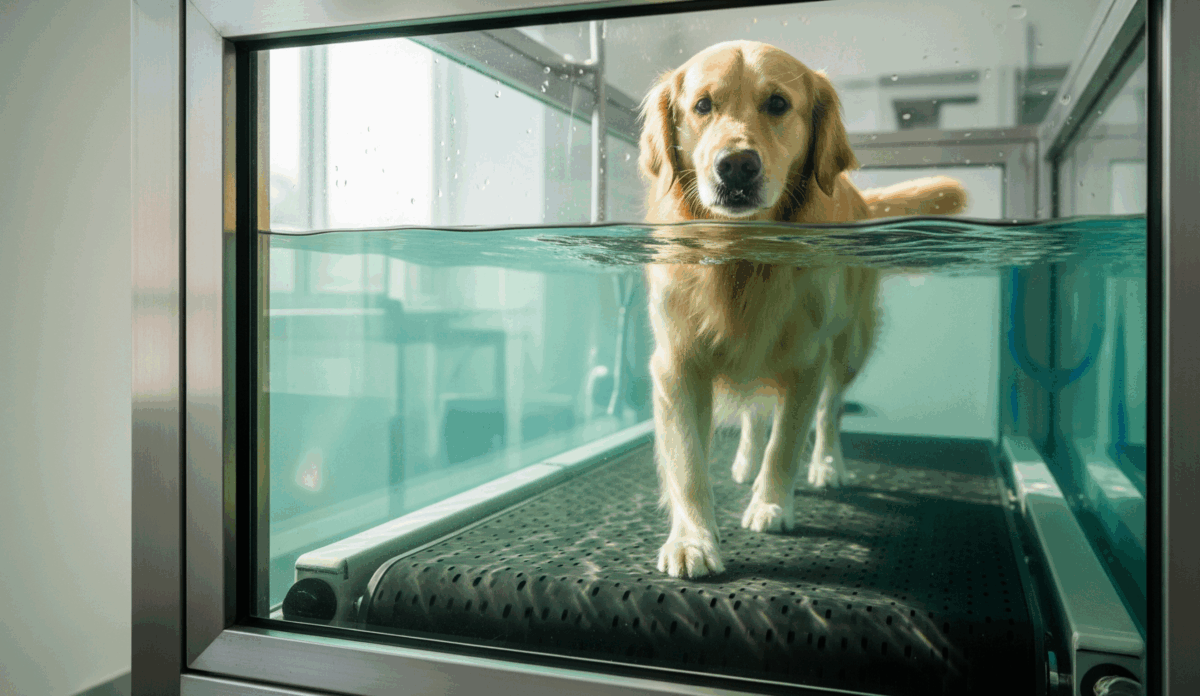
Arthritis creates a frustrating cycle: joints need movement to stay healthy, but movement often causes pain. Hydrotherapy for dogs with arthritis solves this problem by using water’s buoyancy to support a dog’s weight during exercise. This guide covers how sessions work, what benefits to expect, and how to know if it’s a good fit for your dog.
How Water Takes Pressure Off Painful Joints
Water supports a large portion of a dog’s body weight, reducing the load on hips, knees, and spine during movement. This lets a dog with arthritis exercise the muscles around a joint without the impact that walking or running on land creates. Over time, this can build strength that actually supports and stabilizes an arthritic joint.
Types of Hydrotherapy
Underwater Treadmill
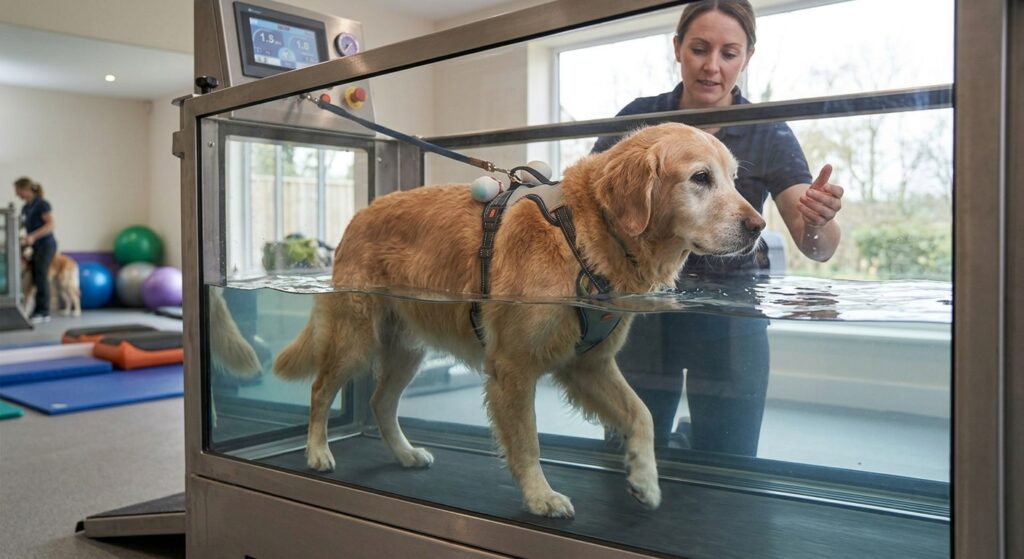
A dog walks on a treadmill inside a water-filled tank, with water level adjusted to control how much weight support the dog gets. This is one of the most common and controllable forms of canine hydrotherapy.
Swimming Pools
Purpose-built therapy pools allow full-body, non-weight-bearing exercise. A trained handler often stays in the water with the dog, especially for dogs new to swimming or dealing with significant mobility limitations.
Underwater Treadmill vs Therapy Pool
| Feature | Underwater treadmill | Therapy pool |
|---|---|---|
| How it works | Your dog walks in a water-filled tank | Your dog swims or floats with full support |
| Weight support | Adjusted by changing the water level | Almost full, since your dog is not bearing weight |
| Handler | Therapist beside the tank | Often in the water with your dog |
| Good to know | Gives the therapist good control of the pace | A flotation aid often helps in early sessions |
What Happens During a Typical Session
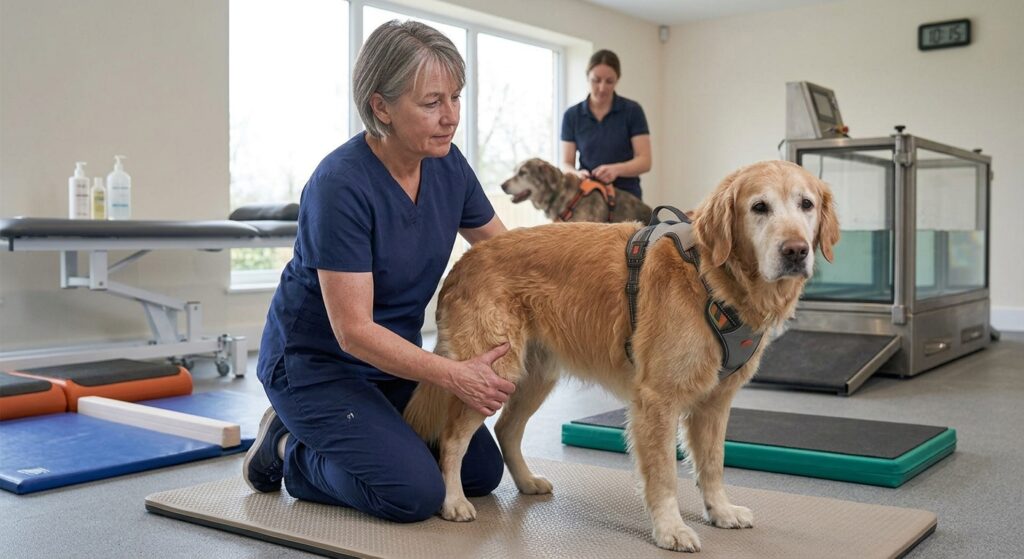
A session usually starts with a brief assessment of your dog’s current mobility and comfort level. The therapist then guides your dog into the water, often with a supportive harness or flotation aid for the first sessions. Sessions typically last 15 to 30 minutes, with the pace and duration adjusted to your dog’s fitness and pain levels rather than a fixed routine for every dog.
How to Prepare for the First Session
- Ask your vet to confirm hydrotherapy is right for your dog
- Choose a therapist trained in canine rehabilitation
- Bring a towel and a list of your dog’s medications
- Ask the facility whether your dog should eat before the session
- Wear clothes that can get wet
- Plan quiet time at home afterward
Benefits Beyond Pain Relief
- Improved muscle strength and mass, especially in the hind legs
- Better range of motion in stiff joints
- Improved cardiovascular fitness without joint strain
- Mental stimulation from a new environment and activity
- Often a helpful addition to recovery after orthopedic surgery, not just for chronic arthritis
Is Hydrotherapy Right for Your Dog?
Most dogs with arthritis are good candidates, but a few situations call for extra caution. Dogs with open wounds, certain heart conditions, or severe anxiety around water may need a modified approach or an alternative form of exercise. Your vet can help assess whether hydrotherapy fits into your dog’s overall treatment plan alongside medication or other therapies.
Questions to Ask the Facility
- Are your therapists trained in canine rehabilitation?
- Do you need a referral from my vet?
- How long is each session, and how many do you recommend?
- Can I stay and watch?
- What does a package cost?
- How warm is the water?
- How do you help anxious dogs?
What to Expect Cost- and Time-Wise
Hydrotherapy typically requires multiple sessions to see meaningful improvement, often once or twice a week for several weeks initially, tapering to a maintenance schedule afterward. Costs vary widely by location and facility, so ask for a clear breakdown of per-session pricing and any recommended package before committing to a full program.
Many owners say the biggest changes show up at home, not in the pool. A dog gets up from bed more easily, or walks a little farther. A simple log helps you see these changes and keeps track of costs.
Hydrotherapy Session Log
| Session | Date | Length | Cost | Mobility at home (better, same, worse) | Notes |
|---|---|---|---|---|---|
| Session 1 | |||||
| Session 2 | |||||
| Session 3 | |||||
| Session 4 | |||||
| Session 5 | |||||
| Session 6 | |||||
| Session 7 | |||||
| Session 8 |
Share this log with your vet and your therapist.
Frequently Asked Questions
How soon will I see improvement from hydrotherapy?
Some dogs show improved comfort and mobility within a few sessions, though meaningful strength gains usually take several weeks of consistent sessions.
Can hydrotherapy replace pain medication for arthritis?
Not usually. It works best as part of a combined approach alongside medication, weight management, and joint supplements, rather than as a standalone replacement.
Do dogs need to know how to swim already?
No. Many hydrotherapy facilities specialize in introducing nervous or inexperienced dogs to water gradually and safely. The American College of Veterinary Sports Medicine and Rehabilitation offers resources on finding qualified canine rehabilitation providers.
Share this log with your vet and your therapist.
This article is for informational purposes only and is not a substitute for professional veterinary advice. Always consult your vet about your dog’s specific health needs.
If your dog is managing arthritis alongside hydrotherapy, our guide on arthritis in senior dogs covers the full range of treatment options worth discussing with your vet.