A Simple Idea With Mixed Evidence
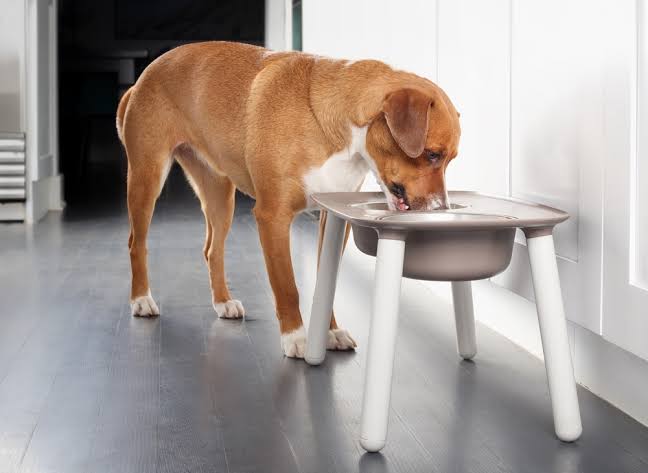
Raised feeding stands are a common recommendation for older dogs, but the research behind them is more mixed than the marketing suggests. Elevated dog bowls for senior dogs may genuinely help some dogs while offering little benefit to others. This guide covers what’s actually known and how to decide if they’re worth trying for your dog.
The Theory Behind Elevated Bowls
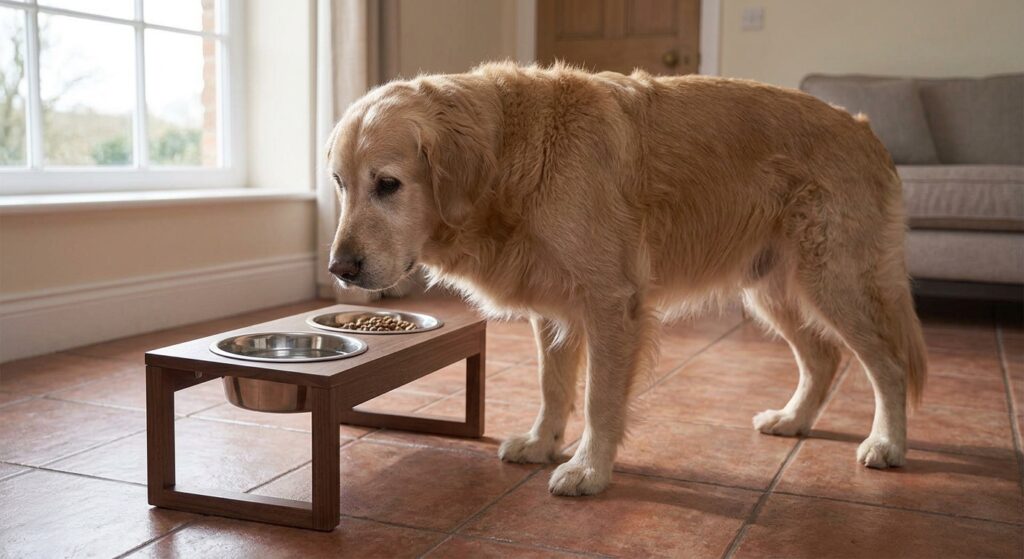
The idea is that raising food and water off the ground reduces how far a dog has to bend their neck and lower their body, which could ease strain on the neck, shoulders, and joints during every meal. For a dog eating multiple times a day, this repeated position matters more than it might for a single occasional stretch.
What the Evidence Actually Shows
Interestingly, some studies in large breed dogs found elevated bowls associated with an increased risk of a serious stomach condition called bloat, which led to more caution around blanket recommendations for all dogs. That said, this research focused on large, deep-chested breeds prone to bloat, and the picture looks different for dogs with existing joint or mobility issues, where the benefit may outweigh the risk.
Who Tends to Benefit Most
- Dogs with confirmed arthritis in the neck, shoulders, or front legs
- Dogs recovering from spinal or orthopedic surgery
- Dogs with megaesophagus, where an elevated position during eating can genuinely help food move correctly
- Smaller or lower-set breeds who have to bend unusually far down to reach a bowl on the floor
Who Should Be More Cautious
Large, deep-chested breeds with a known bloat risk, like Great Danes or Standard Poodles, may want to discuss elevated bowls with a vet first, given the studies linking raised feeding to increased bloat risk in this specific group.
Quick Guide: Is an Elevated Bowl Right for Your Dog?
This table is a rough guide. Your vet knows your dog best.
| Your dog’s situation | Elevated bowl | What to do |
|---|---|---|
| Arthritis in the neck, shoulders, or front legs | May help | Ask your vet about the right height |
| Recovering from spinal or orthopedic surgery | May help | Follow your vet’s feeding instructions |
| Megaesophagus | Can help food move correctly | Feed exactly as your vet advises |
| A small or low-set breed that bends far down | May help | Try it and watch how your dog eats |
| A large, deep-chested breed at risk of bloat | Use caution | Talk to your vet first |
Questions to Ask Your Vet Before Switching
- Is my dog’s breed or build at risk of bloat?
- Would an elevated bowl help my dog’s neck or joint problem?
- What height do you suggest?
- Which signs should I watch for after the change?
- Are there other feeding options that suit my dog better?
Choosing the Right Height
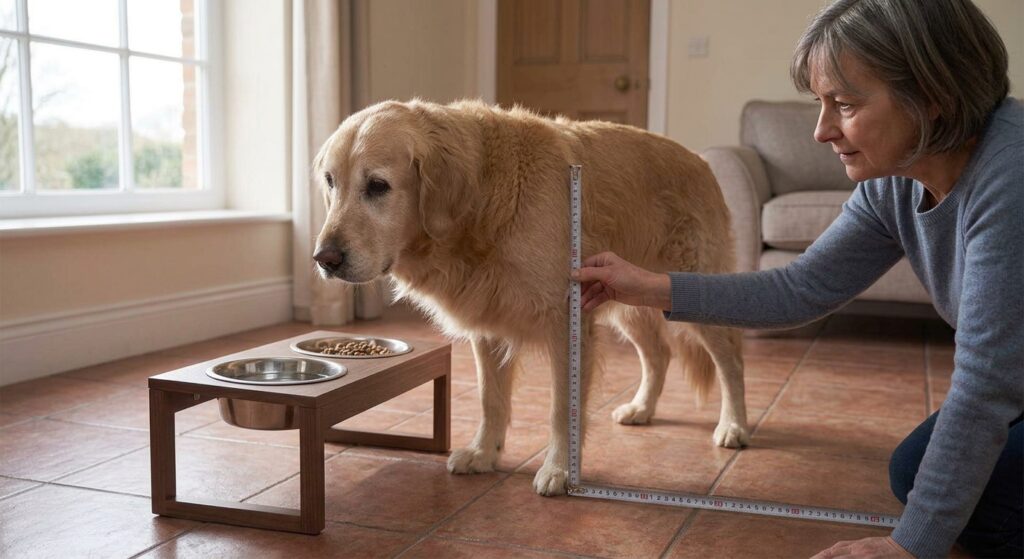
The general guideline is that the bowl’s rim should sit roughly at or slightly below the height of your dog’s shoulder or chest, allowing a natural, comfortable head position rather than reaching up or down significantly. Adjustable stands offer flexibility if your dog’s needs change over time or if you’re unsure of the ideal height initially.
Measure for the Right Height
Ask your dog to stand on a flat floor, then measure.
| What to measure | Your number | Why it matters |
|---|---|---|
| Floor to the shoulder | The bowl rim should sit at or slightly below this height | |
| Floor to the chest | A second reference point for lower-set breeds | |
| Height of the stand’s rim | Compare it with your dog’s numbers |
Watch your dog’s head while eating. It should stay in a natural, level position, without stretching up or down.
Many owners say the first sign of success is small. A dog finishes a meal without pausing, or stops shifting weight while eating. A short log shows whether the stand is really helping.
2-Week Trial Log
| Day | Eating pace (normal, slow, fast) | Posture (comfortable, shifting, stretching) | Coughing, gagging, or vomiting? | Notes |
|---|---|---|---|---|
| Day 1 | ||||
| Day 3 | ||||
| Day 5 | ||||
| Day 7 | ||||
| Day 10 | ||||
| Day 12 | ||||
| Day 14 |
If your dog has a swollen belly, retches without bringing anything up, or seems very restless, go to an emergency vet immediately. These can be signs of bloat.
Material and Stability Considerations
A stable, non-tipping base matters, especially for larger or more enthusiastic eaters who might bump the stand. Stainless steel bowls remain a good hygienic choice regardless of whether they’re elevated, since they resist bacteria buildup better than plastic.
Feeding Stand Checklist
- A stable base that does not tip
- Adjustable height, if your dog’s needs may change
- Stainless steel bowls that fit the stand snugly
- Non-slip feet on the stand
- Bowls washed daily and the stand wiped weekly
Frequently Asked Questions
Should every senior dog use an elevated bowl?
No. It’s most useful for dogs with a specific joint or mobility issue that makes bending down uncomfortable, rather than something every senior dog automatically needs.
Is the bloat risk something all owners should worry about?
The increased risk shown in research applies mainly to large, deep-chested breeds already prone to bloat. Talk to your vet if your dog falls into this category before switching to an elevated bowl. The American Kennel Club has more information on bloat risk factors in dogs.
Can I try an elevated bowl and switch back if it doesn’t help?
Yes, this is a reasonable approach for most dogs without bloat risk factors. Watch how your dog eats and moves for a couple of weeks to judge whether it’s making a real difference.
What are the signs of bloat?
A swollen or hard belly, retching without bringing anything up, drooling, restlessness, and pale gums. Bloat is an emergency. Go to an emergency vet immediately.
Should a dog with megaesophagus eat from an elevated bowl?
Only under your vet’s guidance. Vets often recommend an upright position for these dogs, but the exact setup depends on your dog. Ask your vet for a feeding plan.
Does the water bowl need to be raised too?
Not always. Many stands hold both bowls, but ask your vet if your dog is at risk of bloat. Keep track of how much your dog drinks. Our guide on how much water a senior dog should drink daily explains how.
Can a slow feeder replace an elevated bowl?
They solve different problems. A slow feeder slows down eating, while a raised bowl changes your dog’s posture. Ask your vet which one suits your dog’s needs.
This article is for informational purposes only and is not a substitute for professional veterinary advice. Always consult your vet about your dog’s specific health needs.
If joint discomfort is the underlying concern, our guide on arthritis in senior dogs covers the fuller range of symptoms and treatment options worth discussing with your vet.