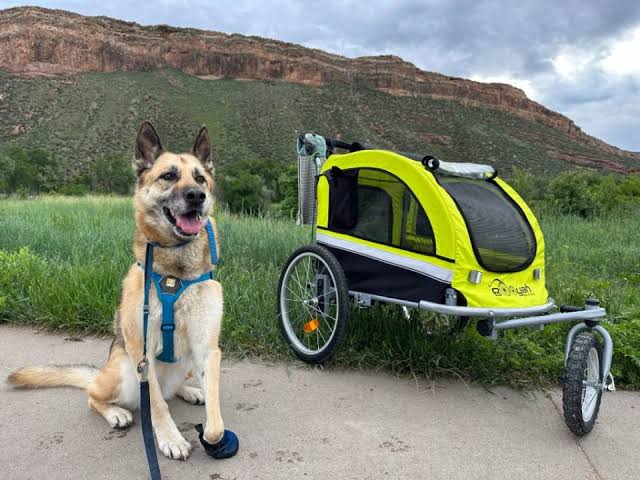
Fresh Air Doesn’t Have to End When Walking Does
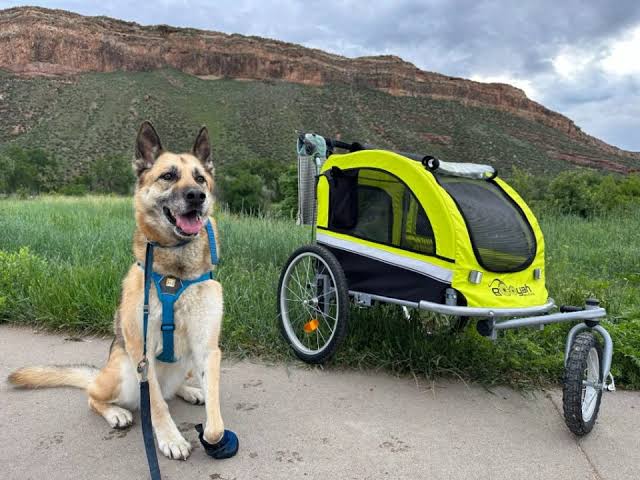
Losing the ability to walk comfortably doesn’t mean a dog has to lose time outside entirely. The best dog strollers let dogs with severe mobility loss, chronic pain, or advanced age still enjoy fresh air, new smells, and the outside world. This guide covers what actually matters when choosing one.
Who Benefits Most From a Dog Stroller
- Dogs with advanced arthritis or degenerative joint disease
- Dogs recovering from surgery who need to avoid walking
- Dogs with conditions like degenerative myelopathy affecting hind-leg function
- Dogs who tire quickly but still enjoy and need mental stimulation from outings
- Multi-dog households where one senior dog can no longer keep pace with others
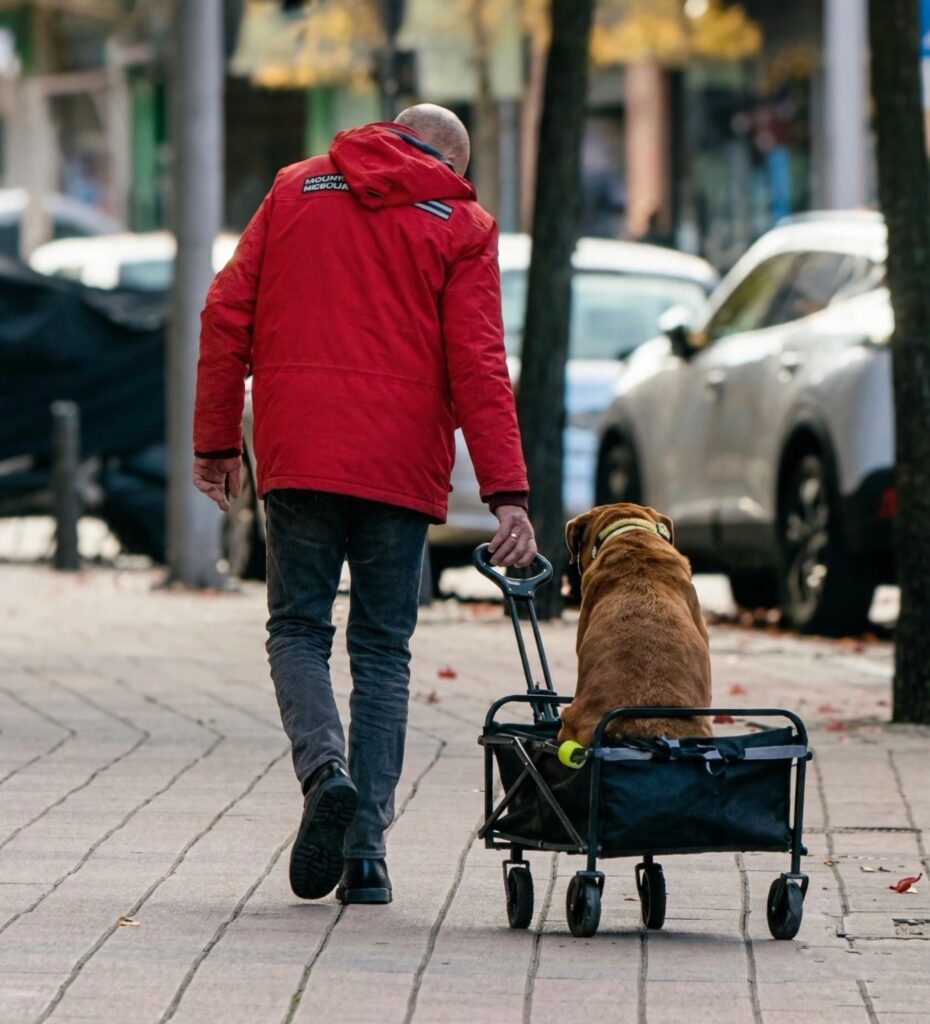
What to Look for in a Good Stroller
Sturdy, Stable Frame
A wobbly frame makes for an uncomfortable, potentially unsafe ride. Look for a solid frame rated well above your dog’s actual weight, since stability matters more than a stroller simply meeting the minimum weight requirement.
Proper Ventilation
Mesh sides and a breathable canopy keep air flowing, which matters a lot in warm weather when a stroller with poor airflow can get uncomfortably hot quickly.
Easy Entry and Exit
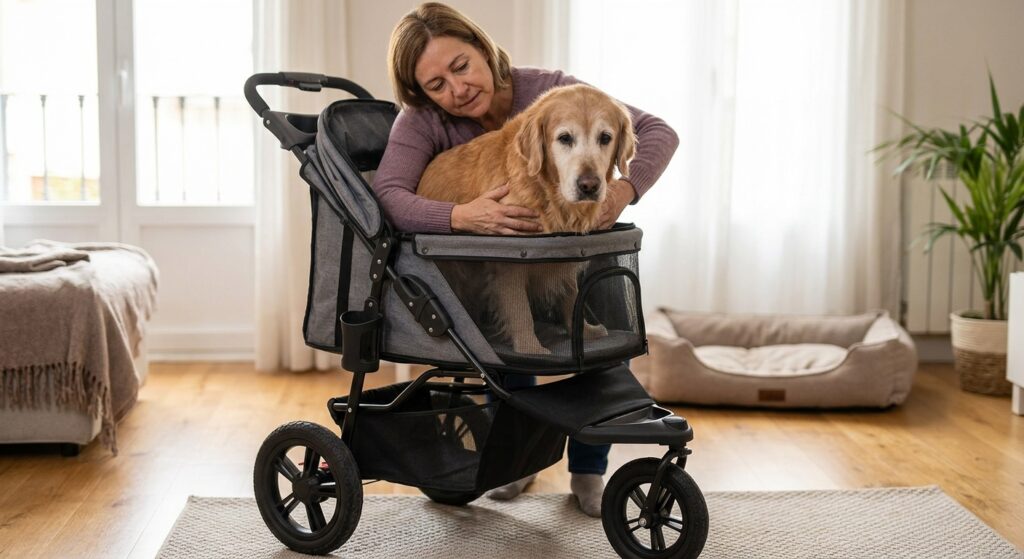
Look for a front or side zipper opening low enough that your dog doesn’t need to jump or climb, since the entire point is avoiding strain on joints.
Many owners say lifting is the hardest part of a stroller outing. A support harness with a handle makes loading and unloading easier on both of you. Our guide to the best mobility harnesses for senior dogs compares your options.
Comfortable, Supportive Bedding
A well-padded base supports joints during the ride, and a removable, washable liner makes cleanup far easier for dogs with occasional accidents.
Smooth-Rolling Wheels
Larger wheels handle uneven sidewalks and curbs more smoothly than small ones, which matters for keeping the ride comfortable rather than jarring.
Stroller Buying Checklist
- A solid frame rated well above your dog’s weight
- Mesh sides and a breathable canopy
- A low front or side opening
- A padded base with a washable liner
- Larger wheels for uneven ground
- A brake that locks the stroller in place
- A frame that folds easily for your car
Size and Weight Capacity
Measure your dog’s length, height, and weight before buying, and choose a stroller with some extra room rather than one that fits exactly. A snug fit might work initially but become uncomfortable if your dog needs to shift positions during a longer outing.
Measure Before You Buy
| What to measure | Your number | Why it matters |
|---|---|---|
| Length, from the chest to the base of the tail | Decides how much room your dog needs to lie down | |
| Height, from the floor to the top of the head while sitting | Helps you check the canopy height | |
| Your dog’s weight | Check it against the weight limit, with room to spare | |
| Height of the stroller’s entry opening | A low opening saves your dog from jumping |
Helping Your Dog Adjust to the Stroller
Introduce the stroller gradually rather than expecting immediate comfort. Let your dog investigate it at home first, then try short trips around the yard or block before attempting a longer outing. Treats and calm praise during early sessions help build a positive association with what might otherwise feel like an unfamiliar, slightly enclosed space.
Many owners say the first rides are the hardest. Dogs often sit stiffly, then relax after a few outings. A short log shows how your dog is settling in.
7-Day Stroller Adjustment Log
| Day | Time in the stroller | Mood (calm, restless, relaxed) | Treats given | Notes |
|---|---|---|---|---|
| Day 1 | ||||
| Day 2 | ||||
| Day 3 | ||||
| Day 4 | ||||
| Day 5 | ||||
| Day 6 | ||||
| Day 7 |
If your dog stays distressed after several days, ask your vet or a trainer for help.
Strollers vs. Wheelchairs vs. Wagons
A stroller works well for dogs who can’t walk much at all and need to be fully supported during outings. A wheelchair suits dogs with some remaining mobility who can still move their front legs. A wagon offers a lower-cost alternative for dogs who mainly need occasional rest breaks during a longer walk rather than full-time support.
Strollers, Wheelchairs, and Wagons Compared
| Option | Best for | Level of support | Keep in mind |
|---|---|---|---|
| Stroller | Dogs that cannot walk much at all | Full support | Needs space to store |
| Wheelchair | Dogs with some mobility and working front legs | Supports the back end | Needs a proper fitting |
| Wagon | Dogs that need rest breaks on longer walks | Low | Offers less support |
Frequently Asked Questions
Is using a stroller a sign I’ve given up on my dog’s mobility?
Not at all. A stroller simply lets your dog keep enjoying outings safely, without pain or excessive strain, alongside any other mobility support or treatment your vet recommends.
How do I know if my dog would enjoy stroller rides?
Most dogs adapt well once introduced gradually, especially since the reward, time outside and new sights and smells, remains the same as walking. The American Animal Hospital Association has more on supporting quality of life in dogs with reduced mobility.
Can a stroller replace exercise entirely?
Not for dogs who can still move safely with support. A stroller works best as a way to maintain outings and mental stimulation, alongside whatever gentle movement your vet still recommends.
How long can my dog stay in the stroller?
Start with short outings. Stop often so your dog can stretch, drink, and sniff. Watch for panting or restlessness, and avoid very hot or very cold weather.
Is a stroller safe in hot weather?
Only with good ventilation, and not in the heat of the day. Never leave your dog alone in a stroller. Our guide on how to prevent heatstroke in senior dogs during summer explains the warning signs.
Can my dog use a stroller if he has incontinence?
Yes. Use a washable liner or a waterproof pad, and change it after each outing. Our guide on the daily hygiene routine for a senior dog with incontinence covers more tips.
How do I get my dog in and out safely?
Choose a low entry. Support your dog’s chest and hind end with both hands, or use a support harness. Never lift your dog by the front legs.
This article is for informational purposes only and is not a substitute for professional veterinary advice. Always consult your vet about your dog’s specific health needs.
If your dog has some mobility left but still struggles, our guide on dog wheelchairs for senior dogs covers a different option worth considering.