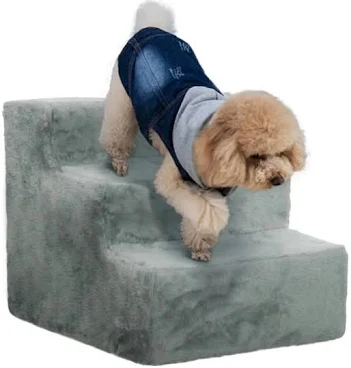
A Small Purchase With a Big Impact on Joint Health
Jumping on and off furniture puts real strain on aging joints, even for a dog who doesn’t seem to mind doing it. The best pet steps solve this by giving your dog a gentler, more controlled way to reach a favorite bed or sofa. This guide covers what to look for and how to get your dog using them comfortably.
Why Jumping Is Harder on Senior Joints Than It Looks
Every jump, especially landing, sends significant impact force through the joints, spine, and hips. For a dog with arthritis or general joint wear, this repeated impact can worsen pain and inflammation over time, even if the dog doesn’t show obvious discomfort in the moment.

What to Look for in a Good Set of Pet Steps
Stable, Non-Slip Base
A wobbly or sliding step set can cause a fall, which defeats the entire purpose. Look for a wide, weighted base or rubber grips on the bottom to keep steps firmly in place.
Appropriate Height and Number of Steps
Taller furniture, like a high bed, needs more steps with shorter individual rises to keep the climb comfortable. Measure your furniture height before choosing a specific product, since one-size-fits-all rarely works well here.
Measure Before You Buy
| What to measure | Your number | Why it matters |
|---|---|---|
| Height from the floor to the top of the bed or sofa cushion | It decides how many steps you need | |
| Your dog’s weight | Check it against the weight limit, with room to spare | |
| Free floor space beside the furniture | The steps need room to sit flush | |
| Floor type (carpet, wood, or tile) | It affects grip and whether the steps slide |
Supportive, Non-Slip Surface
Steps with a textured or carpeted surface give paws better grip than a smooth, hard material, which matters even more for dogs with reduced coordination or vision.
Sturdy Weight Capacity
Check the manufacturer’s weight limit against your dog’s actual weight, with some room to spare, since a step rated right at your dog’s weight may not hold up well over repeated daily use.
Safe Setup Checklist
- Place the steps flush against the furniture
- Put them on a non-slip surface or add a rug grip
- Check the steps for wobble every week
- Keep the path to the steps clear
- Add a nightlight if the room is dark at night
- Replace steps that are worn or loose
Foam vs. Wood vs. Plastic Steps
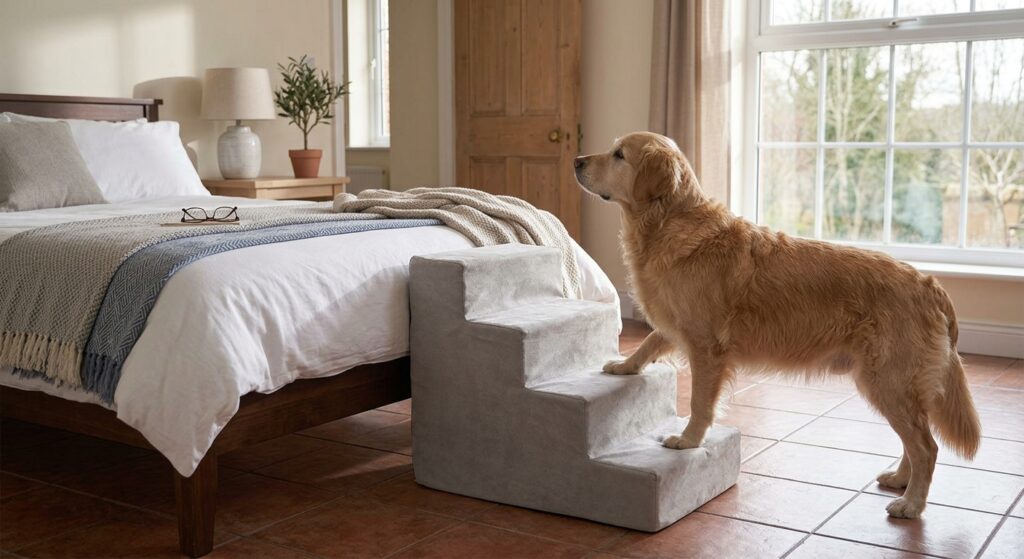
Foam steps are lightweight and gentle on joints if a dog misjudges a step, but they can wear down faster than wood or plastic. Wood and plastic steps tend to be more durable and stable but heavier, which matters if you need to move them between rooms.
Foam vs Wood and Plastic at a Glance
| Material | Pros | Cons | Good for |
|---|---|---|---|
| Foam | Light, and gentle if your dog misjudges a step | Wears down faster | Moving between rooms |
| Wood or plastic | More durable and stable | Heavier | Daily use in one spot |
Training Your Dog to Use the Steps
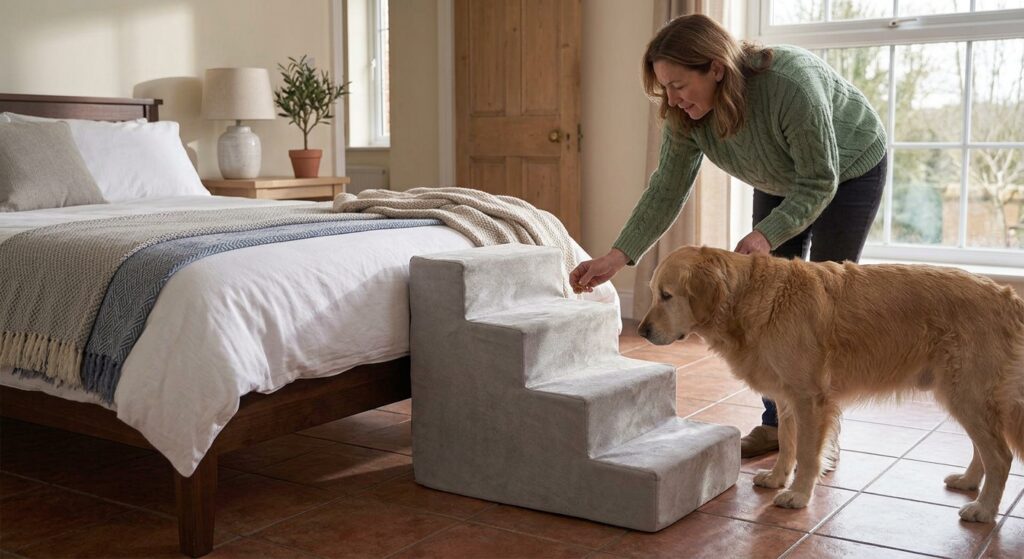
Some dogs take to steps immediately, while others need encouragement. Place treats on each step initially to build a positive association, and avoid physically forcing your dog onto the steps, since this can create anxiety around using them. Patience over a few days usually gets even a reluctant dog comfortable with the new routine.
Many owners say progress comes in small steps. First a sniff, then one paw, then two. Celebrate each stage with a treat and keep sessions short.
7-Day Step Training Log
| Day | Progress (looked, sniffed, one paw, two paws, climbed) | Treats used | Mood | Notes |
|---|---|---|---|---|
| Day 1 | ||||
| Day 2 | ||||
| Day 3 | ||||
| Day 4 | ||||
| Day 5 | ||||
| Day 6 | ||||
| Day 7 |
Never force your dog. If your dog backs away, go back to the previous stage.
Ramps as an Alternative
For dogs who struggle even with steps, a ramp offers an even gentler incline, particularly useful for dogs with more significant mobility limitations or those recovering from surgery.
Many owners find that a ramp suits dogs who tire on steps or are recovering from surgery. For vehicles, our guide to dog ramps for cars explains why they need a different angle. A supportive bed at the top of the steps helps too. Our guide to the best orthopedic beds for senior dogs compares your options.
Frequently Asked Questions
Are pet steps only necessary for very large dogs?
No. Small and medium dogs also benefit, especially breeds prone to back issues like Dachshunds, where jumping poses added risk regardless of overall size.
How do I know if my dog actually needs steps?
Signs like hesitating before jumping, favoring one side when landing, or general stiffness after jumping are all good indicators that steps could help. The American Kennel Club has additional guidance on protecting joint health in aging dogs.
Can pet steps help with more than just beds and sofas?
Yes, some owners also use them for cars or other elevated surfaces, though dedicated car ramps are usually better suited for that specific height and angle.
How many steps do I need?
It depends on the height of your furniture. Measure from the floor to the top of the cushion, then check each product’s height and the rise of each step. More, shorter steps are easier on stiff joints.
Where should I place the steps?
Put them flush against the furniture your dog already uses. Place them on a non-slip surface and away from slippery floors.
Is it okay if my dog still jumps sometimes?
An occasional jump is hard to avoid, but repeated jumping adds strain to sore joints. Steps make the easier route the habit. Block access to the furniture if jumping continues.
How do I clean pet steps?
Wash removable covers according to the label. Wipe plastic and wood with a damp cloth. Vacuum foam steps and spot-clean them gently.
This article is for informational purposes only and is not a substitute for professional veterinary advice. Always consult your vet about your dog’s specific health needs.
If your dog also struggles with household stairs, our guide on how to help a senior dog use stairs safely covers additional traction and support tips.