Why “How Much to Walk a Dog With Arthritis” Doesn’t Have One Answer
Figuring out how much to walk a dog with arthritis trips up a lot of owners, because the right answer changes with severity, not just breed or age. A dog with mild joint stiffness can often handle a longer walk than one with advanced arthritis, even if they’re the same size and age. This guide breaks walking guidelines down by severity, so you can build a routine that keeps your dog moving without causing flare-ups.
Why Walking Still Matters With Arthritis
It might seem safer to just let an arthritic dog rest most of the time, but the opposite is usually true. Complete inactivity leads to muscle loss around the joints, which actually removes support and can make arthritis symptoms worse over time. The goal isn’t to stop walking — it’s to walk in a way that supports the joints instead of stressing them.
Walk Length by Arthritis Severity
| Severity | Recommended Walk Length | Frequency |
|---|---|---|
| Mild (occasional stiffness) | 20-30 minutes | 1-2 times daily |
| Moderate (regular stiffness, some limping) | 10-15 minutes | 2-3 times daily |
| Severe (significant limping, reluctance to move) | 5-10 minutes | 3-4 times daily |
These ranges work as a starting point — always adjust based on how your individual dog responds, and follow any specific restrictions your vet has given for their case.
Best Surfaces and Conditions for Walking
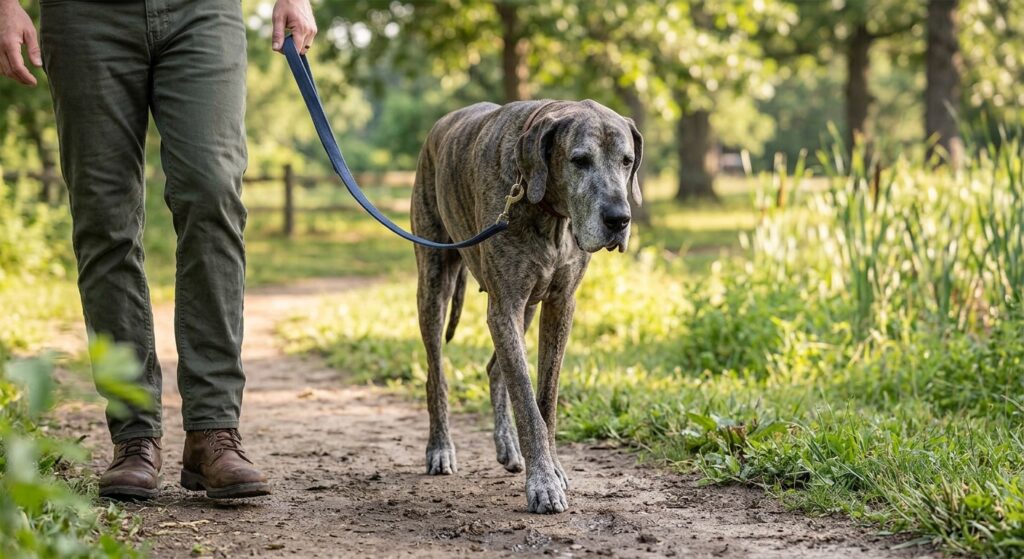
- Flat, even ground puts less strain on joints than hills, stairs, or uneven terrain.
- Grass or dirt paths tend to be gentler than concrete or pavement.
- Cooler parts of the day work best, since heat can make joints feel stiffer and increase overall discomfort.
- Avoid slippery surfaces, like wet grass or smooth tile, since a slip can genuinely aggravate an arthritic joint.
Signs to Stop or Shorten the Walk
Watch for these signs during a walk, which mean it’s time to turn back:
- Noticeable limping that wasn’t present at the start
- Stopping and refusing to continue
- Heavy panting that seems disproportionate to the pace
- Visible stiffness when trying to keep moving
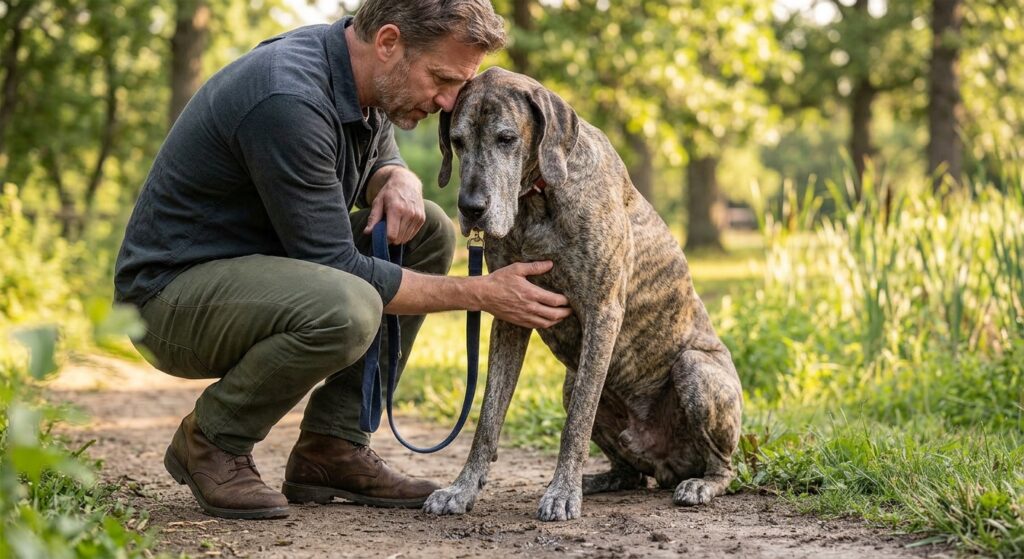
Pushing through these signs can trigger a flare-up that sets your dog back for days, so it’s better to end a walk early than to power through discomfort.
Combining Walks With Other Low-Impact Activity
Short walks work well alongside other joint-friendly activities, like the swimming and hydrotherapy options covered in our exercise for senior dogs guide. Splitting activity across multiple gentle sessions throughout the day, rather than one longer walk, tends to be easier on arthritic joints overall.
The American College of Veterinary Surgeons notes that controlled, low-impact activity is a key part of managing canine osteoarthritis alongside other treatments.
Adjusting the Routine Over Time
Arthritis severity isn’t static — it can worsen gradually, and treatment (medication, supplements, weight loss) can also improve mobility over time. Revisit your dog’s walking routine every few months, or sooner if you notice a clear change in how they handle their current walks.
Frequently Asked Questions
Is it better to do one long walk or several short walks for a dog with arthritis?
Several short walks generally work better than one long walk, since they reduce the cumulative strain on joints while still providing regular movement and mental stimulation throughout the day.
Can walking too much make arthritis worse?
Yes — overdoing it, especially on hard surfaces or hilly terrain, can trigger inflammation and soreness that takes days to settle. Matching walk length to your dog’s current severity level helps avoid this.
Should I stop walking my dog completely during a flare-up?
Not necessarily completely, but scale back significantly to very short, gentle walks or even just supervised time in the yard until the flare-up settles, and check with your vet if it doesn’t improve within a few days.
Getting the walk length right is one of the simplest ways to support a dog with arthritis day to day. Pair this guide with our full overview of arthritis in senior dogs for a complete management approach.