Small Ingredient Choices Add Up
Once a dog is diagnosed with kidney disease, diet becomes one of the most important tools for slowing its progression. Knowing the right foods to avoid for dogs with kidney problems matters just as much as knowing what to feed. This guide covers the ingredients worth cutting and why each one puts extra strain on already-struggling kidneys.
Why Diet Matters So Much With Kidney Disease
Healthy kidneys filter waste products and excess minerals from the blood. Damaged kidneys can’t keep up with that job. Certain nutrients, especially phosphorus and sodium, build up in the blood when kidneys can’t clear them efficiently. Reducing these in the diet takes pressure off the kidneys and can slow disease progression significantly.
High-Phosphorus Foods to Limit
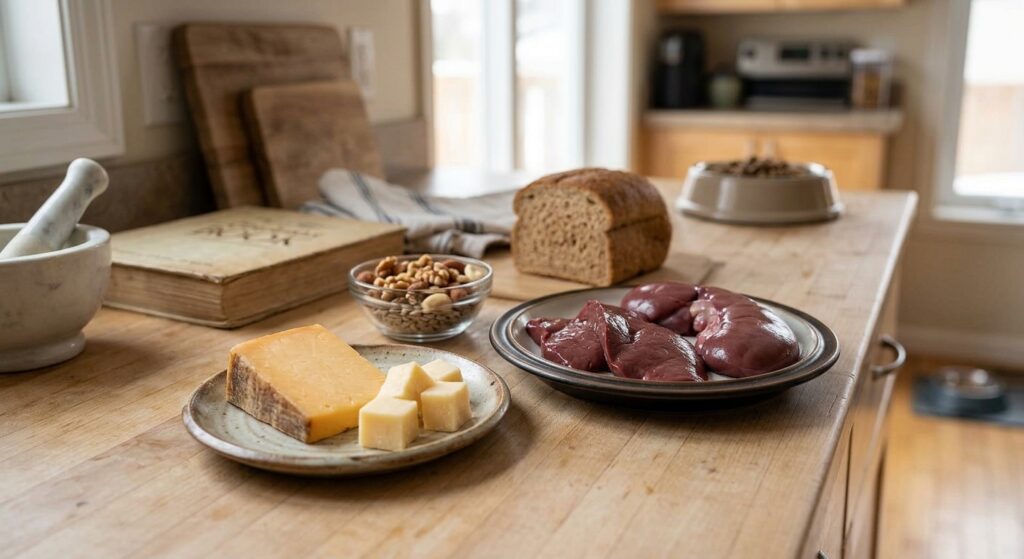
Phosphorus buildup is one of the biggest concerns in kidney disease, and it hides in more foods than most owners expect.
- Organ meats like liver and kidney
- Dairy products, including cheese and yogurt
- Bones and bone-based treats
- Many fish, especially sardines and other small bony fish
- Egg yolks (the whites are lower in phosphorus and often fine in moderation)
Sodium-Heavy Foods to Avoid
High sodium intake raises blood pressure, which adds further strain to already-compromised kidneys.
- Table scraps, especially processed or salted meats
- Cheese and other salty dairy products
- Canned foods not formulated for kidney support, which often run higher in sodium
- Salty snacks like chips, pretzels, or cured meats
Many owners say the hardest part is saying no to the foods their dog loves. Hidden extras add up fast, such as a bite of cheese or a few salty crumbs. A feeding diary shows exactly what your dog eats each day.
7-Day Feeding Diary
| Day | Meals (food and amount) | Treats and extras | Appetite | Notes |
|---|---|---|---|---|
| Day 1 | ||||
| Day 2 | ||||
| Day 3 | ||||
| Day 4 | ||||
| Day 5 | ||||
| Day 6 | ||||
| Day 7 |
Share this diary with your vet. It helps spot hidden sources of phosphorus and sodium.
Protein: It’s Complicated, Not Simply “Avoid”
Many owners assume all protein is bad for kidney disease, but the reality is more nuanced. Dogs with kidney disease typically need reduced but still adequate high-quality protein, not near-zero protein. Cutting protein too aggressively can cause muscle wasting, which creates its own health problems. This is exactly why prescription kidney diets are formulated carefully rather than simply “low protein,” and why homemade diets need veterinary guidance to get the balance right.
Questions to Ask Your Vet About Diet
- Which prescription kidney diet fits my dog’s stage of disease?
- What phosphorus level should I aim for?
- Which treats are safe, and how many per day?
- Does my dog need a phosphorus binder?
- Can a veterinary nutritionist design a homemade plan for us?
- How often should we recheck bloodwork?
Other Ingredients Worth Avoiding
- Foods high in preservatives or artificial additives, which offer no nutritional benefit and add unnecessary processing load
- Excess treats of any kind, since treats often aren’t formulated with kidney-friendly nutrient levels
- Raw bones, which carry both a phosphorus concern and a choking or fracture risk in dogs with reduced resilience
Foods to Limit at a Glance
Always confirm changes to your dog’s diet with your vet first.
| Concern | Examples to limit | Why it matters |
|---|---|---|
| Phosphorus | Organ meats, dairy, bones, small bony fish, egg yolks | It builds up when the kidneys cannot clear it |
| Sodium | Salted meats, salty snacks, cheese, some canned foods | It raises blood pressure |
| Extra treats | Regular commercial treats and table scraps | They are not made for kidney-friendly nutrient levels |
| Raw bones | Any raw bones | They add phosphorus and risk choking or fractures |
Reading Labels the Right Way
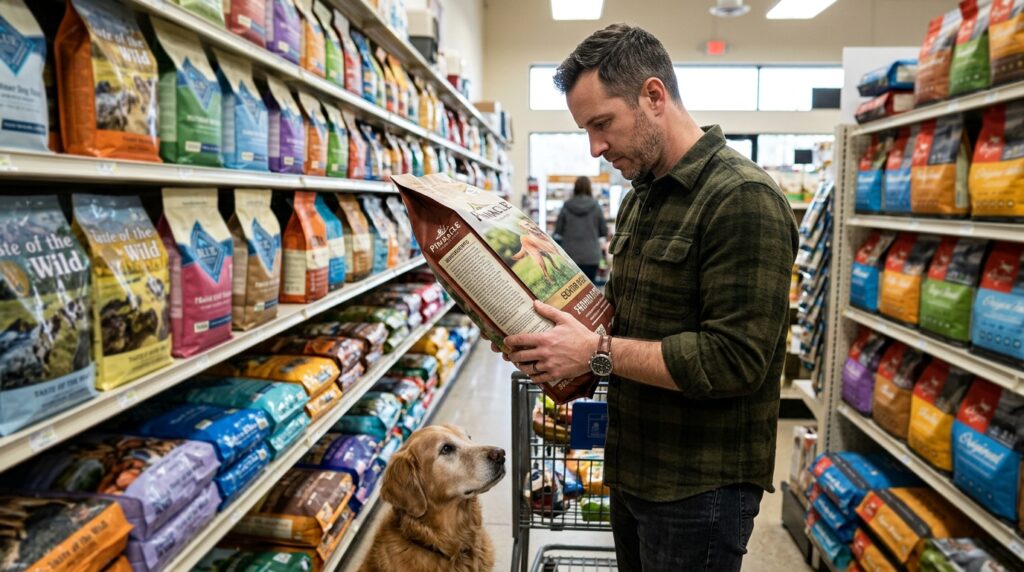
Ingredient lists don’t show phosphorus or sodium content directly, so check the guaranteed analysis section instead. Prescription kidney diets list these values clearly and keep them within ranges appropriate for kidney support, which is why vets generally recommend them over trying to formulate a homemade diet without guidance.
Label Check Before You Switch Foods
- Look for phosphorus and sodium in the guaranteed analysis
- If they are not listed, ask the maker or your vet
- Compare the numbers with the targets your vet gave you
- Check the serving size for your dog’s weight
- Switch foods gradually over several days
- Ask your vet before you add anything new
Frequently Asked Questions
Can my dog with kidney disease ever have treats?
Yes, in moderation, but choose treats specifically formulated for kidney support or very small portions of kidney-safe foods like plain cooked rice or green beans, rather than regular commercial treats.
Is a homemade diet better than a prescription kidney diet?
Not necessarily. Prescription diets are formulated to hit precise phosphorus, sodium, and protein targets. A homemade diet can work, but only when a veterinary nutritionist helps design it, since getting the balance wrong can do real harm.
How quickly does diet change affect kidney values?
Some owners see improvements in bloodwork within a few weeks, though this varies by dog and disease stage. Your vet will likely recheck bloodwork periodically to track progress. The World Small Animal Veterinary Association offers additional guidance on nutrition for dogs with kidney disease.
Can my dog with kidney disease eat eggs?
Egg whites are lower in phosphorus and are often fine in moderation. Yolks are high in phosphorus. Ask your vet before you add eggs to your dog’s meals.
Should I add water to my dog’s food?
It can help. Wet food or a little warm water mixed in adds fluid, which matters for dogs with kidney disease. Ask your vet how much is right. Our guide on how much water a senior dog should drink daily explains what to watch for.
What if my dog refuses the kidney diet?
This is common. Switch foods slowly and ask your vet about other prescription brands and flavors. A dog that stops eating altogether needs a vet visit soon. Our guide on why your senior dog won’t eat covers other causes.
Can my dog still have fruits and vegetables?
Some are fine, such as green beans. Others are not. Grapes and raisins are toxic to dogs. Ask your vet which fruits and vegetables suit your dog’s stage of kidney disease.
This article is for informational purposes only and is not a substitute for professional veterinary advice. Always consult your vet about your dog’s specific health needs.
If you’re building a full feeding plan around kidney disease, our guide on homemade diets for senior dogs with kidney disease walks through what a balanced, vet-guided plan can look like.