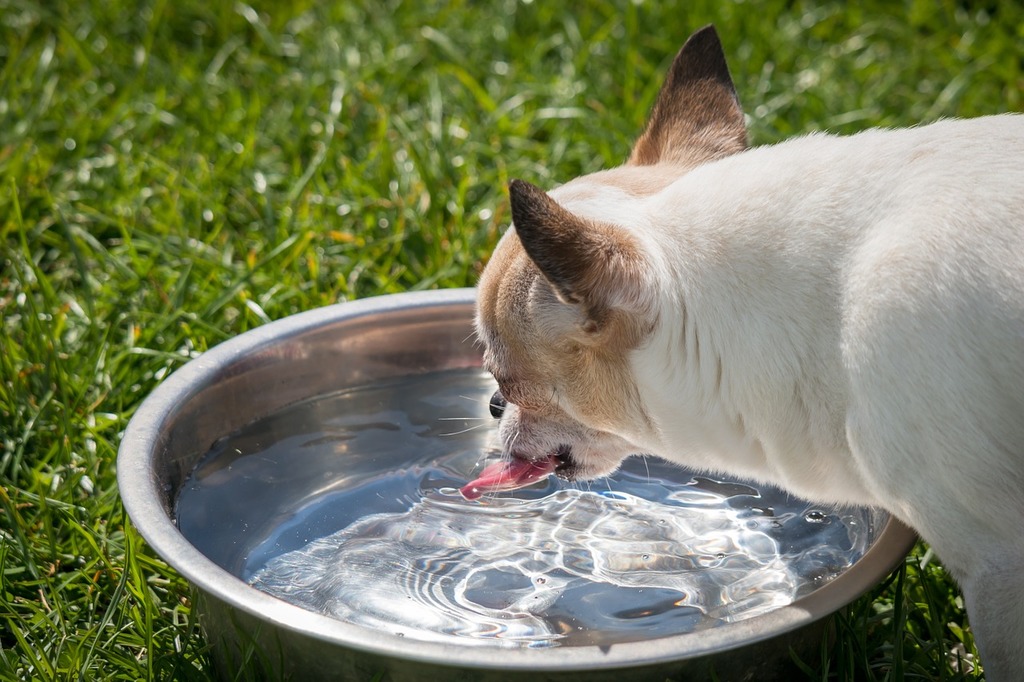
A Simple Number Worth Knowing
Most owners never think about water intake until something seems off. But knowing how much water a senior dog should drink daily gives you an easy early warning system. Changes in thirst often show up before other symptoms. This guide covers normal ranges and the signs that mean it’s time to call your vet.
The General Rule of Thumb
Healthy dogs typically drink about 1 ounce of water per pound of body weight per day. A 30-pound dog would need roughly 30 ounces, or about 3.75 cups, daily. This is just a starting point, though. Activity level, weather, and diet all shift the number up or down.
Daily Water Guide by Weight
This is a starting point for a healthy dog. Heat, activity, and diet change the number.
| Dog’s weight | Water per day (ounces) | Water per day (cups) |
|---|---|---|
| 10 lb | 10 oz | 1.25 cups |
| 20 lb | 20 oz | 2.5 cups |
| 30 lb | 30 oz | 3.75 cups |
| 50 lb | 50 oz | 6.25 cups |
| 70 lb | 70 oz | 8.75 cups |
| 90 lb | 90 oz | 11.25 cups |
Why the Number Changes With Age
Senior dogs often need more careful water monitoring than younger dogs. Several age-related conditions directly affect thirst. Kidney disease is one of the most common, since failing kidneys often cause dogs to drink more to compensate. Diabetes and Cushing’s disease also commonly increase thirst well beyond normal ranges.
Signs of Too Little Water
- Dry or tacky gums
- Loss of skin elasticity (skin that stays “tented” when gently pulled up)
- Sunken eyes
- Low energy or lethargy
- Reduced urination or dark, concentrated urine
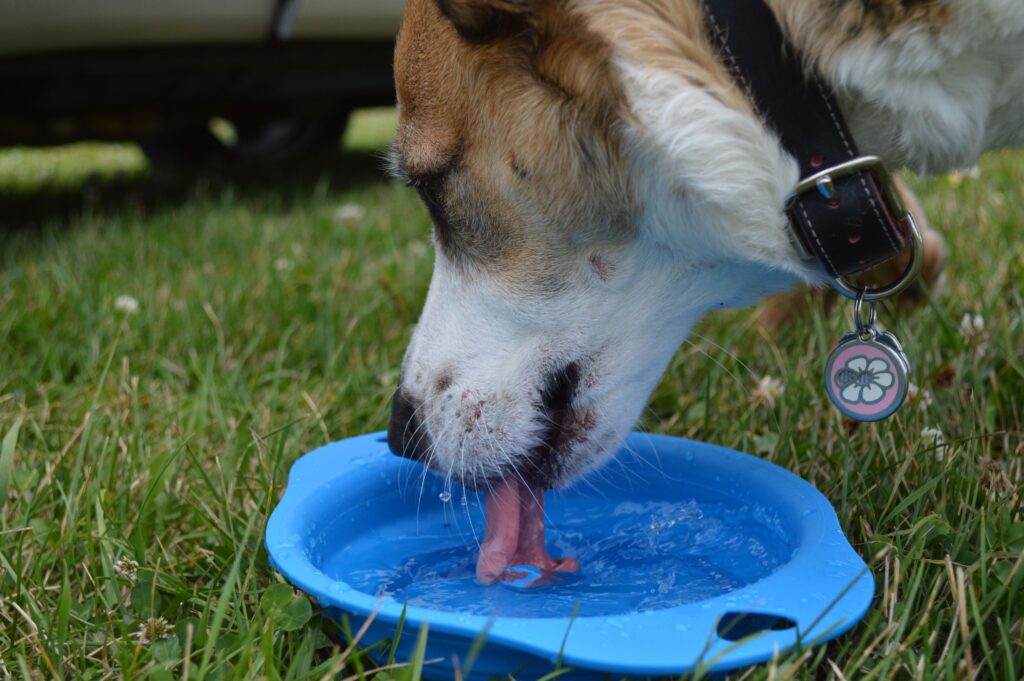
Dehydration can develop faster in senior dogs than younger ones, especially during hot weather or after vomiting or diarrhea.
Ways to Make Drinking Easier
- Keep fresh water in more than one room
- Wash the bowl every day
- Try a pet fountain if your dog likes moving water
- Offer water after walks and naps
- Mix a little water into meals
If you see signs of dehydration, call your vet right away. Do not wait.
Signs of Too Much Water
Increased thirst, called polydipsia, is just as worth noting as too little water. Watch for:
- Drinking noticeably more than usual over several days
- More frequent urination or larger volumes
- Accidents indoors from a previously house-trained dog
- Increased thirst paired with weight loss or lethargy
Excess thirst often points to an underlying condition rather than simple habit, so it’s rarely something to ignore in a senior dog.
Simple Ways to Track Water Intake at Home
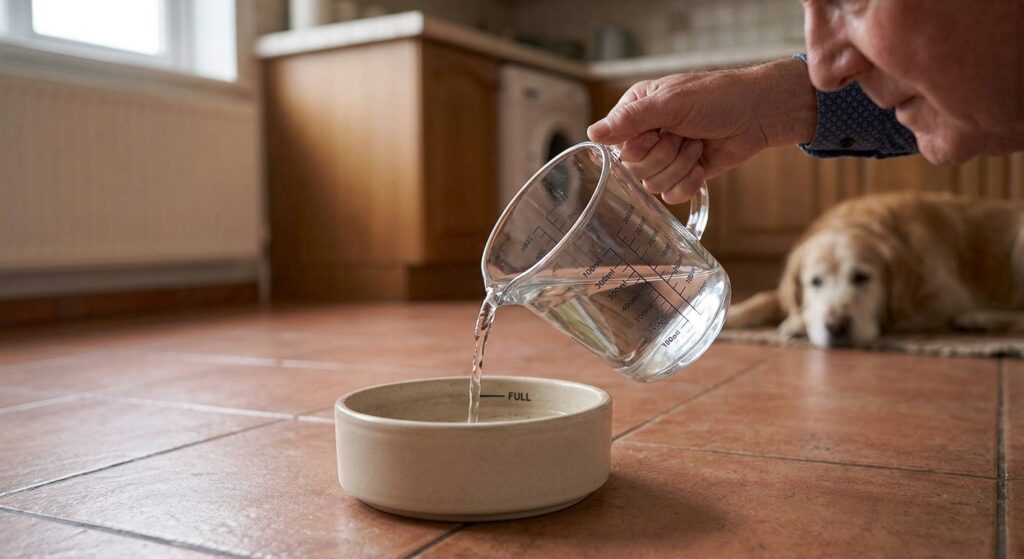
Fill your dog’s bowl with a measured amount each morning, then check how much is left at the end of the day. Do this for a few days to establish a baseline, especially before a vet visit, since your vet will likely ask about typical daily intake. A sudden change from that baseline, in either direction, is worth mentioning even if your dog otherwise seems fine.
Many owners say they never noticed a change in thirst until they measured. A week of numbers gives you a clear baseline. Write down the weather and activity too, since both change how much your dog drinks.
7-Day Water Log
| Day | Water poured in the morning | Water left at night | Water drunk | Weather and activity | Notes |
|---|---|---|---|---|---|
| Day 1 | |||||
| Day 2 | |||||
| Day 3 | |||||
| Day 4 | |||||
| Day 5 | |||||
| Day 6 | |||||
| Day 7 |
Bring this log to your vet. It gives them a baseline to compare against.
When to Call Your Vet
Book an appointment if you notice a clear increase or decrease in water intake lasting more than a couple of days, especially alongside other symptoms like changes in appetite, energy, or bathroom habits. Bloodwork can help identify whether kidney function, blood sugar, or hormone levels are behind the change.
What to Bring to the Vet Visit
- Your water log
- The date you first noticed the change
- Notes on urination, such as color and how often
- A list of food, treats, and medications
- Any other changes in appetite, energy, or weight
Frequently Asked Questions
Is it normal for water intake to increase slightly with age?
A small increase can happen, but a significant or sudden jump usually means something worth checking rather than typical aging.
Can hot weather explain increased thirst on its own?
Yes, warmer weather and more activity both increase normal water needs. If the increase doesn’t match a clear change in temperature or activity, it’s worth mentioning to your vet.
Should I restrict water if my dog seems to be drinking too much?
No. Restricting water can be dangerous, especially if the increased thirst is the body’s response to an underlying condition. The American Veterinary Medical Association recommends addressing the underlying cause rather than limiting access to water.
Does wet food count toward my dog’s daily water?
Yes. Wet food contains a lot of water, so a dog on wet food may drink less from the bowl. Take this into account when you track intake. Our guide on wet vs dry food for senior dogs explains the differences.
Why does my dog drink more at night?
It can be habit, a warm room, or a salty snack. If it is new and continues for several days, mention it to your vet.
Is it safe to give ice cubes or broth?
Ice cubes are fine for many dogs. Avoid broth with salt, onion, or garlic, which can harm dogs. Ask your vet before you add anything to the water.
How do I measure intake if my dog drinks outdoors?
Measure the water at home and note any outings in your log. For longer walks, bring a bottle with a measured amount and offer water from it.
This article is for informational purposes only and is not a substitute for professional veterinary advice. Always consult your vet about your dog’s specific health needs.
If increased thirst is showing up alongside other changes, our guide on kidney disease in senior dogs covers the fuller picture of warning signs worth watching for.