Why Older Dogs Overheat Faster
Senior dogs regulate body temperature less efficiently than younger ones, which makes them more vulnerable to heat-related illness. Learning to prevent heatstroke in senior dogs during summer matters even for dogs who handled hot weather just fine a few years ago. This guide covers the early warning signs and practical ways to keep your dog safe.
Why Age Changes the Risk
Extra weight, thicker or matted coats, and underlying conditions like heart or respiratory disease all reduce a dog’s ability to cool down through panting. Reduced mobility can also mean a dog struggles to move away from heat sources or seek shade on their own, especially with arthritis limiting quick movement.
Early Signs of Overheating
- Heavy, rapid panting that doesn’t settle down with rest
- Bright red gums or tongue
- Thick, excessive drooling
- Weakness or wobbliness
- Reluctance to move or stand
Catching these early signs matters, since heatstroke can progress from mild discomfort to a life-threatening emergency within a short window.
Signs of a Heatstroke Emergency
- Collapse or inability to stand
- Vomiting or diarrhea
- Seizures
- Extremely high body temperature (over 104°F)
- Pale or blue-tinged gums
If you see any of these signs, move your dog to a cool area immediately and get to an emergency vet right away. This is not a situation to monitor at home.
What to Do at Each Stage
This table sums up the signs above. When in doubt, call your vet or an emergency clinic.
| Stage | What you see | What to do |
|---|---|---|
| Early warning | Heavy panting, red gums, drooling, weakness | Move your dog to a cool, shaded place, offer small amounts of water, and call your vet for advice |
| Emergency | Collapse, seizures, vomiting or diarrhea, pale or blue gums, very high temperature | Cool your dog gently with cool water on the belly and paws, and get to an emergency vet right away |
Safe Ways to Keep a Senior Dog Cool
Adjust Walk Times
Walk during the coolest parts of the day, typically early morning or after sunset, rather than midday. Even a short walk in extreme heat can be risky for a senior dog.
Many owners say their dog’s limit changes from one summer to the next. A dog who loved midday walks at ten may tire in minutes at thirteen. A simple log shows where your own dog’s limit sits.
Hot-Day Walk Log
| Day | Temperature | Walk time and length | Panting (normal or heavy) | Water drunk | Notes |
|---|---|---|---|---|---|
| Day 1 | |||||
| Day 2 | |||||
| Day 3 | |||||
| Day 4 | |||||
| Day 5 | |||||
| Day 6 | |||||
| Day 7 |
Share this log with your vet. It helps set safe limits for your dog.
Provide Constant Access to Shade and Water
Make sure shaded outdoor areas and fresh water are always available, both indoors and outside, so your dog never has to search for relief.
Use Cooling Aids
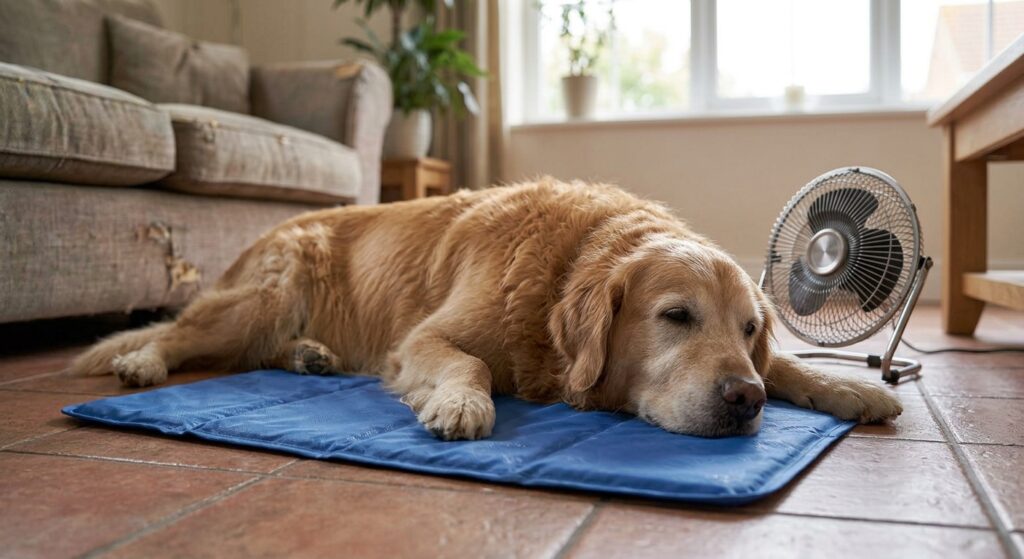
Cooling mats, damp towels, or a fan directed at your dog’s resting area can help maintain a comfortable temperature without needing to run air conditioning constantly.
Never Leave a Dog in a Parked Car
Car interiors heat up dangerously fast, even with windows cracked and even on mild days. This applies to every dog, but the risk is higher for senior dogs who overheat more easily.
Watch the Ground Temperature
Hot pavement can burn paw pads and radiates heat upward, adding to overall heat stress. If pavement feels too hot for your hand after five seconds, it’s too hot for your dog’s paws.
Summer Heat Safety Checklist
- Walk only in the early morning or after sunset
- Test the ground with the back of your hand for five seconds
- Keep fresh water in every room and outside
- Provide shade in the yard at all times
- Put a cooling mat or fan in your dog’s resting area
- Never leave your dog in a parked car
- Ask your groomer or vet whether a trim suits your dog’s coat
- Save the emergency vet’s phone number and address in your phone
Dogs at Extra-High Risk
Flat-faced breeds like Bulldogs and Pugs, overweight dogs, and dogs with heart or respiratory conditions face significantly higher heatstroke risk. If your senior dog falls into one of these categories, extra caution during summer isn’t optional.
Many owners say they lose precious minutes searching for an address when an emergency hits. Fill in this card before summer starts and keep a copy on the fridge.
Emergency Plan Card
| Item | Write it here |
|---|---|
| Nearest 24-hour emergency vet | |
| Phone number | |
| Address | |
| Travel time | |
| Regular vet’s phone number | |
| Who can drive you if needed |
Frequently Asked Questions
What should I do first if I suspect heatstroke?
Move your dog to a cool, shaded area immediately, offer small amounts of water, and use cool (not ice-cold) water on the belly and paws while heading to an emergency vet.
Is a fan enough to keep a senior dog cool indoors?
For mild heat, a fan combined with shade and water often works well. During extreme heat, air conditioning or a cooling mat provides more reliable protection, especially for dogs with existing health conditions. The American Veterinary Medical Association has more guidance on preventing and recognizing heatstroke in pets.
Can senior dogs still go for walks in summer?
Yes, but timing and duration matter more than in younger dogs. Shorter walks during cooler hours, with frequent water breaks, are the safer approach.
How can I check my dog’s temperature at home?
A rectal thermometer gives the most reliable reading. If you see emergency signs, do not stop to measure. Cool your dog gently and go straight to an emergency vet. Our guide to the best dog thermometers explains how to choose one.
Should I shave my senior dog for summer?
Often not. A coat can protect against sun and heat. Ask your groomer or vet, since a badly matted coat may need a trim.
Are ice cubes in the water bowl safe?
For most dogs, yes. Do not use ice-cold water on your dog’s body in an emergency. Cool water on the belly and paws is safer.
Does humidity matter as much as temperature?
Yes. Panting works less well when the air is humid, so a muggy day can be riskier than a dry one at the same temperature. Take extra care on humid days.
This article is for informational purposes only and is not a substitute for professional veterinary advice. Always consult your vet about your dog’s specific health needs.
If reduced mobility makes it harder for your dog to move away from heat or find shade, our guide on adapted exercise routines for senior dogs covers safer ways to stay active in any season.