Why the Introduction Matters More Than You’d Think
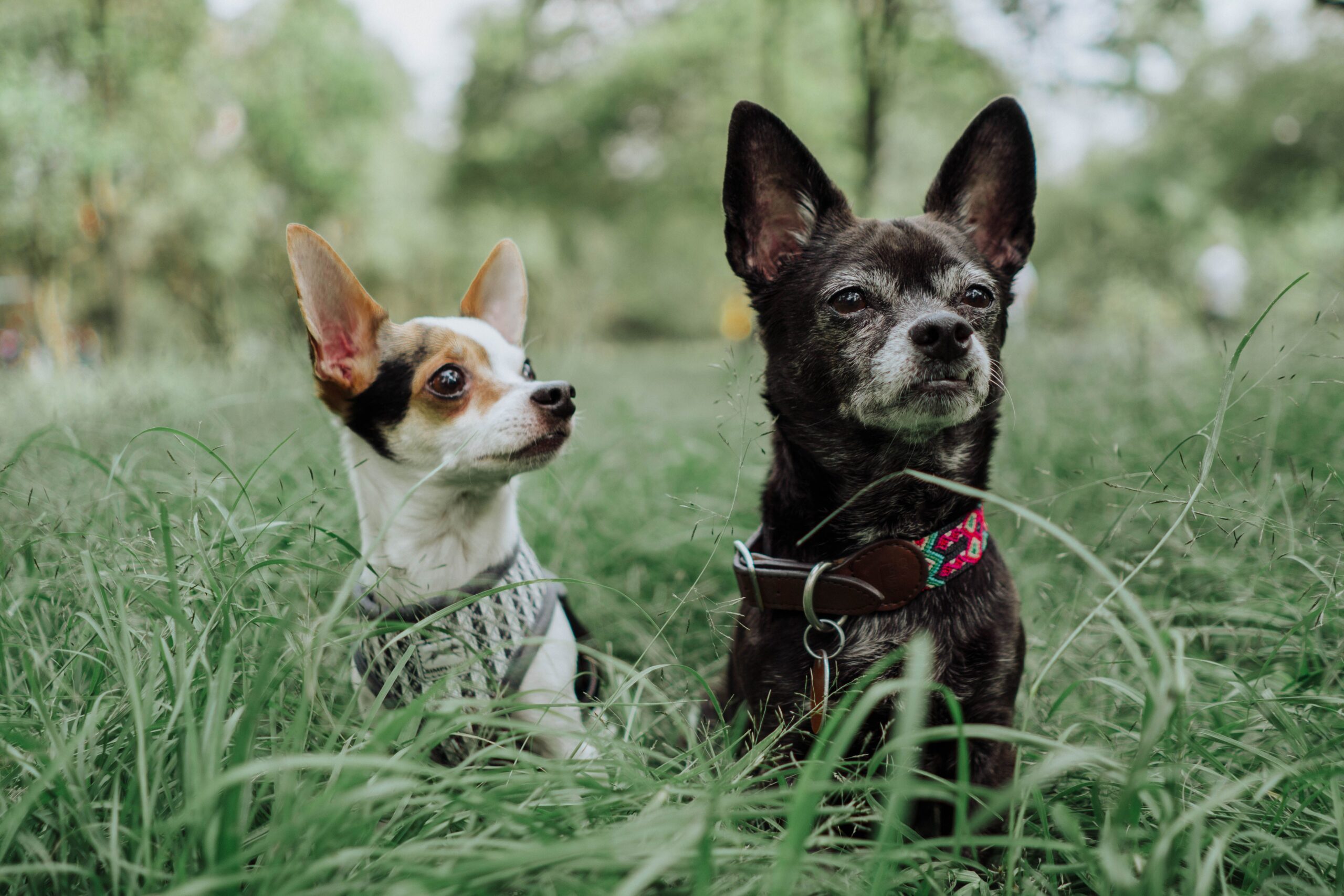
A poorly managed first meeting can set the tone for the entire relationship between your dogs. Introducing a puppy to an older dog the right way protects your senior dog’s comfort and gives the puppy the best chance at a healthy, respectful relationship. This guide walks through a step-by-step approach that reduces stress for both dogs.
Consider Your Senior Dog’s Perspective First
Before bringing a puppy home, think honestly about your older dog’s current health, energy level, and tolerance for chaos. A dog with painful arthritis or reduced patience may need a much slower, more careful introduction than a healthy, easygoing senior. If your dog has significant mobility or health issues, talk to your vet about whether this is a good time for a new addition at all.
Before You Bring the Puppy Home
- Ask your vet whether this is a good time for a new dog
- Set up a gated retreat space for your senior dog
- Buy a separate bed, bowls, and toys for the puppy
- Choose a quiet, neutral place for the first meeting
- Ask a second adult to help handle the leashes
- Plan a short first meeting, not a long one
The First Meeting: Keep It Neutral and Short
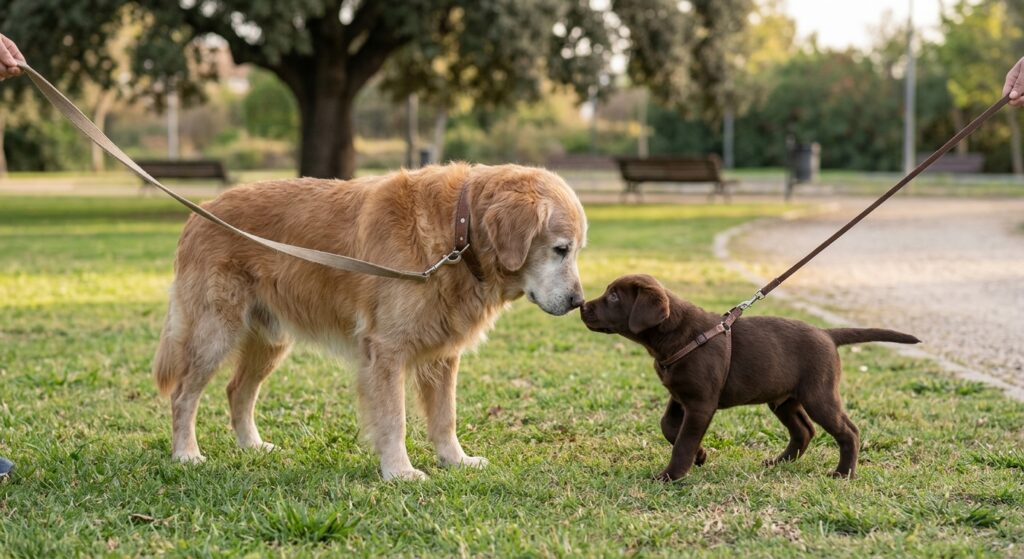
Choose a neutral location, like a quiet park, rather than your home, since dogs are often more relaxed away from territory they feel the need to defend. Keep both dogs on leash, keep the first meeting brief, and watch body language closely rather than forcing prolonged interaction. A calm, uneventful few minutes is a good outcome.
Reading the Signs of Stress in Your Senior Dog
- Stiff body posture or a tucked tail
- Lip licking, yawning, or turning away
- Growling or showing teeth (a clear signal to end the interaction, not punish it)
- Trying to move away or hide
These signs mean it’s time to separate the dogs calmly and try again later, rather than pushing through the discomfort.
Many owners say stress signals are easy to miss in the moment. A short daily note helps you see how the introduction is really going.
Introduction Log
| Day | Time together | Senior dog (calm or stressed) | Puppy’s behavior | Retreat space used? | Notes |
|---|---|---|---|---|---|
| Day 1 | |||||
| Day 2 | |||||
| Day 3 | |||||
| Day 4 | |||||
| Day 5 | |||||
| Day 6 | |||||
| Day 7 |
If your senior dog shows stress signs again and again, slow down and ask your vet or a trainer for help.
Giving Your Senior Dog an Escape Option
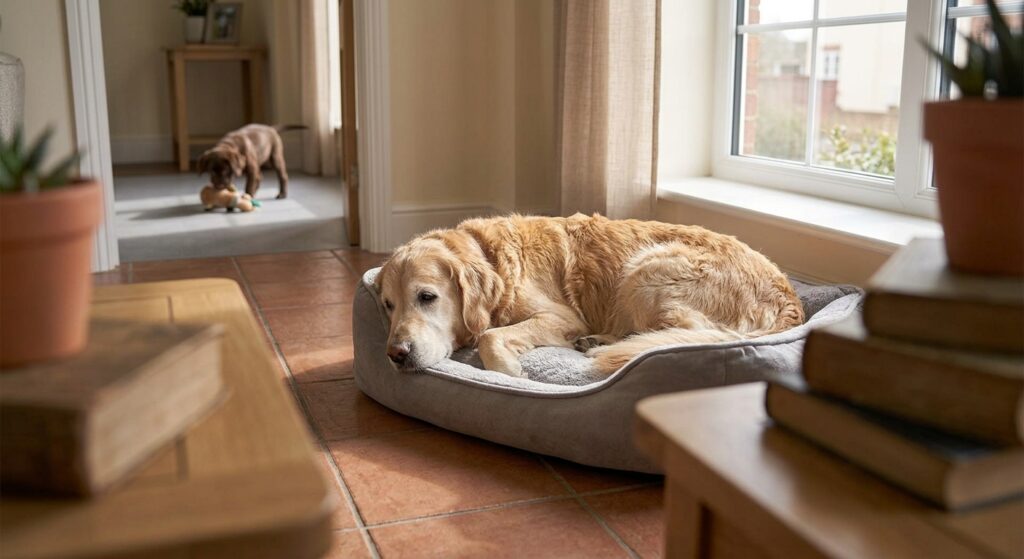
Set up a space the puppy can’t access, like a room with a baby gate or an elevated bed, where your senior dog can retreat whenever they need a break. This single step prevents an enormous amount of stress, since older dogs often need to disengage far more often than a young, energetic puppy naturally would.
Many owners say the retreat room soon becomes their senior dog’s favorite spot. Put a comfortable bed, fresh water, and a favorite toy there. Our guide to the best orthopedic beds for senior dogs can help you choose a bed.
Managing Play and Energy Differences
Puppies often want to play constantly, which can overwhelm or physically strain a senior dog. Supervise all interactions initially, and separate the dogs during high-energy play sessions the puppy needs, like fetch or vigorous play with toys. A tired puppy from a good play session is often much easier for your senior dog to tolerate afterward.
Protecting Resources
Feed the dogs separately, at least at first, and give each dog their own bed, toys, and water bowl. Resource guarding is a common source of conflict between dogs of any age, and removing the competition entirely prevents most of these issues before they start.
Resource Setup Checklist
- Feed the dogs in separate places
- Give each dog its own bed
- Give each dog its own water bowl
- Pick up toys and chews before the dogs share a space
- Give your senior dog quiet one-on-one time without the puppy
How Long Does Adjustment Take?
Every pair of dogs is different, but expect several weeks to a few months before a comfortable routine settles in. Some senior dogs warm up to a puppy quickly, while others simply learn to tolerate them peacefully rather than becoming close companions, and both outcomes are perfectly fine.
Introduction Timeline at a Glance
Every pair of dogs is different. Use this as a rough guide.
| Stage | What to do | What to watch for |
|---|---|---|
| Before the puppy arrives | Set up the retreat space and separate supplies | Your senior dog’s health and energy |
| First meeting | Keep it short, neutral, and on leash | Stiff posture, lip licking, or growling |
| First week | Supervise every interaction and separate the dogs for high-energy play | Signs your senior dog needs a break |
| Weeks 2 to 4 | Add time together slowly | Signs of tension around food, beds, or toys |
| After a month or two | Keep the routine steady | Comfortable coexistence, even if the dogs are not close |
Frequently Asked Questions
Is it unfair to bring a puppy home when I already have a senior dog?
Not inherently, but it does require extra planning and patience to protect your older dog’s comfort and health throughout the transition.
What if my senior dog growls at the puppy?
A growl is communication, not necessarily aggression. It tells the puppy a boundary has been crossed, and it’s a normal, healthy part of dogs learning to coexist, as long as it doesn’t escalate to a bite.
Should I get professional help if the introduction isn’t going well?
Yes, especially if you’re seeing consistent tension or your senior dog seems distressed. A certified trainer experienced with multi-dog households can help. The American Veterinary Society of Animal Behavior has resources on safe introductions between dogs.
How do I stop the puppy from jumping on my senior dog?
Redirect the puppy to a toy and reward calm behavior. Use a leash or a gate to interrupt when needed. Give the puppy plenty of exercise and mental games away from your senior dog.
Should the dogs sleep in the same room?
Not at first. Keep them apart at night until both dogs are comfortable. Later, give each dog its own bed in the same room.
Does my senior dog need extra attention?
Yes. Give your senior dog one-on-one time without the puppy, such as a gentle walk or quiet petting. It shows your older dog that nothing has been taken away.
Can a puppy pass an illness to my senior dog?
Puppies can carry parasites or infections. Ask your vet to check the puppy before the dogs share space, and keep vaccinations up to date for both. Our guide on senior dog wellness exams explains what your older dog’s check-up should include.
This article is for informational purposes only and is not a substitute for professional veterinary advice. Always consult your vet about your dog’s specific health needs.
If your senior dog seems more irritable than usual during this transition, our guide on personality changes in senior dogs covers what’s typical and what’s worth mentioning to your vet.