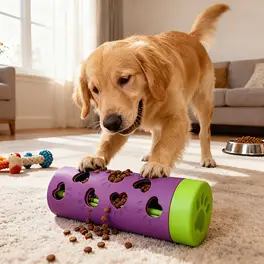
Why Mental Exercise Matters as Much as Physical Exercise
Physical mobility naturally declines with age, but a dog’s mind can often stay sharper for longer with the right kind of stimulation. Cognitive enrichment toys for senior dogs give them a way to stay mentally engaged, even when long walks or vigorous play aren’t realistic anymore. This guide compares the main types and how to introduce them successfully.
Why Mental Stimulation Matters More With Age
Mental enrichment has been linked to slower progression of canine cognitive dysfunction, similar to how mental activity is encouraged for aging humans. Beyond the cognitive benefit, puzzle toys and enrichment activities also reduce boredom-related stress, which can matter a lot for a senior dog who’s less able to burn energy through physical activity.
Types of Cognitive Enrichment Toys
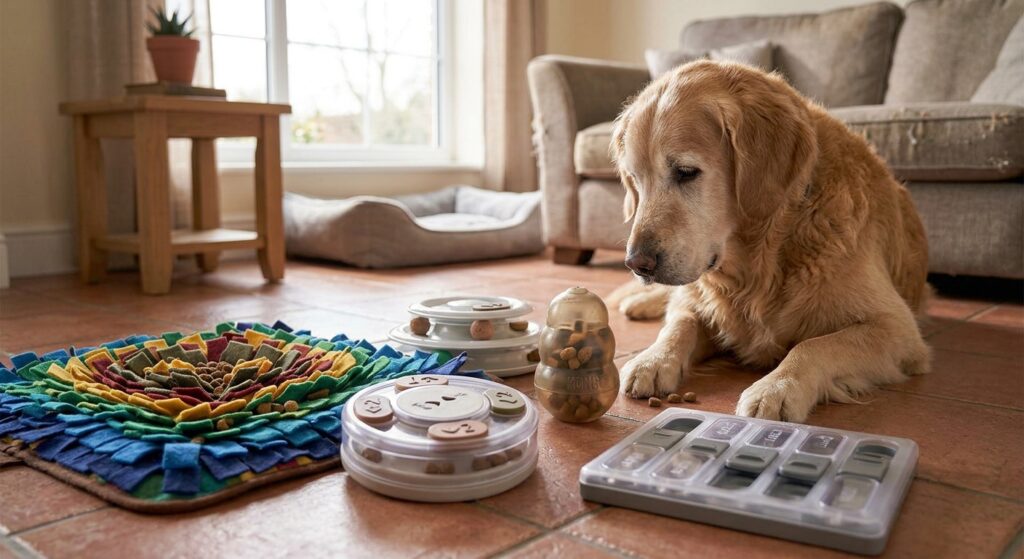
Treat-Dispensing Puzzles
These require a dog to manipulate levers, sliders, or compartments to access hidden treats. They range from simple to quite complex, so starting with an easier design matters for a dog new to puzzle toys.
Snuffle Mats
A snuffle mat hides small treats within fabric strips, encouraging a dog to use their nose to search them out. This is a gentle, low-frustration option that works well for dogs with limited mobility, since it requires no physical dexterity.
Interactive Electronic Toys
Some toys use lights, sounds, or movement to prompt a response from the dog, rewarding interaction with treats or praise. These can offer variety, though they tend to cost more than simpler options.
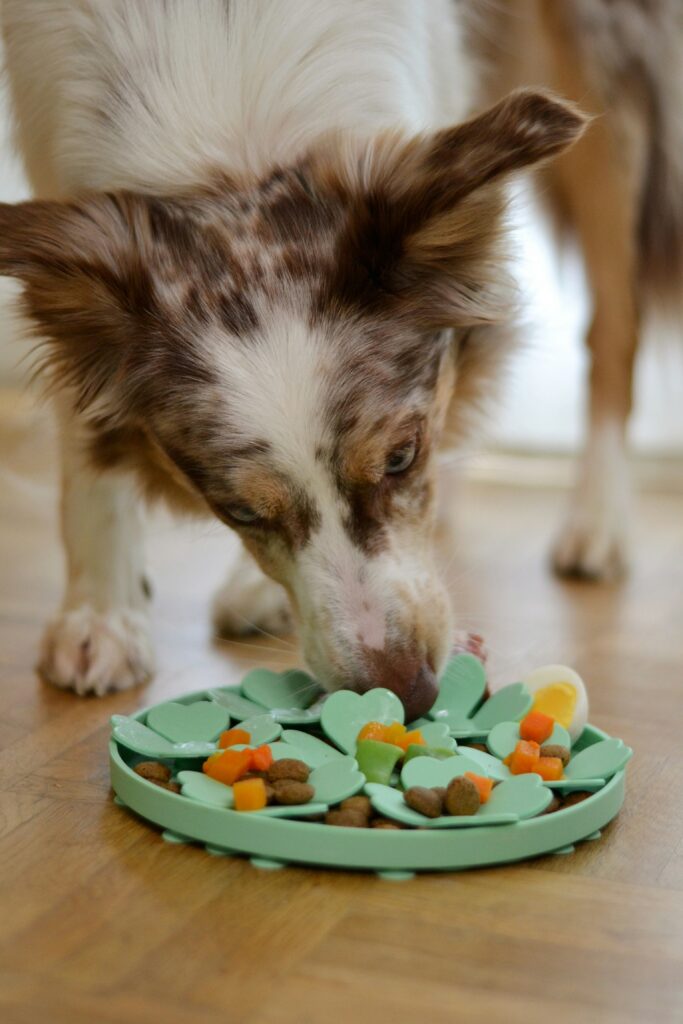
Slow Feeders
While primarily designed to slow down eating, slow feeders with maze-like patterns double as a mild cognitive challenge, making mealtime itself a form of enrichment.
DIY Enrichment
Simple options like hiding treats in a muffin tin under tennis balls, or scattering kibble in a cardboard box with paper, provide real cognitive engagement at little to no cost, which works well for testing whether a dog enjoys puzzle-solving before buying dedicated toys.
Enrichment Toy Types Compared
| Type | Difficulty | Mobility needed | Cost | Best for |
|---|---|---|---|---|
| Treat-dispensing puzzles | Easy to hard | Some pawing | Medium | Dogs who enjoy problem solving |
| Snuffle mats | Easy | Very little, can be done lying down | Low | Dogs with limited mobility |
| Interactive electronic toys | Varies | Varies | Higher | Dogs who like variety |
| Slow feeders | Easy | Very little | Low | Turning mealtime into a challenge |
| DIY enrichment | Easy to adjust | Very little | Little to none | Testing whether your dog likes puzzles |
Choosing the Right Difficulty Level
Starting too difficult can frustrate a senior dog and discourage future attempts. Begin with the easiest version of a puzzle, and only increase difficulty once your dog solves it confidently and quickly. Watching your dog’s body language matters here. Signs of frustration mean it’s time to make things easier, not push through.
The Difficulty Ladder
Move up a level only when your dog solves the current one quickly and confidently.
| Level | Example | What your dog does |
|---|---|---|
| Level 1 | Treats scattered on a snuffle mat | Sniffs and eats |
| Level 2 | Treats under one or two loose cups or tennis balls in a muffin tin | Nudges the cover aside |
| Level 3 | A puzzle with flaps or sliders | Pushes or slides to reach treats |
| Level 4 | A multi-step puzzle | Solves two or more steps in order |
Introducing Puzzle Toys to a Senior Dog
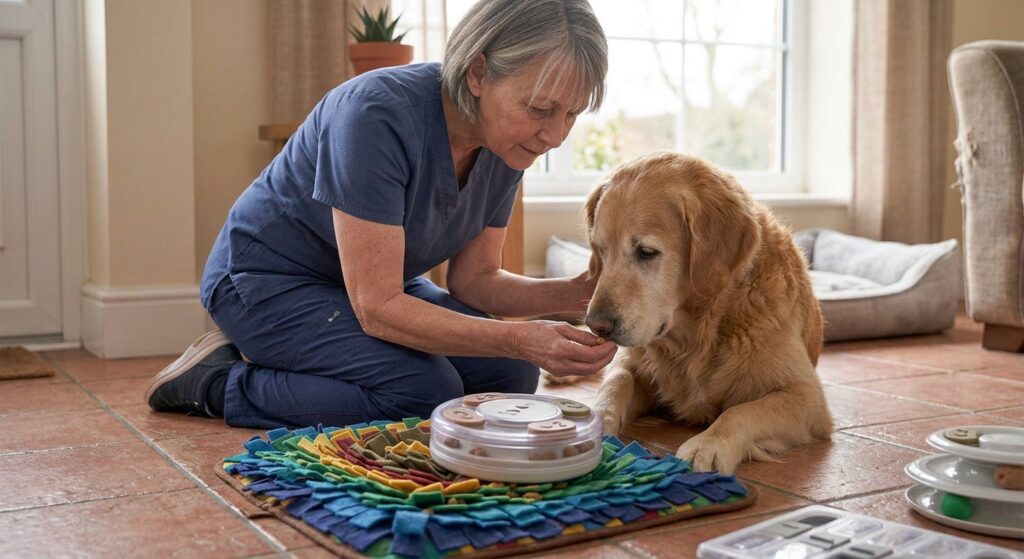
Sit with your dog for the first few attempts, showing them how the toy works if needed. Use extra-appealing treats initially to build motivation, then transition to regular treats or kibble once your dog understands the concept. Keep early sessions short, just a few minutes, to prevent frustration or fatigue.
Your First Puzzle Session
- Pick the easiest puzzle you have
- Use extra-appealing treats
- Sit with your dog and show how the toy works
- Keep the session to a few minutes
- Stop while your dog is still interested
- Put the toy away afterward so it stays special
Many owners say their dog’s mood tells them more than the result does. An eager dog who solves nothing is still learning. A log helps you spot what your dog enjoys.
7-Day Enrichment Log
| Day | Toy used | Minutes | Solved? (yes, partly, no) | Mood (eager, bored, frustrated) | Notes |
|---|---|---|---|---|---|
| Day 1 | |||||
| Day 2 | |||||
| Day 3 | |||||
| Day 4 | |||||
| Day 5 | |||||
| Day 6 | |||||
| Day 7 |
If your dog looks frustrated, go back to an easier version.
Adapting for Physical Limitations
For dogs with arthritis or reduced mobility, choose toys that don’t require standing for long periods or excessive pawing. Puzzles that can be worked on while lying down, like some flat sliding puzzles, are often more comfortable options than toys requiring a dog to paw at height or chase rolling objects.
Many owners say their dog is happiest working a puzzle from a soft bed. Place the toy within easy reach so your dog does not need to stand or stretch. Our guides on arthritis in senior dogs and canine cognitive dysfunction explain how these conditions affect daily activity.
Frequently Asked Questions
How often should I use enrichment toys with my senior dog?
Daily short sessions, even just 5 to 10 minutes, tend to work better than infrequent longer sessions, since consistency matters more than duration for cognitive benefit.
Can enrichment toys help with cognitive decline that’s already started?
Yes, to some degree. While they can’t reverse existing decline, consistent mental stimulation may help slow further progression when combined with other supportive treatments. The American Kennel Club has more on enrichment activities for aging dogs.
Are expensive electronic toys worth it over simple options?
Not necessarily. Many dogs respond just as well to simple, inexpensive puzzles or DIY options. The right difficulty level and consistency matter more than the toy’s price or complexity.
What if my dog ignores the toy?
Try higher-value treats or a different type of toy. Some dogs prefer using their nose to their paws, so a snuffle mat may suit them better. Never force your dog to play.
Are puzzle toys safe for a dog on a diet?
Yes, if you count the treats. Use part of the daily food ration as the puzzle contents. Our guide on helping an overweight senior dog lose weight safely explains how to count extras toward the daily total.
Can a dog with poor eyesight use enrichment toys?
Yes. Scent-based toys such as snuffle mats work well for dogs with low vision. Our guide on cataracts in senior dogs explains how to support a dog whose sight is changing.
How do I clean enrichment toys?
Follow the label for fabric toys. Wash plastic puzzles in warm, soapy water and dry them fully. Check them often for cracks or loose parts, and replace worn toys.
This article is for informational purposes only and is not a substitute for professional veterinary advice. Always consult your vet about your dog’s specific health needs.
If you’re looking for a fuller picture of keeping your dog engaged, our guide on how to mentally stimulate a senior dog covers activities beyond toys alone.