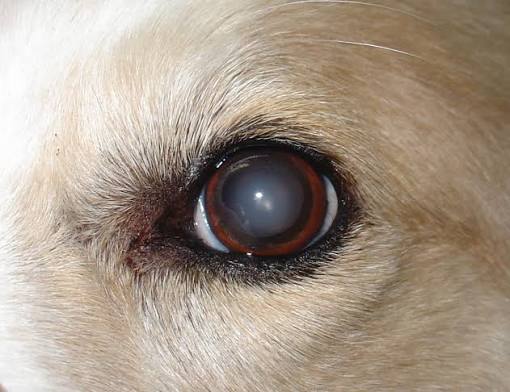
Why Cloudy Eyes Aren’t Always an Emergency, But Shouldn’t Be Ignored
Noticing a cloudy or bluish tint in your older dog’s eyes is unsettling. Cataracts in senior dogs are extremely common, though, and not always urgent. Still, they’re worth taking seriously. Untreated cataracts can affect your dog’s vision. In some cases, they can also lead to painful complications. This guide walks through what cataracts actually are. It also explains how to tell them apart from a normal aging change, and how to think through the surgery decision if your vet recommends it.
What’s Actually Happening Inside the Eye
A cataract forms when the lens of the eye — normally clear — becomes cloudy. This blocks or scatters the light that would otherwise reach the retina. In senior dogs, age-related changes in the lens proteins usually cause this. Diabetes is another common underlying cause, so it’s worth ruling out. Cataracts can affect one eye or both. They can develop slowly over months, or in some cases, more rapidly.
Cataracts vs. Nuclear Sclerosis: A Common Mix-Up
Many owners confuse cataracts with nuclear sclerosis. This is a normal aging change where the lens takes on a hazy, grayish-blue look but doesn’t significantly block vision. Nuclear sclerosis is harmless and needs no treatment. The two can look similar to an untrained eye. That’s exactly why a proper diagnosis matters — guessing at home isn’t reliable.
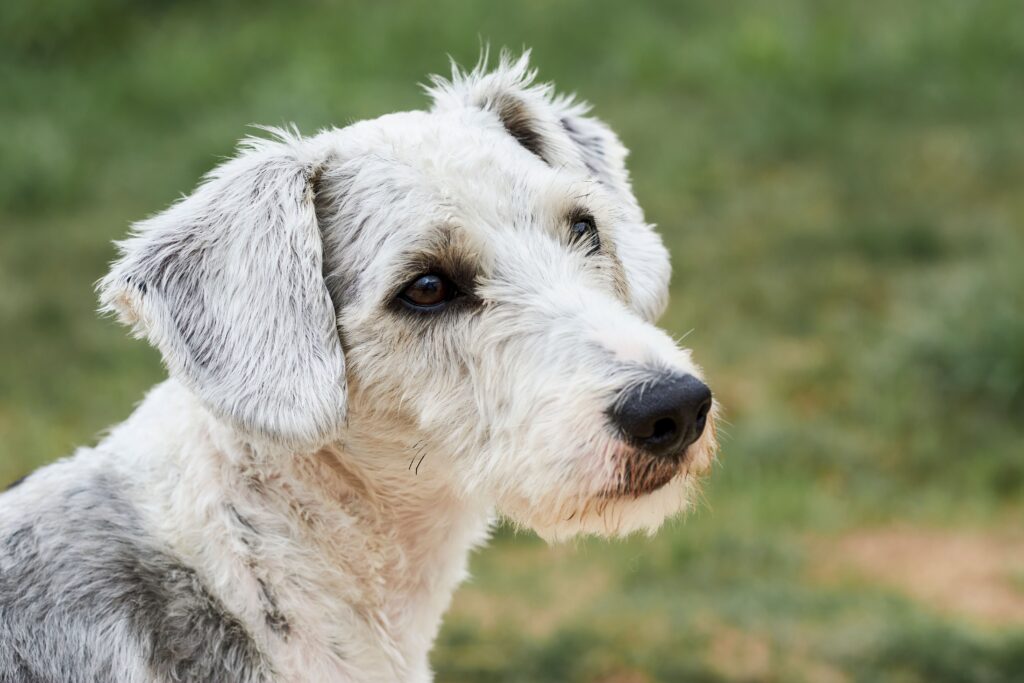
This quick comparison shows the main differences. It cannot replace an eye exam.
| What de problem? | Cataract | Nuclear sclerosis |
|---|---|---|
| What it is | A cloudy lens that blocks light | A normal aging haze in the lens |
| How it looks | White, milky, or opaque patches | An even blue-gray haze |
| Effect on vision | Can dim or block vision | Little effect on vision |
| Treatment | Surgery is the only way to remove it | None needed |
| Who can confirm it | Your vet or a veterinary ophthalmologist | Your vet or a veterinary ophthalmologist |
Symptoms to Watch For
- A visibly cloudy, white, or bluish film over part or all of the eye
- Bumping into furniture or hesitating in dim lighting
- Reluctance to go up or down stairs, especially at night
- Increased clinginess or sticking closer to familiar paths in the house
- Redness, squinting, or pawing at the eye (possible signs of inflammation or complications)
A dog can adapt remarkably well to gradual vision loss. So subtle behavior changes are often the first real clue — not obvious clumsiness.
Many owners say the first sign was not in the eyes at all. It was a small change in routine. A dog who once trotted down the hallway now walks slowly at night. Another stops jumping onto the sofa after someone moves a chair. These shifts are easy to miss. A short log makes them easier to spot.
| Day | Bright light: any hesitation? | Dim light: any bumping? | Stairs or new objects: any trouble? |
|---|---|---|---|
| Day 1 | |||
| Day 2 | |||
| Day 3 | |||
| Day 4 | |||
| Day 5 | |||
| Day 6 | |||
| Day 7 |
Bring this log to your vet. It gives them a clear picture of how your dog copes at home.
How Cataracts Are Diagnosed
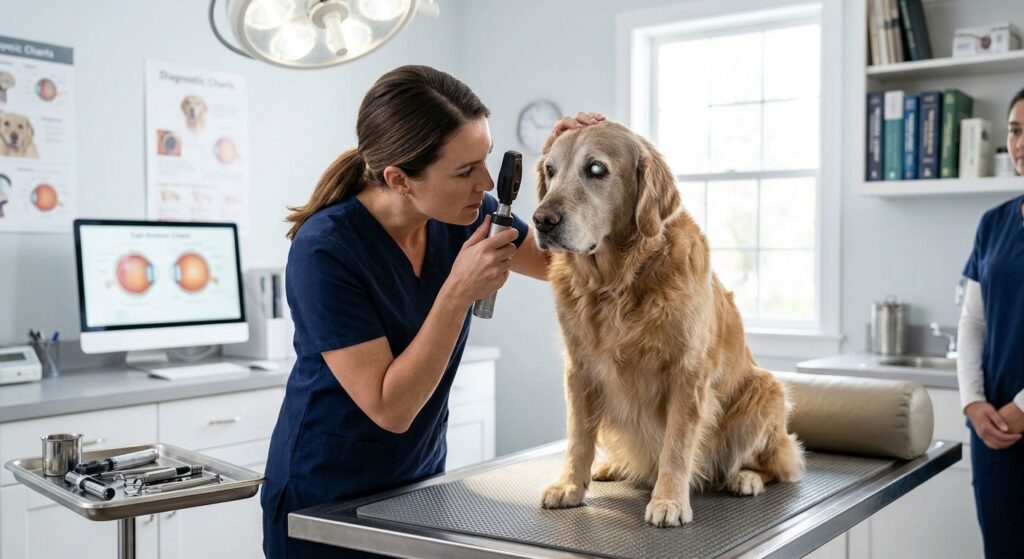
Your vet will typically check the eye with a light and a magnification tool to assess the lens directly. They may also refer you to a veterinary ophthalmologist for a more detailed evaluation, especially if you’re considering surgery. Diabetes is a leading cause of cataracts in dogs. Because of that, vets often recommend bloodwork alongside the eye exam to check for underlying conditions driving the change.
Weighing Cataract Surgery: Is It Worth It?
Surgery is the only treatment that can restore vision lost to a cataract. No eye drop or medication can dissolve one. That said, it’s a real decision with real trade-offs. It isn’t automatically the right choice for every dog.
When Surgery Tends to Make Sense
- The cataract affects both eyes and significantly impacts quality of life
- Your dog is otherwise a good anesthesia candidate, with no major heart, kidney, or other health concerns
- The cataract is caught relatively early, before secondary complications like lens-induced inflammation develop
When Owners Often Choose to Manage Without Surgery
- The dog has only one eye affected and adapts well using the other
- Underlying health issues make anesthesia meaningfully riskier
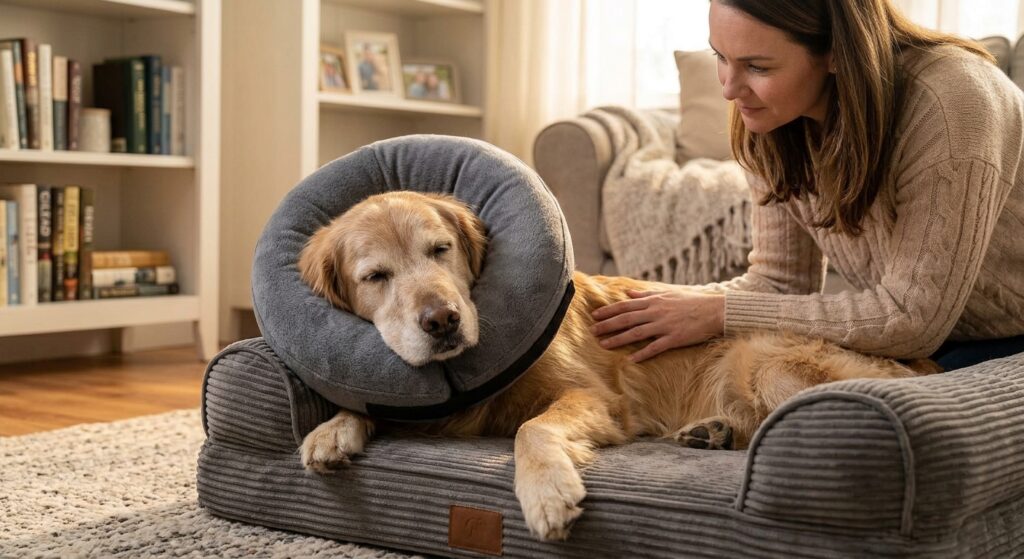
- Cost or the recovery process (which includes eye drops multiple times a day for weeks) isn’t realistic for the household
Neither path is automatically “right.” A veterinary ophthalmologist can give you a much clearer picture of your specific dog’s odds of a good outcome than a general estimate ever could.
Managing Cataracts Without Surgery
If surgery isn’t the right fit, you can still do a lot to help your dog adjust:
- Keep furniture and food/water bowls in consistent locations so your dog can navigate by memory
- Add nightlights in hallways or rooms your dog uses after dark
- Use verbal cues consistently before stairs, curbs, or uneven ground
- Ask your vet about anti-inflammatory drops if inflammation or discomfort develops, even without surgery
Many dogs live full, comfortable lives with unoperated cataracts, especially with a little extra structure at home.
Owners of dogs with vision loss often say the same thing: the house becomes a map. Once the furniture and bowls stay in place, many dogs walk their routes with confidence. Some owners add a textured mat by the water bowl or at the top of the stairs. The dog feels the change under its paws and knows where it is.
What About the Cost?
A veterinary ophthalmologist usually performs cataract surgery, not a general vet, and pricing varies significantly by clinic and region. Ask directly for an estimate that includes pre-surgical bloodwork, the surgery itself, and the follow-up drops and rechecks. The full cost often ends up higher than the headline surgery price alone.
Questions to Ask the Ophthalmologist
Lista (bloque List, con viñetas):
- Is my dog a good candidate, based on the eye exam and bloodwork?
- What is the success rate for dogs like mine?
- Which complications should I watch for?
- What is the full cost, including drops and rechecks?
- How long is recovery, and how many drops does my dog need each day?
- Will my dog need a cone, and for how long?
- What happens if we wait?
Frequently Asked Questions
Can cataracts in senior dogs go away on their own?
No. Once a cataract forms, it doesn’t resolve without surgery. It also doesn’t necessarily get worse quickly, though — some stay stable for a long time.
Are cataracts painful for dogs?
The cataract itself usually isn’t painful. But complications like lens-induced uveitis (inflammation) can be, which is one reason regular vet monitoring matters even if you’re not pursuing surgery.
Can a dog with cataracts still enjoy walks?
Yes, most can. Stick to familiar routes and use a short leash. Go slowly in new places. Dogs rely heavily on smell and hearing, so many keep enjoying their outings.
Can supplements or eye drops dissolve cataracts?
No. No proven drop or supplement dissolves an established cataract. Some drops treat inflammation, but they do not remove the cataract itself. Ask your vet before you give any supplement.
Can cataracts come back after surgery?
Surgery removes the cloudy lens, so the original cataract cannot return. Some dogs develop haziness in the tissue behind the lens later on. Your ophthalmologist will check for this at follow-up visits.
How can I tell if my dog is losing sight?
Watch for hesitation in dim light, bumping into objects, and startling when touched by surprise. Only an eye exam can confirm vision loss, so book a visit if you notice these signs.
Is my dog too old for cataract surgery?
Age alone usually isn’t the deciding factor — overall health and anesthesia risk matter more. Plenty of senior dogs are still good surgical candidates if bloodwork and a physical exam come back clear. The American College of Veterinary Ophthalmologists offers additional resources on evaluating candidates for cataract surgery.
Cloudy eyes are just one of many changes worth tracking as your dog ages. If you haven’t had a full check-up recently, our guide on senior dog wellness exams covers what a thorough vet visit should include and how often to schedule one.