
Your senior dog has arthritis, and you’ve probably already looked into supplements and vet-prescribed medication. But diet often gets overlooked. It can genuinely support joint health. Just as importantly, the right diet helps manage weight, which puts extra strain on painful joints. This guide covers what actually matters when you choose a food for an arthritic senior dog. We also compare the main types of formulas available.
Many owners land on this question the same way: the vet mentions weight and joint support in the same breath, and suddenly “senior food” from the supermarket shelf does not feel like enough. The good news is that you do not need to guess. A few real differences separate a food that helps from one that just says “joint” on the bag.
What to Look for in a Joint-Support Dog Food
Not every “senior formula” on the shelf actually addresses arthritis. Here’s what genuinely matters:
- Added glucosamine and chondroitin. Many joint-focused formulas include these directly in the food. They don’t rely solely on a separate supplement.
- Omega-3 fatty acids (EPA/DHA), typically from fish oil. These have anti-inflammatory properties that can ease joint discomfort.
- Controlled calorie density. Excess weight is one of the biggest factors that worsens arthritis. A food that supports a healthy weight often helps more than one focused purely on “joint” marketing claims.
- High-quality protein at an appropriate level. Senior dogs still need adequate protein to maintain muscle mass. Muscle loss can actually make joint problems feel worse, since there’s less support around the affected joints.
- A manufacturer with dedicated veterinary nutritionists on staff. Joint-support formulas need careful ingredient balancing. Simply adding a supplement to a standard recipe won’t cut it.
Types of Joint-Support Food to Consider
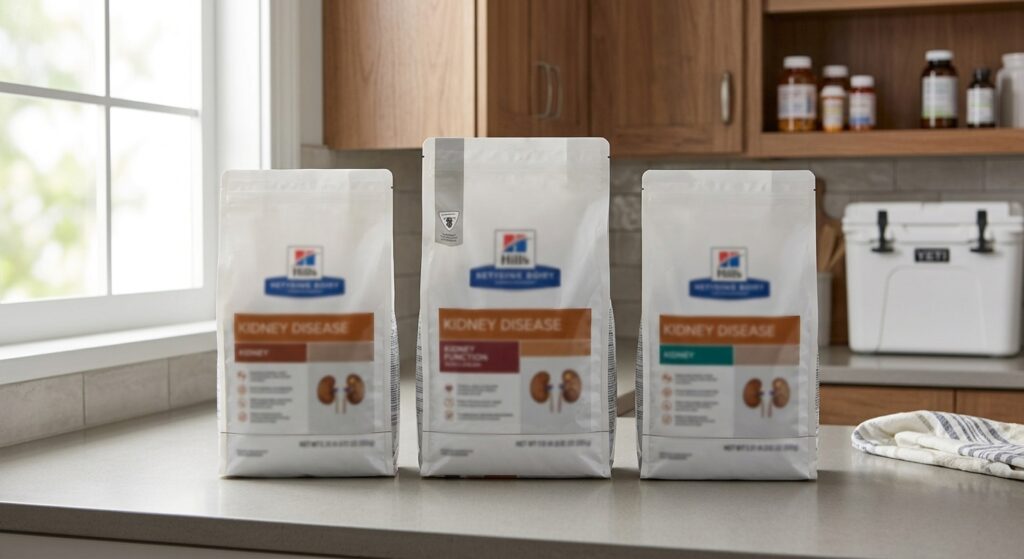
Prescription Joint Mobility Diets
Vets formulate these specifically for dogs with diagnosed arthritis, and they typically require a veterinary recommendation. They tend to combine glucosamine, chondroitin, and omega-3s at clinically-tested, therapeutic doses — not just token amounts.
Best for: Dogs with a confirmed arthritis diagnosis, especially moderate-to-severe cases, where a general “senior” formula may fall short.
Over-the-Counter Senior/Joint Formulas
Many major dog food brands offer a “senior” or “joint care” line without a prescription. These generally include added glucosamine and omega-3s, though usually at lower levels than prescription options.
Best for: Dogs with mild arthritis or those in the earlier stages of joint changes, as a supportive everyday diet alongside other management strategies.
Weight Management + Joint Combined Formulas
Some formulas combine calorie control with joint support. This matters because a large share of dogs with arthritis also carry extra weight. Tackling both issues together tends to produce better results than addressing them separately.
Best for: Dogs with arthritis that also carry extra weight, where a standard senior formula might not provide enough calorie control.
Homemade or Fresh Diets With Vet Guidance
Some owners work with a veterinary nutritionist to design a fresh or homemade diet. This lets them tailor the diet to their dog’s joint needs, weight goals, and any other health conditions — like kidney disease, which changes protein and phosphorus requirements significantly.
Best for: Owners with the time and budget for a customized approach, or dogs with multiple overlapping health conditions where an off-the-shelf formula isn’t a great fit.
Comparison Overview
| Diet Type | Joint Support Level | Requires Prescription | Best Fit |
|---|---|---|---|
| Prescription Joint Mobility | High (clinically dosed) | Yes | Confirmed, moderate-severe arthritis |
| OTC Senior/Joint Formula | Moderate | No | Mild arthritis, general senior support |
| Weight Management + Joint | Moderate | Sometimes | Overweight dogs with arthritis |
| Homemade/Fresh (vet-guided) | Customizable | Requires professional design | Multiple health conditions or specific needs |
Which Type Fits Your Dog Right Now?
The table above compares features. This is the shortcut if you just want an answer:
- Vet has confirmed moderate-to-severe arthritis → ask about a prescription joint mobility diet.
- Mild stiffness, no diagnosis yet, dog is a healthy weight → an OTC senior/joint formula is a reasonable starting point.
- Dog is overweight and has any level of arthritis → prioritize a weight management + joint formula. Extra weight undoes most of the benefit of joint support alone.
- Dog also has another condition, like kidney disease → a standard joint formula may not fit. Ask your vet or a veterinary nutritionist about a tailored diet.
How to Transition Your Dog to a New Food
Switching foods too quickly is one of the most common mistakes owners make. It often causes digestive upset that has nothing to do with the food itself being a poor fit. Transition gradually over 7-10 days instead. Mix in increasing amounts of the new food with the old. This gives your dog’s digestive system time to adjust, and it makes it much easier to tell whether the new diet actually agrees with them.
Should You Combine Food + Supplements?
In many cases, yes. A joint-support food provides a baseline level of beneficial nutrients. A separate supplement, covered in our joint supplement comparison guide, can add more on top if your vet feels your dog needs additional support. Check the food’s label first, though. Doubling up on glucosamine from both food and a supplement isn’t necessarily harmful, but discuss dosage with your vet rather than assuming “more is better.”
Tracking a Food Trial (6-8 Weeks)
A new diet works slowly, so a quick before-and-after glance is easy to miss. Check in every two weeks instead.
| Check-in | Weight | Stool quality (normal / soft / loose) | Ease of movement after rest | Appetite |
|---|---|---|---|---|
| Start | ||||
| Week 2 | ||||
| Week 4 | ||||
| Week 6 | ||||
| Week 8 |
If nothing has improved by week 8, that itself is useful information for your vet, not a failure on your part.
Frequently Asked Questions
Is grain-free food better for dogs with arthritis?
Not specifically. Whether a food has grain has no direct link to joint health. Glucosamine, omega-3s, and calorie control matter far more.
Will changing my dog’s food alone fix their arthritis?
No. Diet supports a broader plan that usually also includes exercise, weight control, and often medication or supplements. For the full picture, see our guide on arthritis in senior dogs.
How do I know if the new food is actually helping?
Look for gradual change over several weeks: easier movement after rest, more willingness to walk, or a healthier body condition if weight loss was also a goal. Give it at least 6 to 8 weeks before deciding.
Can I mix two different joint-support foods?
It is best not to, without asking your vet first. Combining formulas can mean doubling certain ingredients without realizing it. One well-chosen food is usually enough.
My dog is picky. What if they refuse the new food?
Try mixing it gradually with the old food over 7 to 10 days rather than switching all at once, and warm wet food slightly to boost the smell. If your dog still refuses it after a fair trial, tell your vet. There are usually other options within the same category. This guide with our article on joint supplements for dogs with arthritis to build a complete nutritional support plan.