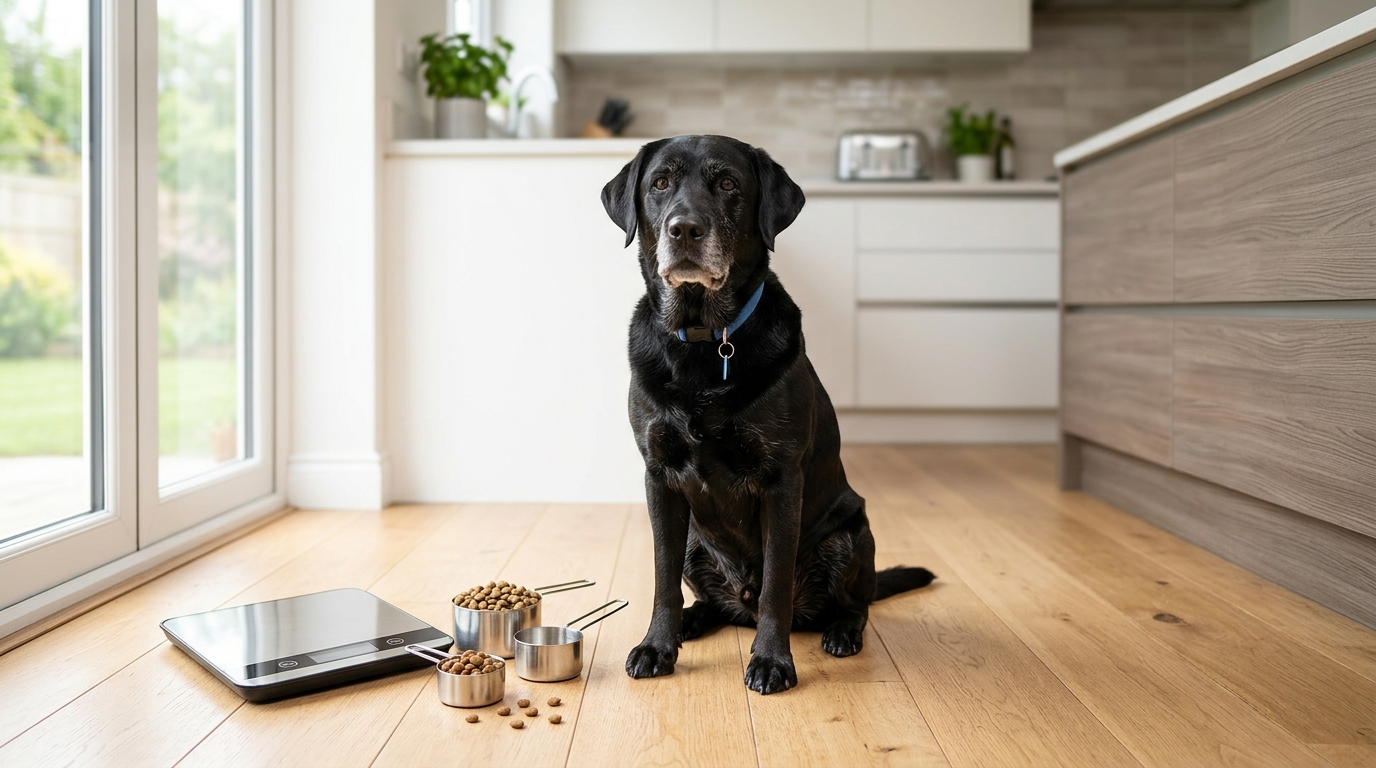
One of the most common questions senior dog owners have is surprisingly simple: how much should I actually be feeding? It sounds basic, but getting it right matters more than ever in a dog’s later years — overfeeding accelerates weight gain that stresses joints and organs, while underfeeding can lead to muscle loss that a senior dog’s body struggles to recover from. This guide breaks down how to calculate appropriate portions and adjust them based on your dog’s specific situation
Why Senior Dogs Have Different Caloric Needs
As dogs age, their metabolism typically slows down and they tend to be less active than in their younger years, which means many senior dogs need fewer calories than they did as adults, even if their weight has stayed the same. At the same time, some senior dogs — particularly those with conditions like kidney disease or cancer — may need to maintain a slightly higher body condition to avoid excessive muscle wasting.
This is why a one-size-fits-all feeding chart on a bag of food is only ever a starting point, not a final answer.
General Feeding Guidelines by Weight
As a general starting point, here’s roughly how many calories a moderately active senior dog needs per day, based on weight:
| Dog’s Weight | Approximate Daily Calories |
|---|---|
| 10 lbs (4.5 kg) | 200–275 calories |
| 20 lbs (9 kg) | 325–450 calories |
| 40 lbs (18 kg) | 550–750 calories |
| 60 lbs (27 kg) | 750–1,000 calories |
| 80 lbs (36 kg) | 950–1,250 calories |
| 100+ lbs (45+ kg) | 1,150–1,500+ calories |
To translate this into actual portions, check the calorie content per cup or per can on your specific food’s label — this varies significantly between brands and formulas, so the same weight of two different foods can require very different portion sizes.
Factors That Change These Numbers
The chart above is only a starting point. Several factors can shift a senior dog’s actual needs significantly:
- Activity level. A senior dog that still enjoys long walks needs more calories than one that mostly rests, even at the same weight.
- Spayed/neutered status. Spayed and neutered dogs generally have slightly lower calorie needs than intact dogs of the same weight.
- Body condition, not just weight. Two dogs of the same weight can have very different body compositions — a lean, muscular 40 lb dog needs a different portion than a 40 lb dog carrying extra fat.
- Health conditions. Dogs with kidney disease, diabetes, or heart conditions often have specific dietary requirements that go beyond simple calorie counting, which is why we cover kidney-specific diets separately.
- Whether treats are included. Treats should generally make up no more than 10% of a dog’s total daily calories — if you’re feeding a lot of treats, that needs to be subtracted from the main meal portions.
How to Check If You’re Feeding the Right Amount
Rather than relying purely on calculations, use these practical checks:
- Body condition scoring. You should be able to feel (though not necessarily see) your dog’s ribs with light pressure, and there should be a visible waist when viewed from above. If ribs are hard to feel, your dog may be overweight; if they’re very prominent, your dog may be underweight.
- Regular weigh-ins. Weighing your senior dog monthly (many vet clinics will let you use their scale for free) helps catch gradual weight changes before they become significant.
- Energy and mobility. A dog at an appropriate weight for their body typically moves more comfortably — this matters especially for dogs managing arthritis, where even a few extra pounds can noticeably affect comfort.
Should You Feed One Large Meal or Split It Up?
Most vets recommend splitting a senior dog’s daily food into two smaller meals rather than one large one. This tends to be easier on digestion, helps maintain more stable blood sugar and energy levels throughout the day, and can be gentler on dogs with certain health conditions. For dogs with a reduced appetite, some owners find that three or four very small meals throughout the day work better than two larger ones.
When to Adjust Portions
Revisit your dog’s portion size:
- After any significant weight change (gain or loss) at a monthly weigh-in.
- Following a new diagnosis that affects dietary needs (kidney disease, diabetes, etc.).
- If activity level changes significantly, such as after an arthritis diagnosis that reduces exercise tolerance.
- Roughly every 6-12 months as a general check-in, even without an obvious reason, since senior dogs’ needs can shift gradually.
Frequently Asked Questions
Should I feed my senior dog less just because of their age? Not automatically — it depends on their activity level and body condition, not age alone. Some senior dogs need fewer calories due to reduced activity, while others (especially those with certain illnesses) may need to maintain higher intake to prevent muscle loss.
Is it normal for a senior dog’s appetite to decrease? A gradual, mild decrease can be normal with age, but a sudden or significant drop in appetite is not something to dismiss — it’s worth discussing with your vet, since it can indicate an underlying health issue. See our guide on what to do when a senior dog won’t eat for more detail.
How do I know if my senior dog is overweight? The easiest home check is feeling for the ribs and looking for a waist from above, as described earlier. If you’re unsure, your vet can assign an official body condition score at your next visit.
Getting portion sizes right is one of the simplest ways to support your senior dog’s long-term health, especially when combined with a food formulated for their specific needs. For dogs managing joint issues, pair this guide with our article on best food for senior dogs with arthritis to fine-tune both what and how much you’re feeding.