Why Choose a No-Pull Harness for an Older Dog?
Walks should feel good for you and your dog. A no-pull harness for senior dogs can help make that happen. It spreads pressure across the chest instead of the neck. It also helps you steer a dog who still pulls out of habit or excitement. This guide covers how these harnesses work, how to choose one, and how to train your dog to walk calmly.
Quick answer: Choose a front-clip or dual-clip harness with soft padding, side buckles or a step-in design, and straps that leave the shoulders free. Fit it so you can slide two fingers under each strap. Then keep walks short and reward your dog for a loose leash.
Why Pulling Gets Riskier With Age
Pulling is hard on any dog. It is harder on a senior dog. A collar puts pressure on the neck every time your dog lunges. Aging joints, weaker muscles, and slower reactions add to the strain. A sudden pull can also throw your dog off balance.
Some senior dogs pull because they still love walks and forget their limits. Others pull because they feel unsteady. A better harness and a calm routine help in both cases.
Collar vs Harness at a Glance
| Collar | No-pull harness | |
|---|---|---|
| Where the pressure goes | The neck | The chest and body |
| When your dog lunges | Strains the neck and throat | Spreads the pressure out |
| Putting it on | Quick and easy | Easy with a step-in or side-buckle design |
| Dogs with neck or back pain | Not ideal | Often a gentler choice, so ask your vet |
Keep a collar for ID tags. For walks, a well-fitted harness is a gentler choice for a dog that pulls.
How a No-Pull Harness Works
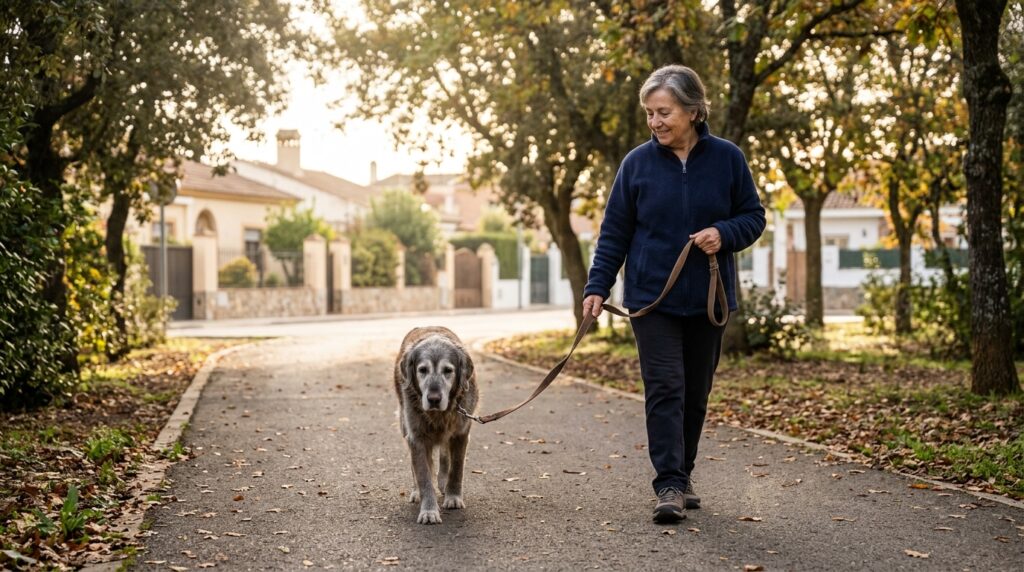
A no-pull harness changes how the leash pulls on your dog’s body. Instead of tightening around the neck, it redirects your dog’s movement. Most designs use one of three clip styles.
Front-Clip Harnesses
The leash clips at the chest. When your dog pulls, the harness gently turns the body sideways. This breaks the forward momentum. Many trainers like this style for dogs that pull hard.
Back-Clip Harnesses
The leash clips between the shoulder blades. This style is easy to put on and comfortable for calm walkers. It does little to stop pulling. Some dogs even pull harder in a back-clip harness.
Dual-Clip Harnesses
These harnesses have clips at both the chest and the back. You can use one clip or both with a double-ended leash. They give you flexibility as your dog’s needs change.
Harness Types Compared
Use this table to compare the three styles at a glance.
| Type | Where the leash clips | Pulling control | Best for |
|---|---|---|---|
| Front-clip | Chest | Good | Dogs that pull |
| Back-clip | Back | Low | Calm walkers and easy on-and-off |
| Dual-clip | Chest and back | Good, and adjustable | Dogs whose needs change |
Which Style Fits Your Senior Dog?
- Your dog still pulls hard: a front-clip harness gives the most control.
- Your dog walks calmly but has stiff joints: a back-clip harness with side buckles is easy to put on.
- Your dog’s needs change over time: a dual-clip harness lets you switch clips.
- Your dog has arthritis in the front legs or shoulders: pick a design that leaves the shoulders free, and ask your vet before choosing a front-clip model.
- Your dog is small: choose a light, soft harness and measure the chest carefully. Small dogs slip out of loose harnesses, so check the fit often.
What to Look for in a No-Pull Harness for Senior Dogs
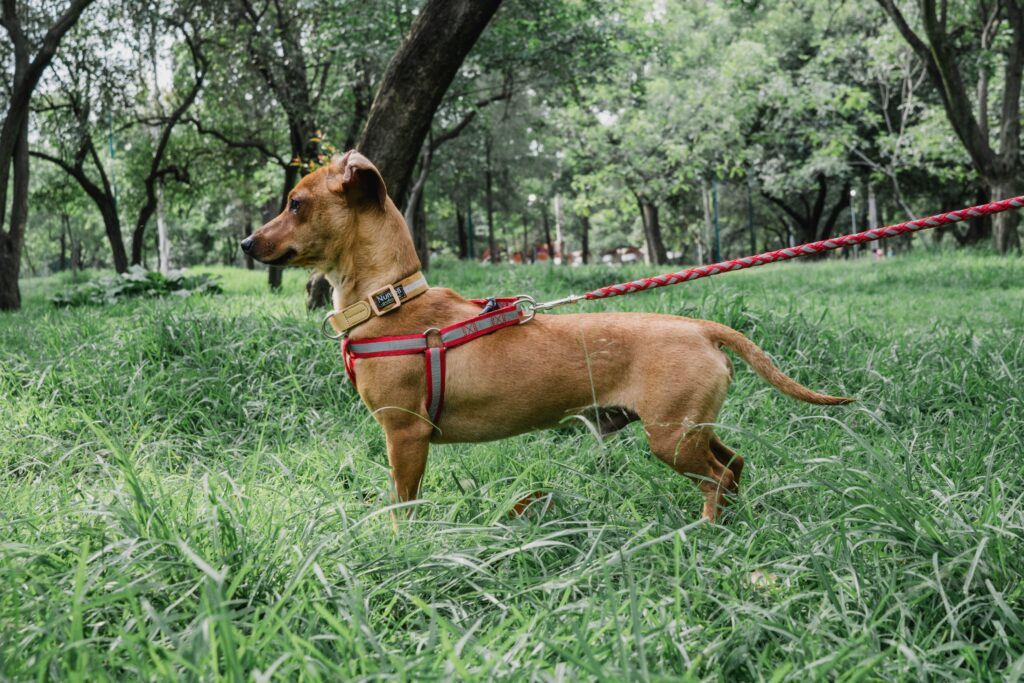
Senior dogs need more than a good clip position. Comfort matters most.
Soft, Padded Lining
Look for soft padding around the chest and under the legs. Thin straps can rub, especially on dogs with thin fur or sensitive skin.
Easy On and Off
Stiff joints make it hard to lift a leg or duck under a strap. Step-in designs and harnesses with side buckles are easier for many senior dogs.
Freedom of Shoulder Movement
Some harnesses have a strap that crosses the front of the shoulders. This can limit the way your dog moves. If your dog has arthritis, ask your vet or a trainer whether this design suits your dog. Our guide on arthritis in senior dogs explains the signs and treatment options.
Adjustable Fit
Straps in several places let you fit the harness to your dog’s shape. This matters when your dog gains or loses weight or muscle.
Visibility
Reflective strips help on early morning and evening walks. They help even more if your dog’s vision is fading.
Quick Buying Checklist
- Soft padding on the chest and under the legs
- Side buckles or a step-in design
- Room for the shoulders to move freely
- Several adjustment points
- Reflective strips
- Washable material
How to Fit the Harness Correctly
A good fit makes the harness safer and more comfortable. A poor fit can rub or let your dog slip out.
- Measure your dog’s chest at the widest point, just behind the front legs.
- Choose a size from the maker’s chart, using both the measurement and your dog’s weight.
- Adjust the straps until you can slide two fingers under each one.
- Check the armpits for rubbing.
- Pull the leash gently and make sure the harness does not slide sideways.
- Check the fit again after the first walk.
Many owners say the first fitting takes several tries. Dogs gain or lose weight, and straps loosen over time. Check the fit every few weeks.
Training Your Senior Dog to Walk Without Pulling
A harness helps, but training does the real work. Keep sessions short and relaxed.
Stop and Wait
When the leash tightens, stop. Wait for your dog to ease off. Then walk on.
Reward the Right Spot
Give a small treat when your dog walks beside you. Reward often at first, then less often as your dog improves.
Keep Walks Short
Senior dogs tire faster than young ones. Two short walks often work better than one long walk.
Many owners say progress comes slowly, then all at once. A dog who pulled for years can learn a looser leash in a few weeks. Patience matters more than speed.
Senior dogs tire faster than young ones. Two short walks often work better than one long walk. Our guide on how much to walk a dog with arthritis explains how to adjust walks by severity.
7-Day Walk Training Log
| Day | Walk length | Times the leash tightened | Treats given | Mood | Notes |
|---|---|---|---|---|---|
| Day 1 | |||||
| Day 2 | |||||
| Day 3 | |||||
| Day 4 | |||||
| Day 5 | |||||
| Day 6 | |||||
| Day 7 |
Use this log to see how your dog improves from day to day.
When Pulling Is a Sign of Something Else
A dog who never pulled and suddenly does may feel uneasy or confused. A dog who resists walks may feel pain. If the change is new, mention it to your vet. Our guide on how to help a senior dog use stairs safely covers other signs of mobility trouble.
If your dog needs help standing or climbing, a support harness with a handle may suit your dog better than a no-pull harness.
Frequently Asked Questions
Is a no-pull harness safe for a senior dog?
Yes, when it fits well and has soft padding. Choose a design that does not restrict the shoulders. Ask your vet if your dog has arthritis or another joint problem.
Will a no-pull harness stop my dog from pulling completely?
Not on its own. A harness makes pulling less rewarding, but training does the real work. Pair the harness with rewards for walking beside you. The American Kennel Club offers additional guidance on leash training and walking equipment.
How tight should the harness be?
Snug but not tight. You should be able to slide two fingers under any strap. If the harness shifts or rubs, adjust it.
Is a front-clip or back-clip harness better for a senior dog?
A front-clip harness gives more control. A back-clip harness is easier to put on. A dual-clip harness lets you choose. Pick the style your dog tolerates best.
Can my dog wear the harness all day?
It is best not to. Take it off indoors, since straps can rub the skin. Check your dog’s skin after each walk, and wash the harness when it gets dirty.
What if my dog hates putting on the harness?
Go slowly. Let your dog sniff the harness and reward every small step. Keep early sessions short. A step-in design may help a stiff dog.
How long does it take to learn loose-leash walking?
It varies. Some dogs improve in a few weeks. Others need several months. Short, daily sessions work best.
What is the best no-pull harness for a senior dog with arthritis?
There is no single best model. Look for soft padding, side buckles or a step-in design, and straps that leave the shoulders free. Ask your vet to check the fit if your dog has joint pain.
Is a harness better than a collar for a senior dog?
For walks, usually yes. A harness spreads pressure across the chest instead of the neck. Keep a collar for ID tags.
Can a small senior dog use a no-pull harness?
Yes. Choose a light, soft harness and measure the chest carefully. Small dogs can slip out of loose harnesses, so check the fit often.
This article is for informational purposes only and is not a substitute for professional veterinary advice. Always consult your vet about your dog’s specific health needs.
If your dog needs more than a no-pull harness, such as help standing or climbing, our guide to the best mobility harnesses for senior dogs covers support options with handles.