Not Every Lump Is Cancer, But Every Lump Deserves a Look
Finding a new lump on your dog is scary. The good news is that many tumors in senior dogs turn out to be benign. Still, the only way to know for sure is to have it checked, since some cancerous tumors look and feel exactly like harmless ones at first. This guide covers what tends to make a lump more or less concerning, and when to book that vet visit.
Why Tumors Become More Common With Age
Cells accumulate small mutations over a lifetime. Older dogs have simply had more time for abnormal growths to form. This doesn’t mean every lump is dangerous. It does mean vets take new lumps in senior dogs more seriously than in younger ones, purely due to the odds involved.
Common Types of Lumps in Older Dogs
Lipomas
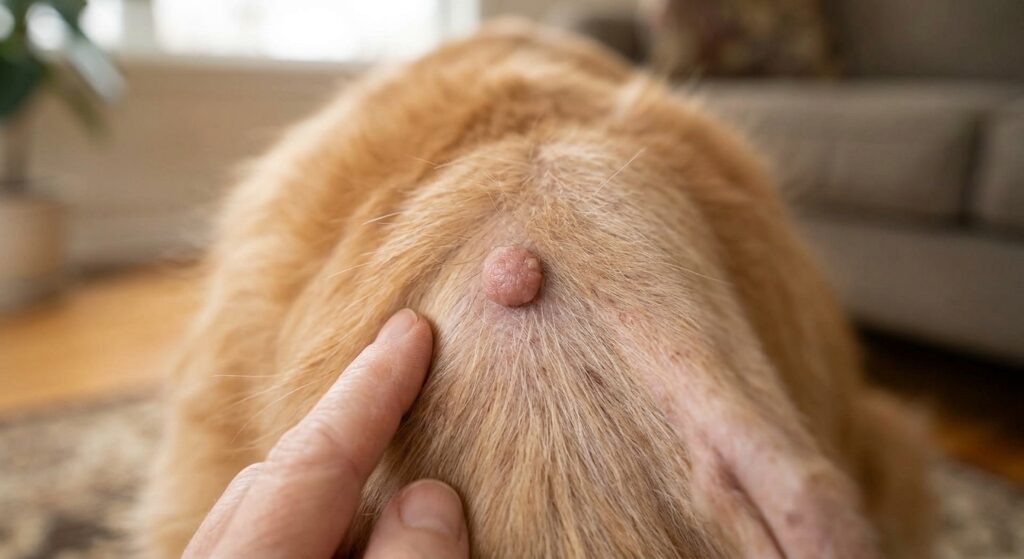
These soft, movable fatty lumps sit just under the skin. They’re extremely common in senior dogs and almost always benign, though a vet still needs to confirm this rather than assume it from a quick feel.
Sebaceous Cysts
These small, often round bumps form when a skin gland gets blocked. They can look alarming if they become inflamed or rupture, but most resolve without major intervention.
Mast Cell Tumors
These vary widely in appearance, which makes them tricky. Some look like a simple bump; others are red, swollen, or change size quickly. Because of this variability, vets often recommend testing any new lump rather than judging by appearance alone.
Other Skin and Internal Tumors
Lumps can also arise from other tissue types, and not every tumor is visible on the skin. Some internal tumors are only found through bloodwork, imaging, or a physical exam that notices swelling in the abdomen or elsewhere.
Lump Types at a Glance
No lump type can be confirmed by touch alone. Use this table as a rough guide.
| Type | What it usually feels like | What it usually is | Vet check needed? |
|---|---|---|---|
| Lipoma | Soft and movable under the skin | Almost always benign | Yes, to confirm |
| Sebaceous cyst | Small, round bump | Usually harmless | Yes, especially if inflamed |
| Mast cell tumor | Varies, and may change size | Can be serious | Yes, testing is recommended |
| Other tumors | Varies | Varies | Yes |
Warning Signs That Mean a Same-Week Vet Visit
- Rapid growth over days or a few weeks
- A lump that’s firm, fixed to underlying tissue, or irregularly shaped
- Redness, ulceration, or bleeding from the lump
- Sudden appearance of multiple new lumps
- Any lump paired with lethargy, weight loss, or reduced appetite
Many owners find a lump by accident while petting their dog. A monthly check turns that accident into a habit. Run your hands slowly over the whole body, including the legs, belly, armpits, and neck. Write down each lump and measure it with a ruler.
Lump Tracker
| Lump | Location | Size | Soft or firm | Date found | Changes since last check |
|---|---|---|---|---|---|
| Lump 1 | |||||
| Lump 2 | |||||
| Lump 3 |
Take a photo of each lump next to a coin to show its size. Show the tracker and photos to your vet.
How Vets Diagnose a Lump or Tumor
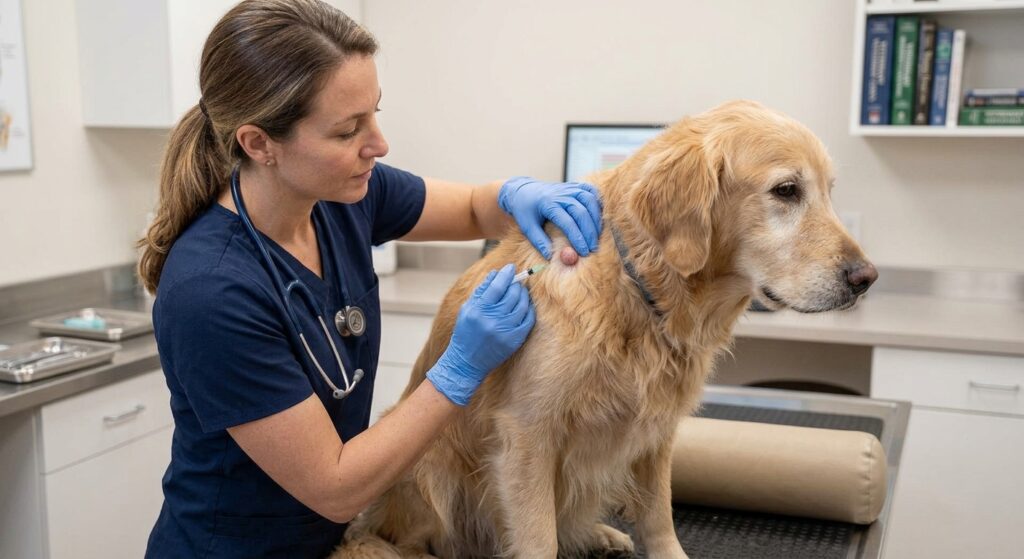
The most common first step is a fine needle aspirate, a quick, low-discomfort procedure where the vet draws a small sample of cells with a thin needle and examines them under a microscope. This often gives a same-day answer for common lump types. If results are unclear, a biopsy — removing part or all of the lump for lab analysis — gives a more definitive diagnosis.
Questions to Ask About a Lump
- What do you think this lump could be?
- Do you recommend a needle aspirate or a biopsy?
- How soon will the results arrive?
- Should we remove it, and why or why not?
- Which signs should I watch for while we wait?
- When should we recheck it?
What Happens If It Is Cancer
A cancer diagnosis in a senior dog isn’t automatically a worst-case scenario. Many tumors, even some malignant ones, respond well to surgical removal, especially when caught early. Your vet can walk you through realistic options based on the tumor type, its location, and your dog’s overall health, rather than a one-size-fits-all approach.
Many owners say the waiting is the hardest part. Ask your vet how long results will take and what the next steps are, so you know what to expect. Keep your dog’s routine as normal as possible in the meantime. Good food, gentle walks, and time with you still matter. Some owners also worry about costs. Our guide to pet insurance for senior dogs explains what to check before you rely on a policy.
Frequently Asked Questions
Should I wait and monitor a new lump before seeing a vet?
A brief monitoring period is reasonable for a small, soft, unchanging lump. But get any new lump checked within a couple of weeks, since appearance alone can’t reliably tell benign from malignant.
Are certain breeds more prone to tumors in old age?
Yes. Breeds like Boxers, Golden Retrievers, and Boston Terriers have higher rates of certain tumor types. The American Veterinary Medical Association has additional resources on cancer risk and screening in dogs.
Does a lump’s size indicate whether it’s dangerous?
Not reliably. Small lumps can be malignant, and some large lumps are completely benign. Size matters less than growth rate, texture, and lab results.
Can a lipoma turn into cancer?
Lipomas themselves are benign. But a cancerous lump can look just like one. Only testing can tell them apart, so have every new lump checked.
Is a needle aspirate painful for my dog?
Most dogs handle it well. The vet uses a thin needle, and it takes only a few moments. Some dogs may need light sedation if they are anxious or the lump is hard to reach.
Should every lump be removed?
Not always. Some benign lumps can stay if they do not bother your dog. Your vet will decide based on test results, the lump’s location, and how fast it grows.
How often should I check my dog for lumps?
Once a month at home, and at every vet visit. A regular routine helps you notice changes early.
Diagnosis and treatment can get expensive, so it helps to understand how pet insurance for senior dogs handles new illnesses before you need it.
This article is for informational purposes only and is not a substitute for professional veterinary advice. Always consult your vet about your dog’s specific health needs.
Regular vet visits make it much easier to catch new lumps early. Our guide on senior dog wellness exams covers what a thorough check-up should include and how often to schedule one.