When Dog Wheelchairs for Senior Dogs Make Sense
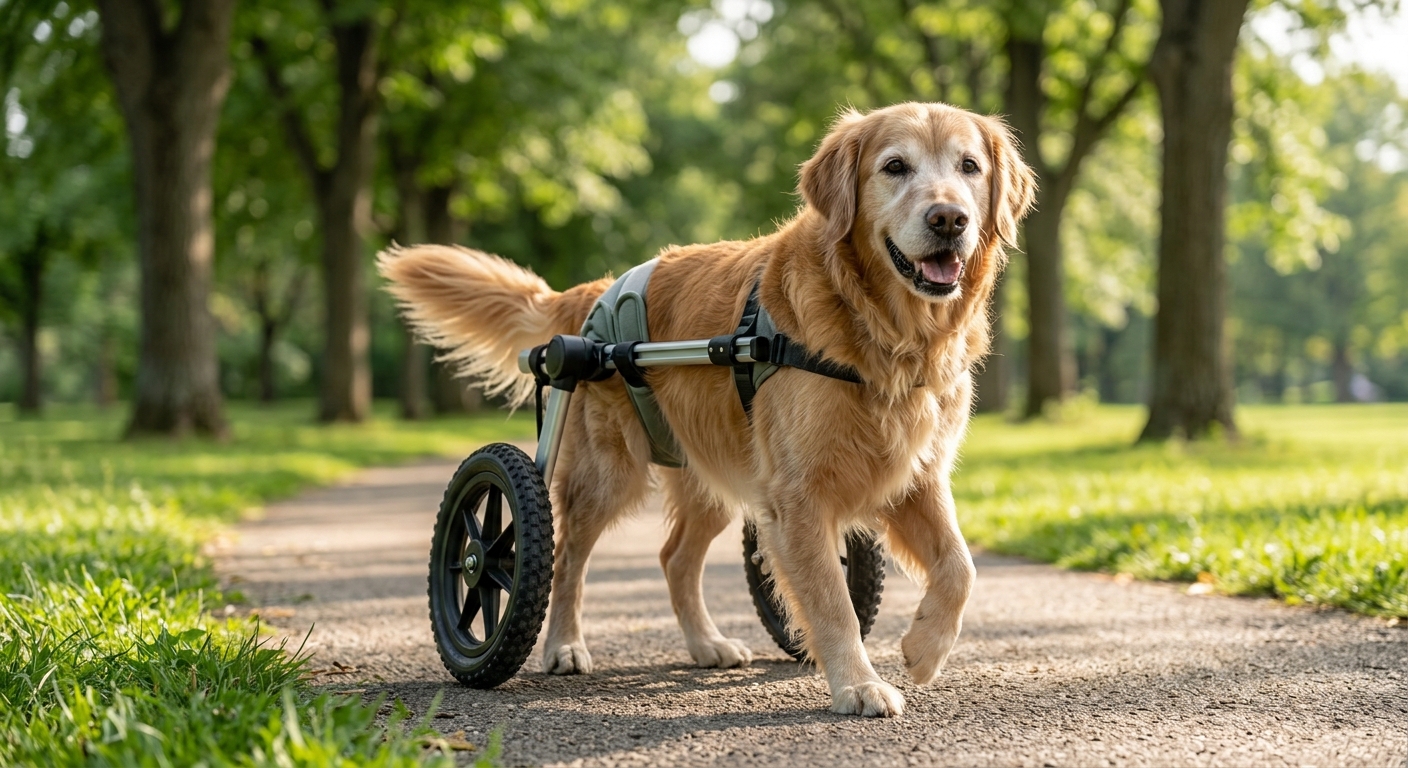
Dog wheelchairs for senior dogs provide mobility support when hind-leg weakness, paralysis, or advanced arthritis makes walking without assistance difficult or impossible. Rather than a last resort, many dogs adapt to a wheelchair remarkably well and continue enjoying walks, play, and an active life with the right support. This guide covers the main types available and what to expect during the adjustment process.
Signs a Wheelchair May Be Worth Considering
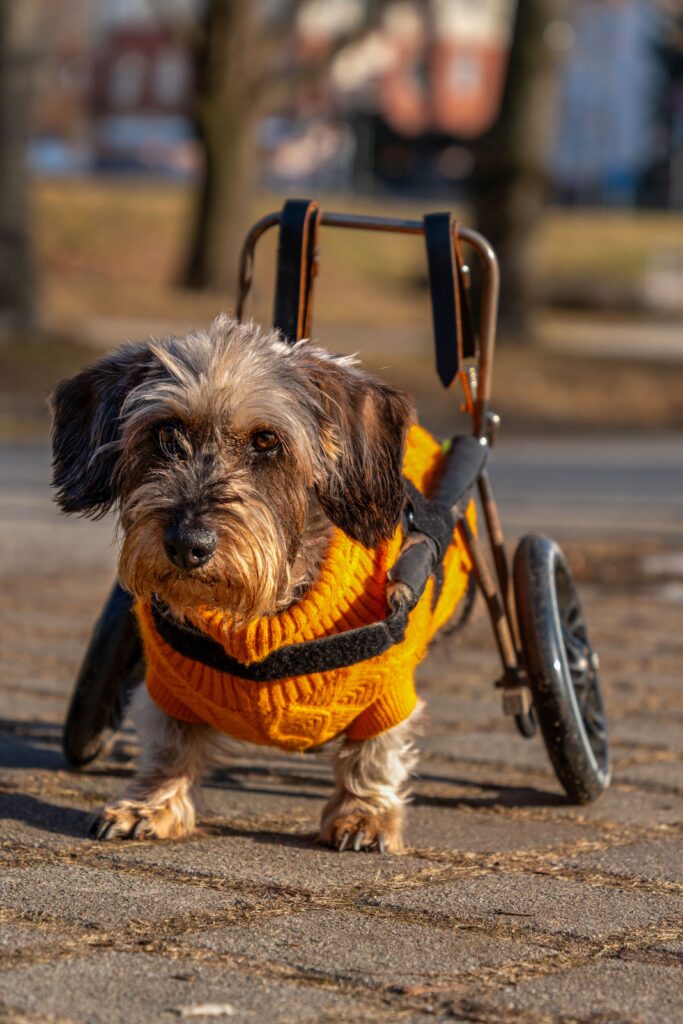
- Significant hind-leg weakness that a harness alone no longer adequately supports
- Partial or full hind-leg paralysis, from conditions like degenerative myelopathy or intervertebral disc disease
- Advanced arthritis where walking causes visible distress despite other management strategies
- Recovery from spinal or orthopedic surgery, where a vet recommends supported mobility during healing
A wheelchair works best as part of a plan discussed with your vet, since the underlying cause affects which type and design suits your dog best.
Types of Dog Wheelchairs
Rear-Support Wheelchairs
These support only the hind legs, allowing dogs with functional front legs to walk normally while the cart’s wheels take on the work the hind legs can no longer do effectively. This is the most common type for dogs with arthritis or hind-leg weakness.
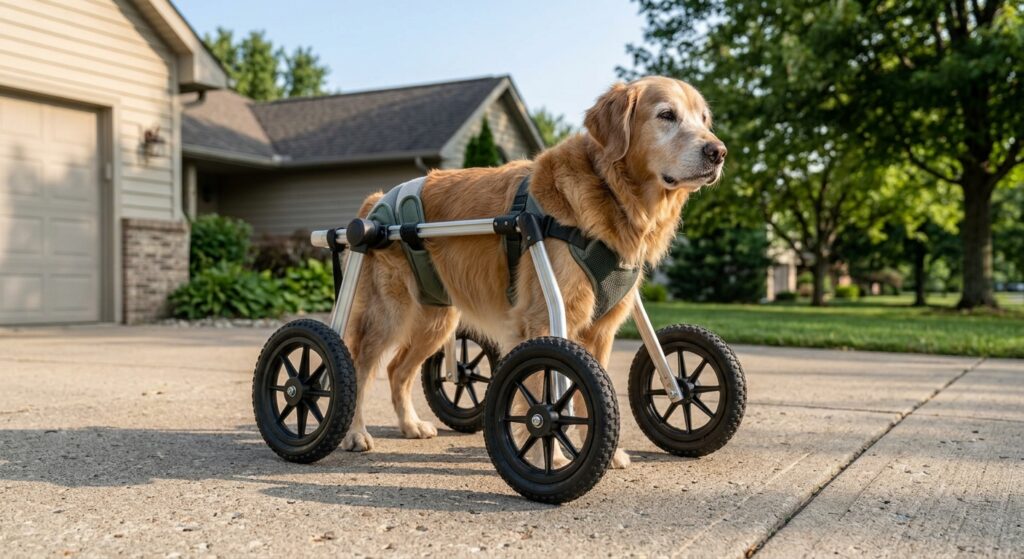
Full-Support (Quad) Wheelchairs
Providing support to all four legs, these work for dogs with weakness affecting both the front and hind end, though this is less common in typical age-related decline compared to hind-leg-specific issues.
Adjustable/Modular Carts
Many modern wheelchairs offer adjustable frames that can shift from rear-support to full-support configurations, which is useful if your dog’s condition may progress over time, avoiding the need to purchase an entirely new cart later.
Which Wheelchair Type Fits?
| Type | Best for | Keep in mind |
|---|---|---|
| Rear-support | Dogs with weak or paralyzed hind legs and strong front legs | The front legs do all the steering and pulling |
| Full-support (quad) | Dogs with weakness in both the front and hind legs | Needs a careful fit and usually a vet’s advice |
| Adjustable/modular | Dogs whose condition may change over time | Costs more at first, but it can adapt later |
Measuring for a Proper Fit
Getting measurements right matters enormously for comfort and effectiveness:
- Height from the ground to the top of the shoulders, taken while your dog stands naturally.
- Length from shoulders to hips, to ensure the frame properly aligns with your dog’s body.
- Weight, to confirm you’re within the cart’s rated capacity — going close to the maximum isn’t ideal for controlled movement.
- Hind leg length, if your dog’s back legs will rest in slings, since incorrect sling height affects both comfort and how effectively the cart supports movement.
Many wheelchair manufacturers offer measurement guides or even video consultations, since an improperly fitted cart can cause discomfort or reduce how well your dog adapts to using it.
Your Dog’s Measurement Log
Measure twice and write the numbers down before you order. Use the same units the manufacturer uses.
| Measurement | How to take it | Your dog’s number | Date |
|---|---|---|---|
| Shoulder height | Ground to the top of the shoulders, dog standing naturally | ________ | ________ |
| Body length | Shoulders to hips | ________ | ________ |
| Weight | Weigh your dog on a scale | ________ | ________ |
| Hind leg length | Only if the back legs will rest in slings | ________ | ________ |
| Notes | Questions for the manufacturer or your vet | ________ | ________ |
Helping Your Dog Adjust
- Start indoors on a flat, familiar surface, giving your dog a chance to understand the cart’s movement without additional challenges like uneven ground.
- Keep initial sessions short — 5-10 minutes — and gradually increase as your dog builds confidence and the muscles involved adjust to the new movement pattern.
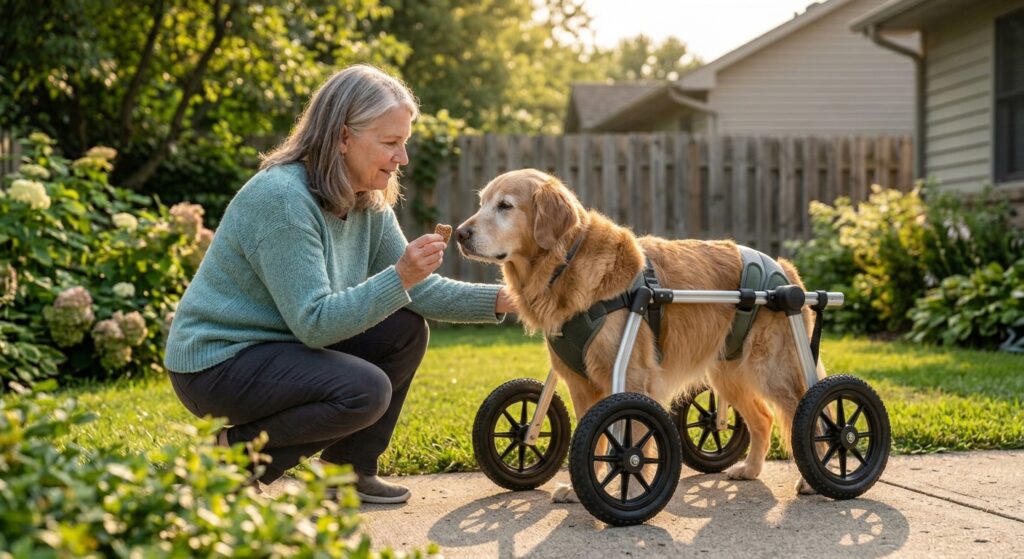
- Use treats and calm encouragement, especially for the first several uses, to build a positive association with the cart.
- Be patient with the learning curve — some dogs adapt within days, while others take a few weeks to move confidently.
- Watch for chafing or discomfort around the support straps during the adjustment period, adjusting fit as needed.
Many owners say the first few sessions feel awkward. Their dog stands still, looks around, and waits. Then something small changes. A neighbor walks by, or a squirrel runs across the yard, and the dog takes off. Owners often describe that first confident walk as the moment they stopped worrying.
Daily Care Checklist for Wheelchair Dogs
A wheelchair helps your dog move. It does not replace daily care. Use this checklist after each outing.
- ☐ Check the skin under the straps and slings for redness, hair loss, or sores.
- ☐ Look at the hind paws and toes for scrapes, especially if they drag.
- ☐ Tighten any loose bolts and check that the wheels turn freely.
- ☐ Take the wheelchair off when your dog rests, and never leave your dog in it unsupervised.
- ☐ Give your dog a soft place to rest, such as one of the best orthopedic beds for senior dogs.
- ☐ Keep the skin around the hips and belly clean and dry.
- ☐ Call your vet if you see sores, swelling, limping, or signs of pain.
Life Quality With a Wheelchair
Many owners worry a wheelchair signals the end of an active life, but the opposite is often true — dogs frequently regain enthusiasm for walks and outdoor time once pain-free, supported movement becomes possible again. The American Animal Hospital Association recognizes mobility aids as a legitimate part of supporting quality of life in dogs with significant mobility limitations, rather than a measure of last resort.
Many owners worry that a wheelchair signals the end of an active life. The opposite is often true. Dogs frequently regain enthusiasm for walks and outdoor time once supported movement becomes possible again. Vets often include mobility aids in a quality-of-life plan for dogs with significant mobility limits. Ask your vet whether a wheelchair fits your dog’s plan. For general guidance on senior pet care, visit the AVMA website.
Frequently Asked Questions
Will my dog hate using a wheelchair?
Most dogs adapt well, especially with a patient introduction process, since the cart typically restores mobility and reduces the frustration of struggling to move rather than adding a new burden.
Can a dog use a wheelchair only part-time?
Yes — many dogs use a wheelchair specifically for walks or outdoor time while resting normally without it indoors, which works well for dogs who don’t need constant support throughout the day.
How much does a dog wheelchair typically cost?
Costs vary widely based on size, adjustability, and build quality, ranging from more basic fixed-size models to higher-end adjustable carts. Some organizations and online communities also offer used wheelchairs at a reduced cost, which is worth researching if budget is a concern.
Will a rear-support wheelchair work if my dog’s front legs are weak?
Usually not. A rear-support cart depends on strong front legs to pull and steer. If your dog’s front legs are weak too, ask your vet about a full-support wheelchair.
How long can my dog stay in the wheelchair at one time?
Start with short sessions of 5 to 10 minutes. Build up slowly as your dog gets stronger. Take breaks, check the skin, and ask your vet how long each outing should last for your dog.
Is a wheelchair better than a mobility harness?
It depends on how much support your dog needs. A harness works well for dogs who can still bear some weight on their hind legs. A wheelchair suits dogs who can’t. Read our guide to the best mobility harnesses for senior dogs to compare.
Can a dog with incontinence use a wheelchair?
Yes, but the skin needs extra care. Urine can irritate the skin under the straps. Clean and dry your dog after each outing. Our guide to the best dog diapers and our daily hygiene routine for a senior dog with incontinence can help.
This article is for general information only. It does not replace advice from your veterinarian. Always talk to your vet before choosing a mobility aid for your dog.
A properly fitted wheelchair can restore a senior dog’s mobility and quality of life when other support options are no longer enough. If joint pain adds to your dog’s mobility problems, read our arthritis in senior dogs guide for a complete management plan. If your dog still walks but needs help on stairs or slippery floors, a mobility harness may be enough for now.