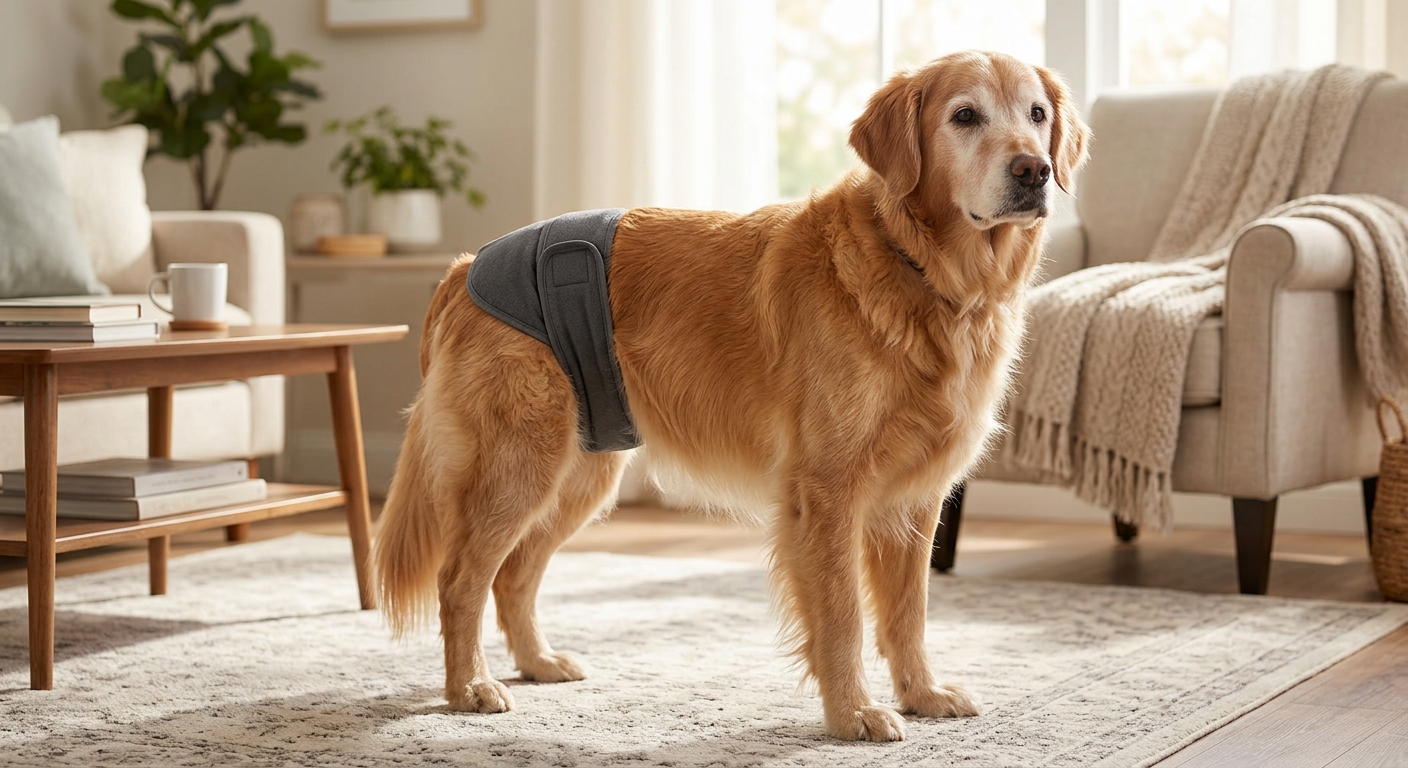
Why Dog Diapers for Senior Dogs Can Help
Incontinence is a common, manageable part of aging for many senior dogs, and dog diapers for senior dogs offer a practical way to handle it without constant cleanup stress or restricting your dog to certain areas of the house. This guide covers the main types available, how to size them correctly, and tips for keeping your dog comfortable while using them.
Common Causes of Incontinence in Senior Dogs
- Weakened bladder muscles from natural aging
- Hormone-related incontinence, more common in spayed female dogs
- Kidney disease, which increases urine production and frequency — see our guide on kidney disease in senior dogs for more detail
- Cognitive dysfunction, which can affect a dog’s awareness of needing to go outside
- Mobility issues, where a dog physically struggles to get outside in time despite normal bladder control
Since incontinence can stem from several different causes, a vet visit to identify the underlying reason is worthwhile, even while diapers help manage the day-to-day mess in the meantime.
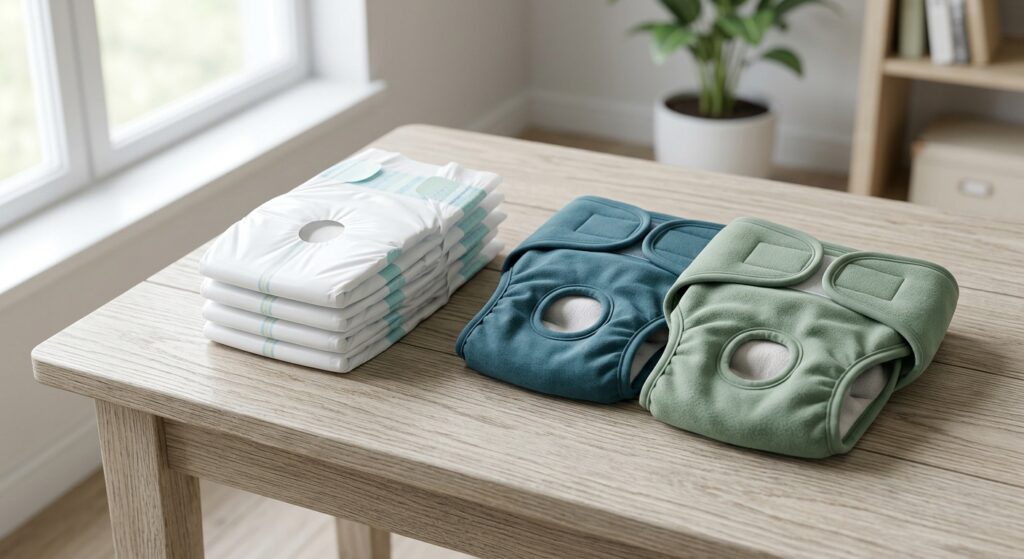
Disposable vs Washable Diapers
Disposable Diapers
Pros: Convenient, no laundry involved, often more absorbent per use. Cons: Ongoing cost adds up over time, and they create more regular waste.
Best for: Owners prioritizing convenience, travel situations, or occasional use during illness recovery.
Washable/Reusable Diapers
Pros: Lower cost over time, often more comfortable fabric against the skin, better for regular long-term use. Cons: Requires regular washing, and absorbency depends on the quality of the inner liner.
Best for: Dogs needing diapers as a long-term daily solution, where the laundry routine becomes manageable as part of a normal routine.
Diaper Options Compared
| Option | Convenience | Cost over time | Best for |
|---|---|---|---|
| Disposable | High, with no laundry | Adds up | Travel and occasional use |
| Washable | Needs regular washing | Lower | Long-term daily use |
| Belly band for males | Easy to put on | Varies | Dribbling in male dogs |
Male Wraps vs Full Diapers
Male dogs have the option of a belly band/wrap, which covers just the area needed for urine leakage rather than the full diaper shape used for female dogs or dogs managing bowel incontinence as well. Belly bands tend to be simpler to put on and more comfortable for dogs who only need to manage dribbling rather than full incontinence.
Getting the Right Fit
A poorly fitted diaper leads to leaks, chafing, or a dog managing to remove it entirely.
Sizing tips:
- Measure your dog’s waist at the point where the diaper will sit, not just their general size category.
- Leave enough room to fit two fingers comfortably under the waistband — too tight causes irritation, too loose causes leaks.
- For male dogs, make sure the wrap fully covers the area to prevent leakage at the front.
- Check the tail hole placement carefully for full diapers, since a poor fit here is a common source of chafing.
Measure Before You Buy
| What to measure | Your number | Why it matters |
|---|---|---|
| Waist, where the diaper will sit | Decides the size, more than the general size category | |
| Your dog’s weight | Check it against the maker’s size chart | |
| Position of the tail base | Helps you check the tail hole placement | |
| Type needed (belly band or full diaper) | Depends on your dog’s needs |
Fit Check
- You can slide two fingers under the waistband
- There are no gaps around the legs
- The tail hole sits comfortably over the tail
- The diaper covers the whole area that needs protection
- No red marks show on the skin after wearing
Getting Your Dog Used to a Diaper
- Let your dog sniff the diaper and give a treat.
- Put it on for a few minutes while you play or feed your dog.
- Take it off and praise your dog.
- Increase the time slowly, while you watch your dog.
- Check the skin each time you take the diaper off.
Go back one step if your dog keeps pulling at it.
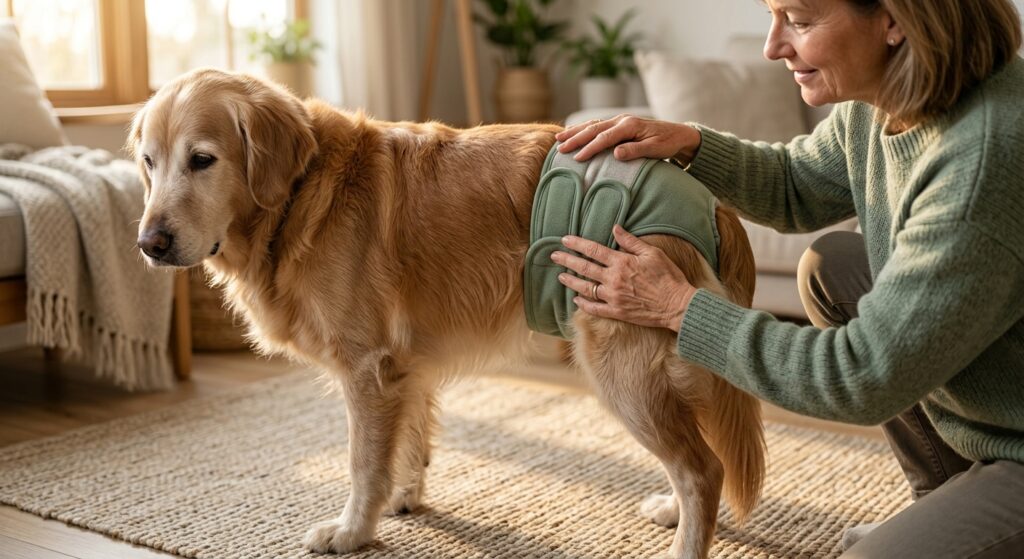
Keeping Skin Healthy With Regular Diaper Use
Extended diaper use increases the risk of skin irritation or urine scald if not managed carefully.
Prevention tips:
- Change diapers promptly after they’re soiled, rather than leaving them on for extended periods.
- Use a barrier cream (vet-approved for dogs) on skin prone to irritation.
- Give your dog diaper-free time when supervised, allowing skin to air out.
- Watch for redness, odor, or signs of discomfort, which may indicate it’s time to adjust the diaper type or check with your vet about skin care.
The American Kennel Club notes that managing incontinence with appropriate products, combined with addressing any underlying medical cause, helps maintain both hygiene and a dog’s dignity during this stage of life.
Many owners say skin problems start quietly, with a little redness or a faint smell. A short log helps you catch them early. Our guide on the daily hygiene routine for a senior dog with incontinence covers the full routine.
7-Day Diaper Log
| Day | Diaper changes (times) | Skin (normal, red, sore) | Barrier cream used? | Diaper-free time | Notes |
|---|---|---|---|---|---|
| Day 1 | |||||
| Day 2 | |||||
| Day 3 | |||||
| Day 4 | |||||
| Day 5 | |||||
| Day 6 | |||||
| Day 7 |
Call your vet if redness or odor does not clear up.
Frequently Asked Questions
Will using diapers make my dog’s incontinence worse over time?
No — diapers manage the symptom but don’t affect bladder muscle function itself. They don’t cause or worsen incontinence; they simply help manage the mess while any underlying cause is identified and treated.
How often should I change my dog’s diaper?
Generally every 4-6 hours, or sooner if visibly soiled, to reduce the risk of skin irritation. Dogs with more frequent urination due to kidney disease or diabetes may need more frequent changes.
My dog keeps trying to remove the diaper. What should I do?
Make sure the fit isn’t too tight or uncomfortable first, then try a different style (wrap vs full diaper) or brand, since some dogs respond better to different closures or materials. Gradual, positive introduction — similar to introducing a harness — can also help some dogs adjust.
Can my dog sleep in a diaper overnight?
Many dogs do. Use a well-fitting, absorbent diaper. Change it right before bed and again first thing in the morning. Check the skin each day. The American Kennel Club has general guidance on caring for senior dogs.
Should I take the diaper off for bathroom trips?
If you can, yes. Take your dog outside often, and reward every time your dog pees outdoors. It helps your dog keep the habit.
Can I use baby diapers on my dog?
Some owners cut a tail hole in baby diapers. Fit can be a problem, and the absorbent gel can irritate skin or cause harm if your dog chews it. Pet-specific diapers are made for dogs’ bodies. Ask your vet which option suits your dog.
When should I call the vet?
Call if the leaking is new or getting worse, if you see blood in the urine, if your dog strains, or if the skin looks sore. A sudden increase in drinking is also worth mentioning. Our guide on how much water a senior dog should drink daily explains what is normal.
This article is for informational purposes only and is not a substitute for professional veterinary advice. Always consult your vet about your dog’s specific health needs.
Managing incontinence with the right diaper option helps keep both your dog and your home comfortable during this stage of life. If kidney disease is a contributing factor, pair this guide with our article on kidney disease in senior dogs to address the underlying cause alongside day-to-day management.