
A Small Wobble Can Mean a Lot of Different Things
Watching your dog’s legs tremble or shake while walking is worrying, especially in a senior dog shaking when walking more than usual. Sometimes it’s a mild, harmless sign of age-related muscle weakness. Other times, it points to something that genuinely needs treatment. This guide breaks down the most common causes and how to tell which situation you’re dealing with.
Possible Causes of Shaking or Trembling Legs
Muscle Weakness and Loss of Mass (Sarcopenia)
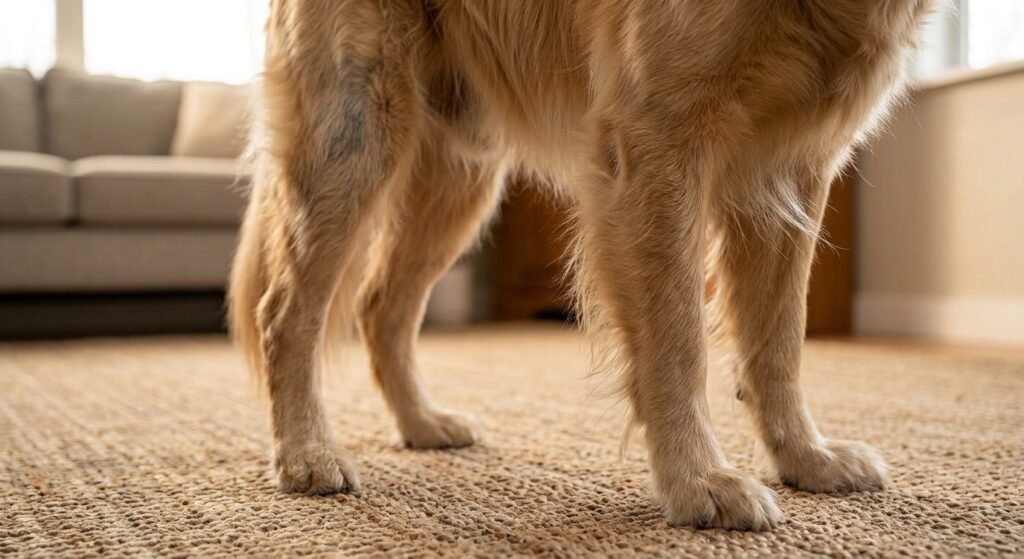
As dogs age, they naturally lose some muscle mass, especially in the hind legs. Weaker muscles tire faster and can visibly tremble during or after a walk, particularly on stairs or uneven ground.
Arthritis and Joint Pain
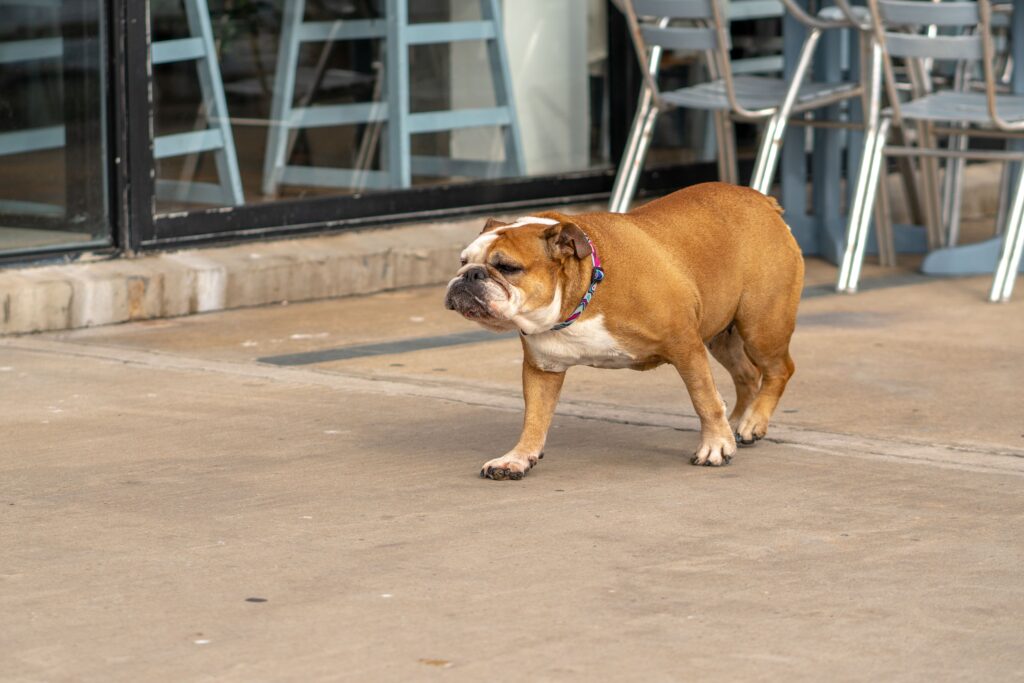
Painful joints often change the way a dog moves. Some dogs compensate by shifting weight unevenly, which can look like shaking or trembling, especially when standing still after exercise.
Degenerative Myelopathy
This is a progressive spinal cord disease seen in certain breeds, including German Shepherds and Corgis. It typically starts with hind-leg weakness and instability that can resemble trembling, gradually worsening over months.
Neurological Issues
Conditions affecting the brain or nerves, including vestibular disease or early neurological decline, can also cause shakiness, sometimes paired with a head tilt or loss of balance.
Low Blood Sugar or Other Metabolic Issues
In some dogs, especially small breeds, low blood sugar can cause noticeable trembling and weakness. This is more likely if the shaking comes with lethargy or disorientation.
Cold or Simple Fatigue
Not every case points to disease. Senior dogs lose body fat and regulate temperature less efficiently, so mild shivering in cold weather or after a longer-than-usual walk can be completely normal.
| When it happens | What it may point to | What to do |
|---|---|---|
| After a long walk or on stairs | Muscle fatigue or weakness | Mention it at the next check-up |
| Standing still after exercise | Joint pain | Book a vet visit |
| In cold weather | Normal cooling or fatigue | Keep your dog warm and watch |
| With a head tilt or loss of balance | A neurological problem | Book a vet visit soon |
| With confusion or unusual lethargy | A metabolic or neurological problem | Call your vet the same day |
Many owners find that a light coat and shorter walks with rest stops reduce the trembling. If the shaking stops, cold or tiredness was probably the cause. If it keeps happening, talk to your vet. Our guide to the best winter coats for senior dogs can help you choose one.
When to See a Vet
A single wobbly moment after a long walk usually isn’t an emergency. Book a vet visit if you notice:
- Shaking that’s new, worsening, or happening more frequently
- Weakness paired with stumbling, dragging paws, or falling over
- Signs of pain, such as yelping, reluctance to move, or a hunched posture
- Shaking combined with confusion, vomiting, or unusual lethargy
Bring a short video if you can. Vets often find it easier to assess gait and tremors on video than from a verbal description alone.
Many owners notice the shaking only on certain walks. One dog trembles on the stairs but not on flat ground. Another shakes only after resting. A short log of what happens and when helps your vet find the cause faster.
10-Day Walk Log
| Day | Walk length | When did the shaking start? | Which legs? | Other signs |
|---|---|---|---|---|
| Day 1 | ||||
| Day 2 | ||||
| Day 3 | ||||
| Day 4 | ||||
| Day 5 | ||||
| Day 6 | ||||
| Day 7 | ||||
| Day 8 | ||||
| Day 9 | ||||
| Day 10 |
Show this log to your vet along with a short video.
What Your Vet Will Likely Check
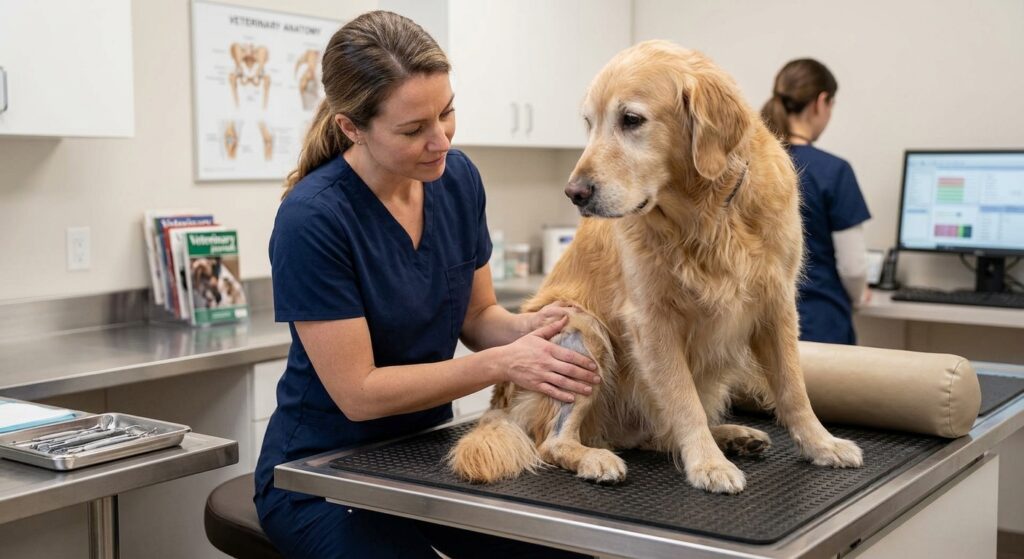
A full physical and neurological exam usually comes first, checking reflexes, joint range of motion, and muscle tone on both sides of the body. Bloodwork can rule out metabolic causes, and in some cases, your vet may recommend X-rays or referral to a veterinary neurologist if a spinal or neurological cause seems likely.
Questions to Ask Your Vet
- Could this be pain, muscle weakness, or a neurological problem?
- Which tests do you recommend first?
- Does my dog need X-rays or a referral to a neurologist?
- Is it safe to keep walking, and for how long?
- Would a harness or other mobility aid help?
- When should I come back for a recheck?
Frequently Asked Questions
Is shaking always a sign of pain in senior dogs?
Not always. It can reflect pain, but it can also come from weakness, cold, low blood sugar, or a neurological issue. That’s why a proper exam matters more than guessing from the symptom alone.
Can arthritis medication help with shaking legs?
If arthritis is the underlying cause, pain management and mobility support can reduce the trembling significantly. It won’t help, though, if the real cause is neurological or metabolic. The American Veterinary Medical Association has additional resources on evaluating mobility changes in senior pets.
Should I limit my dog’s walks if their legs are shaking?
Shorter, more frequent walks are often a good starting point while you figure out the cause, rather than cutting out exercise entirely, since gentle movement helps maintain muscle mass.
Can shaking be a sign of an emergency?
Yes, sometimes. Call your vet or an emergency clinic right away if the shaking comes with collapse, seizure-like movements, repeated vomiting, or trouble breathing.
Do some breeds shake more as they age?
Yes. Large breeds often show hind-leg weakness earlier. Small breeds are more prone to low blood sugar. Degenerative myelopathy also affects certain breeds, such as German Shepherds.
Can supplements help a senior dog with weak, shaky legs?
Some supplements support joint health, but they do not fix every cause. Ask your vet first. Our guide to the best joint supplements for senior dogs explains what to look for.
Do mobility aids help a dog with shaky hind legs?
They can. A harness with a handle supports your dog on stairs and slippery floors. Non-slip rugs also help. Ask your vet which option fits your dog. Our guide to mobility harnesses for senior dogs compares popular choices.
This article is for informational purposes only and is not a substitute for professional veterinary advice. Always consult your vet about your dog’s specific health needs.
If joint pain seems to be part of the picture, our guide on arthritis in senior dogs covers the full range of symptoms and treatment options worth discussing with your vet.