
There’s No Universal Winner
The wet vs dry food for senior dogs debate doesn’t have one right answer. The best choice depends on your dog’s teeth. It also depends on their health conditions and personal preferences. This guide breaks down the real differences. That way you can decide based on your own dog, not general advice.
Nutritional Differences Are Smaller Than You’d Think
Both wet and dry foods can be nutritionally complete when properly formulated. Neither format is inherently healthier overall. The bigger differences come down to water content and texture. How each interacts with specific health conditions matters more than the format itself.
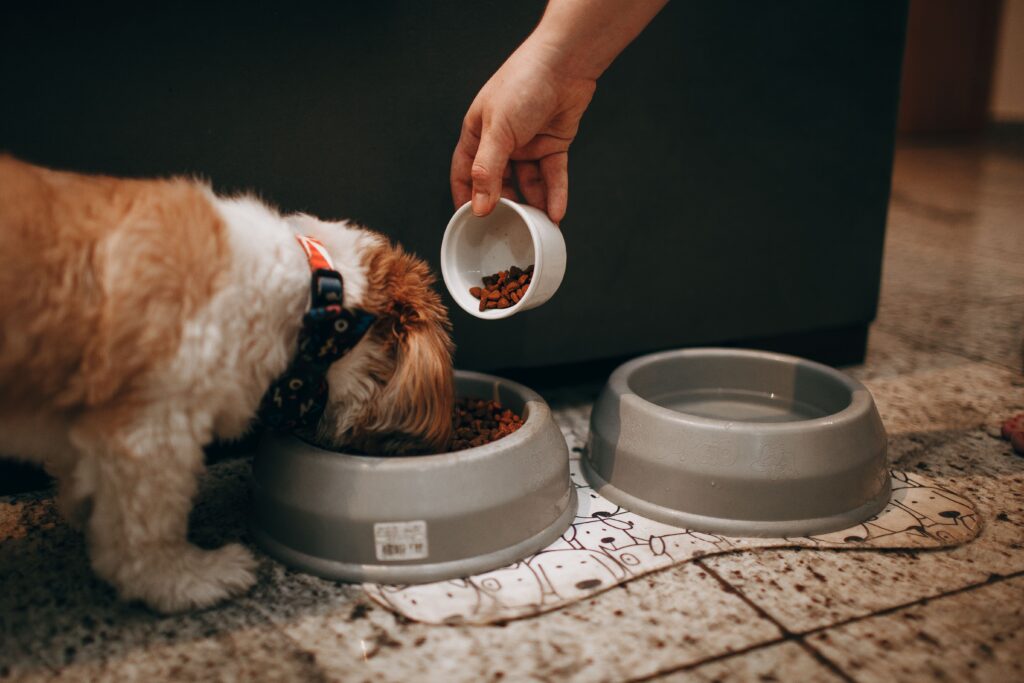
When Wet Food Makes More Sense
Dental Pain or Missing Teeth
Soft food is far easier to chew. This matters a lot for senior dogs dealing with dental disease, loose teeth, or teeth that have already been removed.
Kidney Disease or Low Water Intake
Wet food has high moisture content, which supports hydration. This can matter a lot for dogs with kidney disease. They need to stay well hydrated but don’t always drink enough on their own.
Reduced Appetite
Wet food is often more aromatic and appealing to dogs who’ve grown pickier with age. It can help maintain calorie intake in a dog losing interest in food.
Many owners notice a change in appetite before anything else. A dog who once cleaned the bowl now leaves half. A short log shows whether a different food helps.
7-Day Appetite Log
| Day | Food and amount offered | Amount eaten | Stool | Notes |
|---|---|---|---|---|
| Day 1 | ||||
| Day 2 | ||||
| Day 3 | ||||
| Day 4 | ||||
| Day 5 | ||||
| Day 6 | ||||
| Day 7 |
If your dog refuses food for more than a day or two, call your vet.
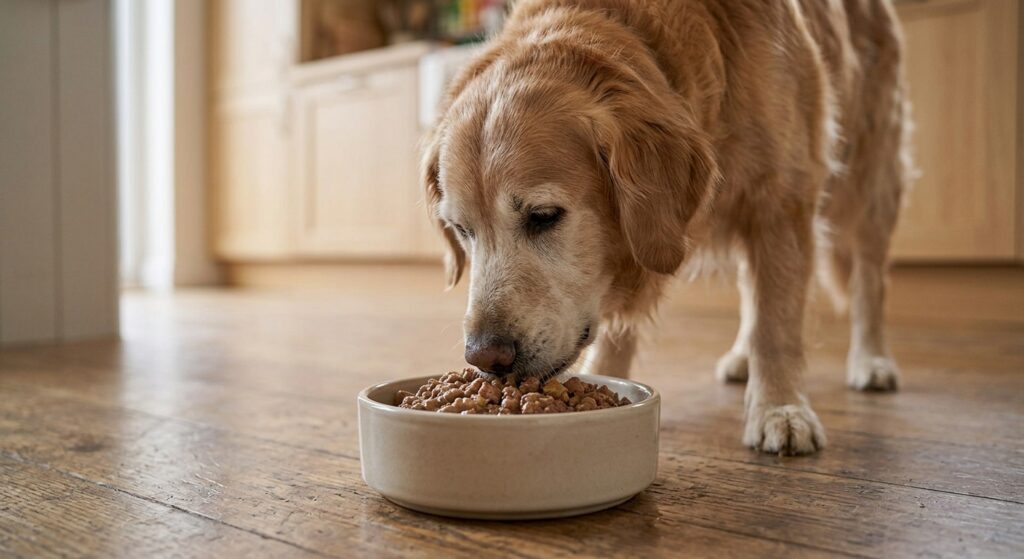
When Dry Food Still Works Well
Healthy Teeth and Gums
For dogs without dental issues, chewing kibble has a mild abrasive action. This can help reduce plaque buildup, offering a small dental benefit wet food doesn’t provide.
Budget and Convenience
Dry food is generally cheaper per calorie. It also doesn’t spoil the way an opened can of wet food does, which makes it more practical for some households.
Weight Management
Dry food often makes portion control easier. Measuring cups are calibrated more consistently for kibble than for wet food.
Wet vs Dry at a Glance
| Factor | Wet food | Dry food |
|---|---|---|
| Water content | High | Low |
| Chewing | Soft and easy | Firmer, with a mild scrubbing effect |
| Appeal | Aromatic and tempting | Less aromatic |
| Cost | Higher per calorie | Lower per calorie |
| Storage | Opened cans spoil quickly | Keeps longer |
| Portion control | Harder to measure | Easier to measure |
Can You Mix Both?
Yes, and many owners do exactly this. Mixing wet and dry food combines the hydration and palatability of wet food with the dental and cost advantages of dry food. Just match the combined calories to your dog’s needs. It’s easy to overfeed when mixing formats without adjusting portions.
How to Mix Wet and Dry Without Overfeeding
- Ask your vet for your dog’s daily calorie total
- Split that total between the wet and dry food
- Measure each portion every time
- Lower the dry portion when you add wet food
- Weigh your dog every few weeks and adjust with your vet
What Matters More Than the Format
Prioritize a food suited to your dog’s health conditions and life stage. This matters more than the wet-versus-dry question alone. A dog with kidney disease benefits more from a properly formulated kidney diet, wet or dry, than from switching formats without addressing the underlying nutrition.
Many owners find that their dog’s needs change from one year to the next. Teeth wear down, appetite shifts, and a food that worked at eight may not suit a dog at twelve. Our guides on dental disease in older dogs and foods to avoid for dogs with kidney problems cover those two conditions in more detail.
Quick Check: Which Format Fits Your Dog Today?
- Does your dog chew comfortably, or drop food while eating?
- Does your dog drink enough water each day?
- Is your dog’s appetite steady?
- Does your dog have kidney or dental disease?
- Is your dog’s weight stable?
If any answer worries you, talk to your vet before you change foods.
Frequently Asked Questions
Does wet food cause more dental problems than dry food?
Not directly. But it doesn’t offer the mild plaque-reducing benefit of chewing kibble. Regular brushing or dental chews still matter, whichever food type you choose.
Can I switch my senior dog from dry to wet food suddenly?
It’s better to transition gradually over 7 to 10 days. This avoids digestive upset, especially in older dogs with more sensitive stomachs.
Is wet food better for dogs with kidney disease specifically?
Higher moisture content can help support hydration. But the phosphorus and protein formulation matters more than the wet-versus-dry format alone. The World Small Animal Veterinary Association has more on nutrition considerations for dogs with kidney disease.
How should I store opened wet food?
Cover it and keep it in the fridge. Check the label for how long it keeps, since many cans last only a few days. Do not leave it out for hours.
Can I warm up wet food?
Yes. A little warmth boosts the smell and can tempt a picky dog. Test the temperature first. It should be lukewarm, never hot.
Can toppers help a picky senior dog eat?
A spoonful of wet food on top of kibble often works. Avoid toppers with added salt, onion, or garlic, which can harm dogs. Ask your vet before you add anything new. If your dog keeps refusing food, our guide on why your senior dog won’t eat covers other causes.
Do I need to feed less when I switch to wet food?
Often, yes. Calories per cup or can differ a lot between foods. Check the calories on the label and ask your vet how much to feed.
This article is for informational purposes only and is not a substitute for professional veterinary advice. Always consult your vet about your dog’s specific health needs.
If hydration is a specific concern for your dog, our guide on how much water a senior dog should drink daily covers what’s normal and when low water intake becomes a red flag.