Why Extra Weight Hits Harder in Senior Dogs
Carrying extra weight puts more strain on joints, the heart, and organs at any age, but it’s especially risky for older dogs already managing age-related wear and tear. Helping an overweight senior dog lose weight safely takes a slower, more careful approach than a typical diet plan for a younger dog. This guide covers how to do it without putting your dog’s health at risk.
Why Weight Loss Needs a Different Approach in Senior Dogs
Rapid weight loss can be dangerous at any age, but senior dogs are more vulnerable to muscle loss, nutrient deficiencies, and underlying conditions that complicate a standard diet plan. A vet check before starting is essential, since conditions like hypothyroidism or arthritis can both contribute to weight gain and change how a dog should safely lose it.
Step One: Rule Out Medical Causes
Before assuming extra weight is purely about diet and exercise, it’s worth ruling out hypothyroidism, which slows metabolism and causes weight gain even with normal eating. Reduced mobility from arthritis can also lead to weight gain simply because a dog moves less throughout the day. Treating an underlying cause often makes weight loss much easier to achieve.
Many owners are surprised to learn that a thyroid problem can sit behind stubborn weight gain. Our guide on hypothyroidism in senior dogs explains the signs to watch for. A short list of questions helps you get the most from the weight check.
Questions to Ask at the Weight Check
- What is my dog’s body condition score?
- What is a healthy target weight for my dog?
- How many calories should my dog eat each day?
- Could my dog’s thyroid or joints be affecting weight?
- When should we recheck?
Building a Safe Weight Loss Plan
Get an Accurate Starting Point
Your vet can assess body condition score and calculate a target weight based on breed and frame size, which is more useful than going by breed averages alone.
Adjust Calories Gradually
A safe weight loss rate for dogs is generally around 1 to 2% of body weight per week. Cutting calories too aggressively risks muscle loss and nutrient deficiencies, which matter even more in a senior dog already managing reduced muscle mass.
What a Safe Pace Looks Like
A safe rate is generally 1 to 2% of body weight per week. Ask your vet for your own dog’s target.
| Starting weight | 1% per week | 2% per week |
|---|---|---|
| 20 lb | 0.2 lb | 0.4 lb |
| 40 lb | 0.4 lb | 0.8 lb |
| 60 lb | 0.6 lb | 1.2 lb |
| 80 lb | 0.8 lb | 1.6 lb |
Choose the Right Food, Not Just Less Food
Simply feeding less of a regular diet can leave a dog under-nourished in key nutrients. Weight management formulas are designed to reduce calories while keeping protein and essential nutrients adequate, which works better long-term than portion-cutting alone.
Measure Every Meal
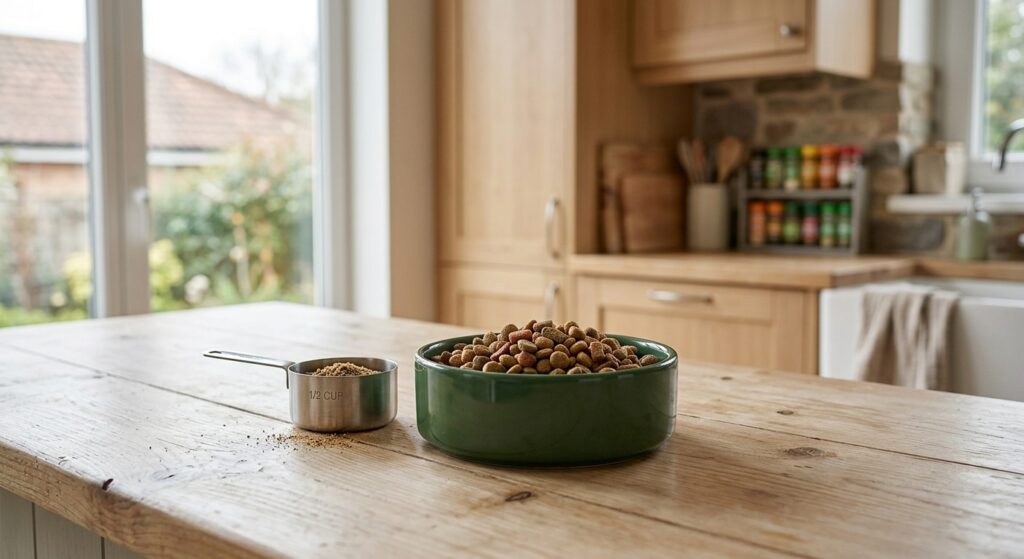
Eyeballing portions is one of the most common reasons weight loss plans stall. A kitchen scale or measuring cup used consistently makes a real difference over weeks and months.
Daily Feeding Checklist
- Use the same measuring cup or a kitchen scale every time
- Write the daily food total where everyone can see it
- Tell every family member how much to give
- Count treats and extras toward the daily total
- Set aside the day’s treats in a small container each morning
Exercise: Gentle, Consistent, and Joint-Friendly
Exercise still matters for weight loss, but intensity should match your dog’s actual mobility. Short, frequent walks are often safer and more sustainable than one long walk, especially for dogs with arthritis. Swimming or hydrotherapy, where available, offers a joint-friendly way to burn calories without added impact.
Many owners find that two or three short walks suit their dog better than one long one. Stop when your dog slows down or lags behind. Rest is part of the plan. Our guide on hydrotherapy for dogs with arthritis explains what a session involves.
Tracking Progress the Right Way
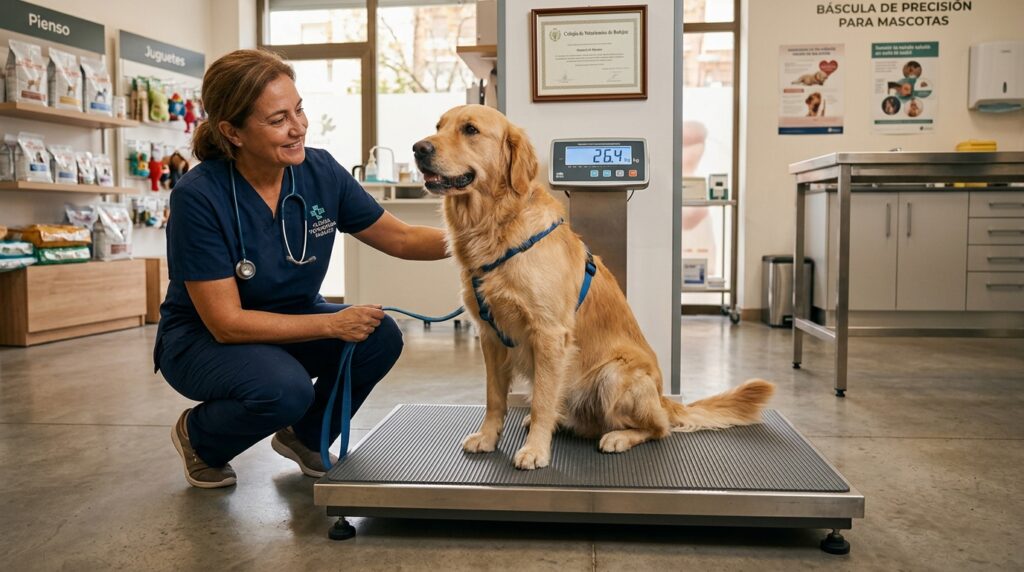
Weigh your dog every two to four weeks rather than daily, since small day-to-day fluctuations aren’t meaningful. Take photos from the same angle periodically. Visual changes are sometimes easier to notice than numbers alone, especially for dogs where a pound or two makes a real visible difference.
Many owners say progress feels invisible from one week to the next. A simple log shows the trend. Fill it in at each weigh-in, every two to four weeks.
Weight Loss Log
| Check-in | Date | Weight | Photo taken? | Energy and mobility | Notes |
|---|---|---|---|---|---|
| Check-in 1 | |||||
| Check-in 2 | |||||
| Check-in 3 | |||||
| Check-in 4 | |||||
| Check-in 5 | |||||
| Check-in 6 |
Bring this log to your vet at each recheck.
Frequently Asked Questions
How long should it take an overweight senior dog to reach a healthy weight?
This depends on how much weight needs to come off, but a gradual pace over several months is safer than a fast timeline, especially for older dogs.
Are treats completely off-limits during weight loss?
No, but treats should count toward the daily calorie total. Many owners switch to low-calorie options like small pieces of carrot or green beans instead of cutting treats entirely.
Can arthritis medication make weight loss easier?
Yes, indirectly. Better pain control often means a dog can move more comfortably, which supports both exercise and overall calorie burn. The World Small Animal Veterinary Association offers additional guidance on weight management in senior dogs.
Can I start a weight loss food without asking my vet?
Ask first. Some dogs have conditions that need a specific diet. Your vet can pick a food that fits your dog’s health and tell you how much to feed.
Why is my dog always hungry on a diet?
It is common. Smaller portions can feel like a big change. Ask your vet about a weight management formula that keeps your dog fuller. Small pieces of green beans can work as a low-calorie snack. Do not give extra food on your own.
Is it safe to skip a meal to speed things up?
No. Skipping meals can upset your dog’s stomach and add to muscle loss. Follow the plan your vet gives you and keep a steady feeding routine.
What should I do if my dog stops losing weight?
Plateaus are common. Re-check your portions, count every treat, and look at how much your dog moves. If the weight stays the same for several weeks, ask your vet to review the plan.
This article is for informational purposes only and is not a substitute for professional veterinary advice. Always consult your vet about your dog’s specific health needs.
If joint pain is limiting how much your dog can exercise, our guide on adapted exercise routines for senior dogs covers safer ways to stay active at any mobility level.