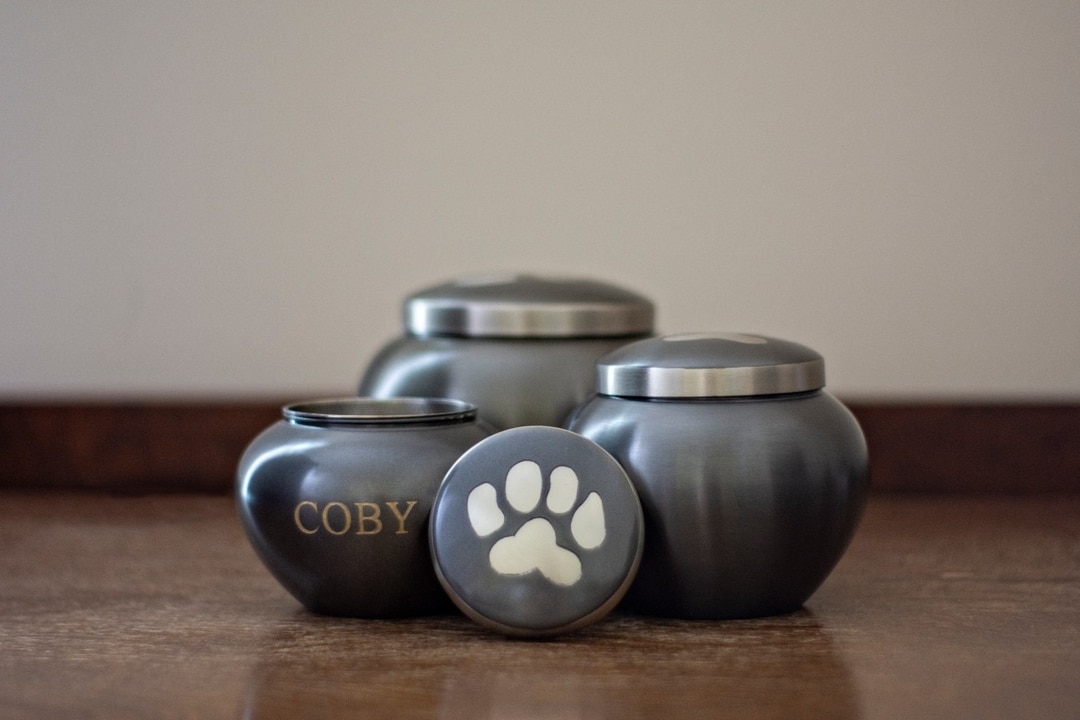
Understanding Pet Cremation vs Burial
Deciding between pet cremation vs burial is one of the practical decisions that comes alongside saying goodbye to a dog. There’s no universally “right” choice — it depends on your personal preferences, local regulations, budget, and what feels most meaningful to you. This guide walks through the main options for each, so you can make this decision with clearer information during an already difficult time.
Cremation Options
Communal Cremation
Your dog is cremated together with other pets, without individual ashes returned. This is generally the most affordable option, often arranged directly through your vet clinic.
Best for: Owners who don’t need physical remains returned, or who prefer a simpler, lower-cost option.
Individual Cremation
Your dog is cremated alone, with their ashes returned to you, typically in a simple container unless you choose a specific urn.
Best for: Owners who want to keep their dog’s ashes, whether for scattering, keeping at home, or another form of memorial.
Private Witnessed Cremation
Similar to individual cremation, but you have the option to be present for some or all of the process, which some owners find meaningful as a final act of closeness.
Best for: Owners who want maximum certainty about which remains are returned, or who find the presence itself meaningful.
Questions to Ask the Provider
- ☐ Is this communal, individual, or witnessed cremation?
- ☐ How will I know the ashes are my dog’s?
- ☐ How long will it take to get the ashes back?
- ☐ What is the total cost, including the urn and transport?
- ☐ Can I be present, or say goodbye first?
Choosing an Urn or Keepsake
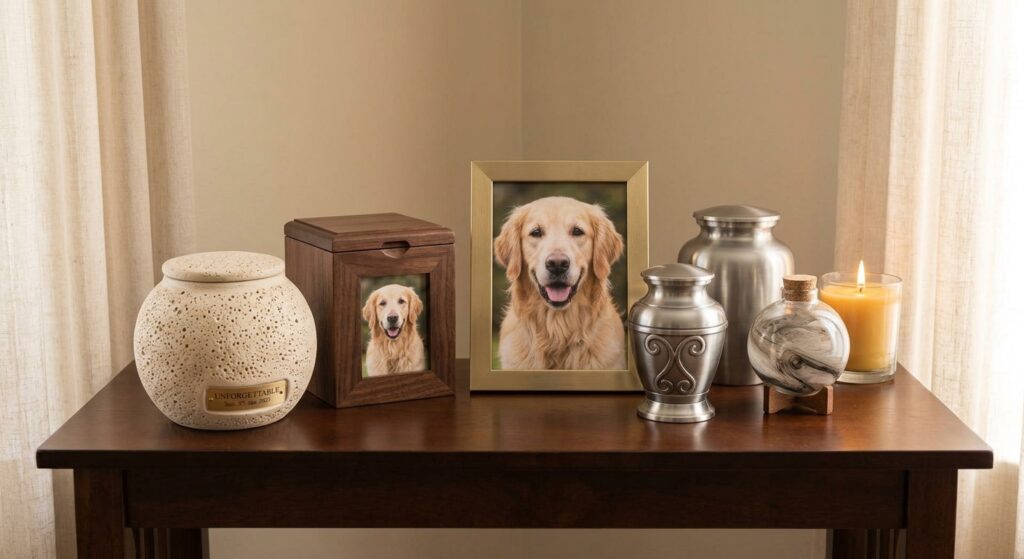
If you choose individual cremation, options for the ashes include:
- Simple cardboard or wooden boxes, often included with basic individual cremation
- Decorative urns in various materials (wood, ceramic, metal)
- Small keepsake urns or jewelry that hold a small portion of ashes, while the rest is kept elsewhere or scattered
- Biodegradable urns, designed for scattering or burial that returns the ashes naturally to the earth over time
Burial Options
Home Burial
Burying your dog on your own property, where local regulations allow it. This can feel deeply personal, keeping your dog close in a place with shared memories.
Considerations: Check local regulations first, since some areas restrict pet burial for public health reasons. Bury at a sufficient depth (typically at least 3 feet) to prevent disturbance by other animals, and consider using a biodegradable casket or wrapping if you’d prefer a more natural burial.
If your dog was euthanized, ask your vet about safe burial. Euthanasia drugs can remain in the body and can harm other animals that dig. Before you dig, call your local utility locating service to check for pipes and cables.
Pet Cemetery
Dedicated pet cemeteries offer a permanent, maintained resting place, often with options for headstones or markers, similar to human cemeteries.
Considerations: Costs vary significantly based on location and plot type, and it’s worth researching options in your area in advance if this appeals to you, rather than during an already difficult moment.

Comparing Cost
| Option | Typical Cost Range |
|---|---|
| Communal cremation | Lowest cost |
| Individual cremation | Moderate cost |
| Private witnessed cremation | Higher cost |
| Home burial | Low cost (aside from any casket/marker) |
| Pet cemetery burial | Highest cost, varies significantly by location |
Exact costs vary considerably by region and provider, so it’s worth checking with local options directly for accurate current pricing.
Decision Worksheet
| Option | What matters to me | Local rules and price I found | Notes |
|---|---|---|---|
| Communal cremation | ________ | ________ | ________ |
| Individual cremation | ________ | ________ | ________ |
| Private witnessed cremation | ________ | ________ | ________ |
| Home burial | ________ | ________ | ________ |
| Pet cemetery | ________ | ________ | ________ |
Making the Decision When You’re Ready
Some owners prefer to make this decision in advance, once a terminal diagnosis makes the end of life a known reality, rather than facing the choice for the first time in an emotional moment. This isn’t necessary, though — vet clinics and pet loss services generally guide you through the options calmly whenever you’re ready to decide, whether that’s planned ahead or in the moment itself.
Many owners say they chose the option that felt right to them, and not the one that looked best on paper. Some decided ahead of time, and others in the moment. Both ways are common.
If you are still facing this decision, our guides on when to say goodbye to your dog and palliative care for dogs in their final stage of life may help.
For general guidance on end-of-life care for pets, visit the AVMA website.
Frequently Asked Questions
Is it legal to bury a pet in my backyard?
This depends entirely on your local regulations — some areas allow it with certain depth and location requirements, while others prohibit it, often due to water table or public health concerns. Check with your local municipality before planning a home burial.
How long does cremation typically take?
This varies by provider, but individual cremation with ashes returned typically takes anywhere from a few days to about two weeks, depending on the service and current demand.
Can I keep my dog’s ashes at home indefinitely?
Yes, there’s no issue with keeping ashes at home for as long as you’d like — some owners keep them permanently, while others eventually scatter them in a meaningful location or bury them at a later time.
Can I scatter my dog’s ashes anywhere?
Rules vary. Check your local rules, and ask permission on private or public land before you scatter.
Can I bury my dog’s ashes?
Usually yes, often with a biodegradable urn. Check your local rules first.
How will I know the ashes are my dog’s?
Ask the provider how they identify each pet. Individual and witnessed cremation give the most certainty.
Do I have to decide before the vet appointment?
No. Your vet can guide you through the options. Planning ahead can ease the stress. See our guide on when to say goodbye to your dog.
Whichever option feels right for you and your dog, this decision is deeply personal, and there’s no wrong answer. If you’re still processing this loss, our guide on coping with the loss of a dog offers additional support for this time.