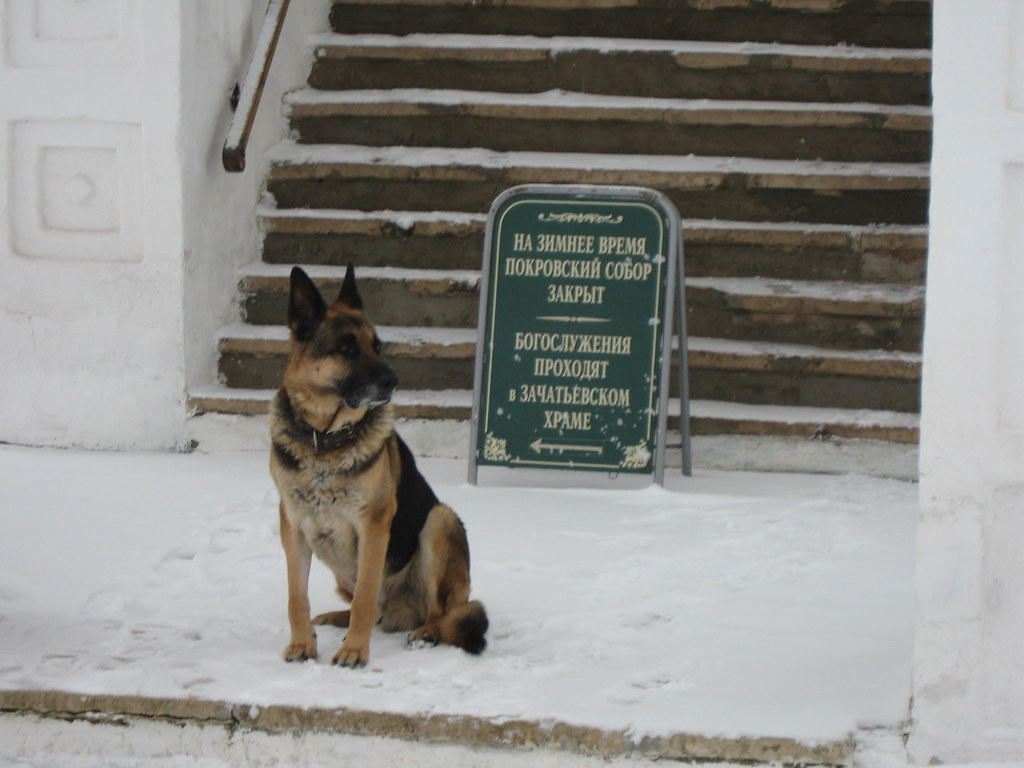
Why Stairs Become a Bigger Deal With Age
Stairs that a younger dog barely notices can turn into a real challenge for an older one. Weaker joints, less muscle, and reduced balance all make falls more likely. Learning to help a senior dog use stairs safely can prevent injuries and take a lot of daily stress off your dog. This guide covers practical changes you can make right away.
Signs Your Dog Is Struggling With Stairs
- Hesitating or pausing at the top or bottom before attempting stairs
- Taking stairs one at a time instead of a normal gait
- Shaking or wobbling on the steps
- Avoiding stairs entirely when they used to use them freely
- Yelping or stiffening after going up or down
Any of these signs are worth mentioning to your vet, since they often point to arthritis or another mobility issue rather than simple stubbornness.
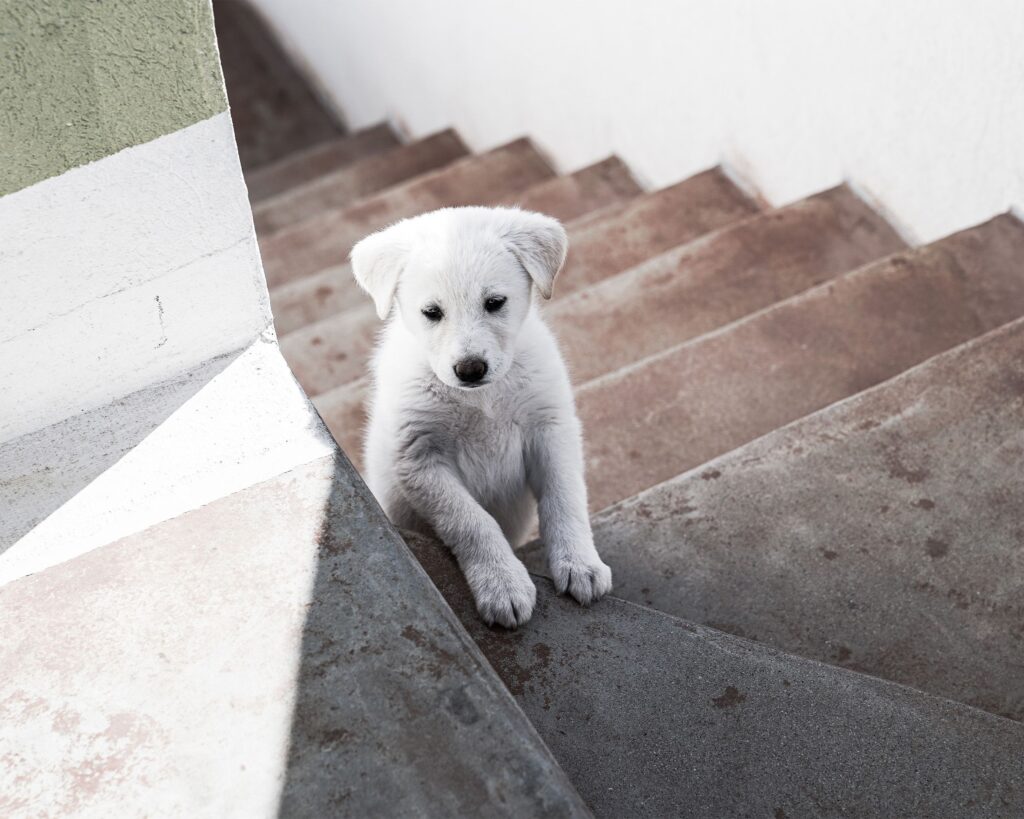
Many owners say they noticed the problem only after a slip. A week of notes shows how your dog really handles the stairs. Watch from a safe distance and never push a dog that refuses to climb.
7-Day Stair Log
| Day | Up or down | Hesitation (none, some, a lot) | Slips or stumbles | Signs of pain | Notes |
|---|---|---|---|---|---|
| Day 1 | |||||
| Day 2 | |||||
| Day 3 | |||||
| Day 4 | |||||
| Day 5 | |||||
| Day 6 | |||||
| Day 7 |
Bring this log to your vet visit.
Add Traction to Slippery Steps
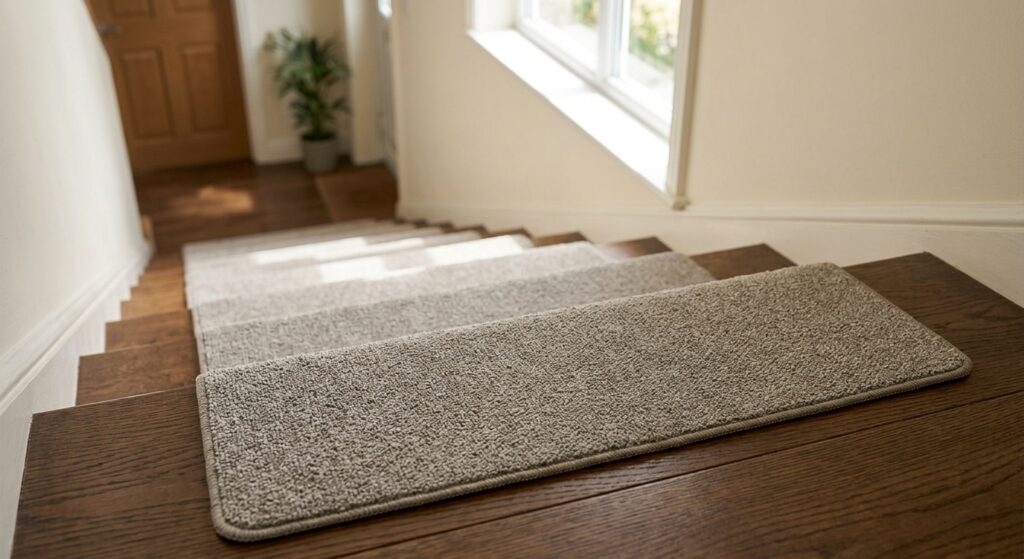
Hard, smooth stairs are one of the biggest fall risks for senior dogs. Non-slip stair treads, carpet runners, or rubber-backed mats give paws something to grip, dramatically reducing slipping. This is often the single most effective and least expensive change you can make.
Many owners say traction was the first change that made a clear difference.
Stair Safety Checklist
- Check that every step has a non-slip surface
- Make sure treads and runners are firmly attached
- Replace worn treads before they curl at the edges
- Check that the floor at the top and bottom is not slippery
- Keep the stairs clear of toys and clutter
Improve Lighting Around the Stairs
Reduced vision is common in older dogs, and dim stairwells make depth judgment harder. Adding a nightlight near the top and bottom of the stairs helps a dog with declining eyesight navigate more confidently, especially during early morning or nighttime trips.
Train a Slower, Controlled Pace
Some dogs try to rush stairs out of habit, which increases fall risk once their coordination isn’t what it used to be. Using a calm verbal cue and rewarding slow, controlled movement can help retrain the habit, especially when paired with treats for patience rather than speed.
On the way to the stairs, a no-pull harness can help keep your dog’s pace slow and steady.
Consider a Harness With a Handle
A harness with a sturdy top handle lets you support your dog’s weight directly during stair use, without pulling on the neck or collar. This works especially well for dogs with hind-leg weakness, since you can help lift the back end during the hardest part of the climb.
Many owners say a handle harness gave them more confidence on the stairs. Practice on a flat floor first, so your dog gets used to the fit before you try it on steps. Our guide to the best mobility harnesses for senior dogs compares popular options.
When to Limit or Block Stair Access
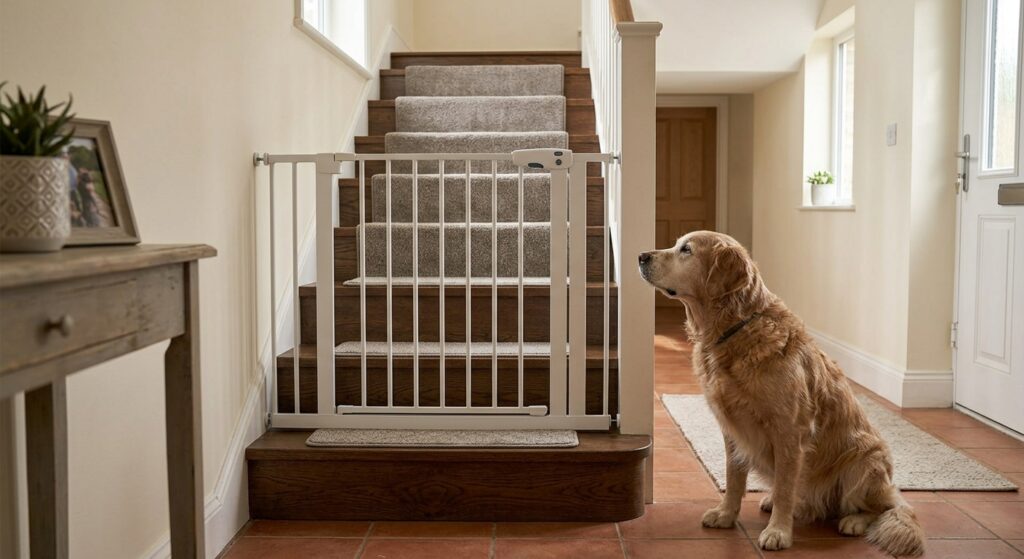
For dogs with significant arthritis, degenerative myelopathy, or advanced mobility loss, the safest option may be limiting stair access altogether. A baby gate at the top or bottom, combined with keeping food, water, and a bed on one level, removes the risk entirely rather than managing it day to day.
Ramps as an Alternative
For a few steps, like those leading to a porch or a raised bed, a ramp can replace stairs entirely and puts far less strain on joints than climbing. Ramps take some training to use comfortably, so introduce them gradually with treats and patience rather than expecting immediate use.
Owners with a raised bed or sofa can also look at pet steps. Our guide to the best pet steps for beds and sofas explains what to look for.
Which Fix Fits Your Dog?
| Situation | Helpful fix | Keep in mind |
|---|---|---|
| Slipping on smooth steps | Non-slip treads or runners | Attach them firmly |
| Dim stairwell or declining vision | Nightlights | Place one at the top and one at the bottom |
| Hind-leg weakness | Harness with a handle | Support your dog’s weight without pulling on the neck |
| Only a few steps, such as a porch | Ramp | Introduce it gradually with treats |
| Pain or repeated stumbling | Block the stairs | Keep food, water, and a bed on one level |
Frequently Asked Questions
Should I carry my senior dog on stairs instead of letting them walk?
For small dogs, this can work well, especially on tall or steep stairs. For larger dogs, supporting them with a harness handle is usually more practical and safer for both of you.
Are stair-climbing struggles always a sign of arthritis?
Not always, but it’s one of the most common causes. Vision loss, neurological conditions, and general muscle weakness can also play a role, so a vet check helps confirm the cause. The American Animal Hospital Association has more on assessing mobility changes in senior dogs.
How do I know if it’s time to block stairs completely?
If your dog shows consistent pain, repeated stumbling, or you’re regularly worried about a fall, blocking access is usually the safer choice over continuing to manage the risk daily.
How do I teach my dog to use a ramp?
Start with the ramp flat on the floor and reward each step on it. Raise it a little at a time. Use treats and patience, and never force your dog onto it.
Should my dog’s bed be upstairs or downstairs?
Choose the level that reduces trips. If your dog’s mobility is limited, keep the bed, water, and an easy route outside on the same floor.
What kind of baby gate is safest at the top of the stairs?
A gate screwed into the wall is safer than a pressure-fit gate at the top of stairs. Check that it latches firmly and that your dog cannot squeeze under it.
Can pain relief or supplements make stairs easier?
If arthritis is the cause, better pain control often helps. Ask your vet which options suit your dog, and never give human painkillers. Our guide on the best joint supplements for senior dogs explains what to look for.
If joint pain seems to be part of the picture, our guide on arthritis in senior dogs covers the full range of symptoms and treatment options worth discussing with your vet.